If you spend any time on TikTok, Instagram or Facebook, you have almost certainly been served a BetterMe ad — a wall Pilates routine, a “28 days to a flatter belly” challenge, or a calming meditation clip promising a healthier, happier you. BetterMe is the app behind that avalanche of marketing, and it has grown into one of the biggest names in digital wellness: a global, AI-driven platform founded in 2017 that now spans more than 100 million downloads, over 20 million social-media followers, and two flagship apps — BetterMe: Health Coaching and BetterMe: Mental Health — plus a corporate program, an online store, and its own fitness band. It bundles home workouts, personalized meal plans, calorie and habit tracking, guided meditations and motivational challenges into a single subscription aimed squarely at beginners.
For people who want to start moving at home with no equipment, follow an easy structured plan, and get gentle nudges to stay consistent, the appeal is obvious. But BetterMe is also one of the most aggressively marketed apps on the planet, and an honest look reveals real trade-offs — opaque, quiz-gated pricing, an auto-renewal system that has frustrated a lot of users, and “personalization” that is more template than tailor-made. This 2026 review walks through BetterMe’s full lineup — the Health Coaching and Mental Health apps, the workout and meal-plan library, the confusing pricing and billing, head-to-head comparisons against Noom and Simple, the genuine pros and cons, and exactly who should (and shouldn’t) sign up.
BetterMe Review 2026: The Viral All-in-One Wellness App With Great Workouts and Confusing Pricing
Overview and Background
BetterMe is a global digital-wellness company that builds personalized fitness, nutrition and mental-health apps. It isn’t a single workout app or a clinical weight-loss program — it’s a broad platform built around one mission the company has repeated since 2017: making a healthy lifestyle accessible to everyone, regardless of age, body type, fitness level or background. That inclusivity is baked into the brand’s tagline, “I love myself, so I work on myself,” and into workouts designed to be modified for different abilities and mobility levels. With roots in Ukraine and operations now headquartered in Cyprus, BetterMe has scaled into one of the most-downloaded wellness brands in the world.
The ecosystem breaks down into a few pieces. BetterMe: Health Coaching is the main app — workouts, meal plans, calorie and water tracking, intermittent-fasting timers, and self-care challenges. BetterMe: Mental Health is a separate meditation app with guided sessions, breathing exercises and sleep sounds. Alongside them sit BetterMe for Business (a corporate-wellness platform offering short in-office or Zoom workouts plus employee app access), the BetterMe Store (workout apparel and equipment), and the BetterMe Band, a fitness tracker. The company’s scale is genuinely large: it reports around 20 million social-media followers, roughly 65 million people using its Wall Pilates program, about 1.5 million ratings on the Health Coaching app, and roughly half of its users based in the United States.
On the independent-reputation side, the picture is mixed but leans positive. BetterMe holds a 4.4 out of 5 “Great” score on Trustpilot across roughly 107,000 reviews (about 63% five-star, but a meaningful ~10% one-star), and rates well on the app stores — around 4.7/5 on the Apple App Store and about 4.5/5 on Google Play, with its Mental Health app averaging about 4.6/5. At the same time, BetterMe is not accredited by the Better Business Bureau and currently carries an “F” rating there, driven largely by billing complaints. In other words: most users like the workouts, but a real minority have had frustrating experiences with charges and cancellation.
Why BetterMe Stands Out in 2026
Genuinely all-in-one: This is BetterMe’s core pitch and the main reason to choose it over a single-purpose app. One subscription covers workouts, meal plans, calorie and water tracking, intermittent fasting, mindfulness and challenges. Instead of juggling a workout app, a food logger and a meditation app, beginners get everything under one roof — and for people who feel overwhelmed by fitness tech, that consolidation is the whole appeal.
A huge, no-equipment workout library: BetterMe offers 3,000+ workouts spanning wall Pilates, calisthenics, HIIT, strength, yoga, stretching and walking routines — most requiring little or no equipment. Its viral Wall Pilates program alone is used by tens of millions of people. For anyone who wants to exercise at home without a gym, the sheer variety keeps a routine from getting stale.
Built for beginners and every body: BetterMe leans hard into inclusivity and modifiability. Workouts are designed to be scaled for different fitness and mobility levels, and reviewers with injuries, limited mobility or years away from exercise consistently say it’s one of the few apps that felt approachable rather than intimidating. It’s a low-pressure on-ramp, not an elite training platform.
A self-love, mindset-first philosophy: Unlike shame-driven diet apps, BetterMe frames the journey around self-acceptance and habit change. The app includes learning modules on self-talk, body image and a healthier relationship with food, and the “I love myself, so I work on myself” ethos runs throughout. For people who’ve bounced off harsh, restrictive programs, that gentler framing is a real differentiator.
Motivating challenges and gamification: Time-boxed challenges (“28 days to a flatter belly,” step goals, streaks) and progress celebrations are among the most-praised features in user reviews. The gamified structure gives beginners short, achievable targets and a sense of momentum — the accountability many people need to actually stick with a plan.
Flexible, multi-diet meal plans: BetterMe’s nutrition side offers 1,000+ recipes and meal plans across a wide range of eating styles — vegan, vegetarian, keto, paleo, pescatarian, lactose- and gluten-free, plus options tailored for type 1 and type 2 diabetes (with the sensible caveat to consult a doctor first). Each recipe includes ingredients, instructions and nutrition info, making healthy eating easier to follow.
A real ecosystem, not just an app: Beyond Health Coaching, BetterMe ships a dedicated Mental Health meditation app (averaging ~4.6/5), a corporate-wellness platform for employers, an online store of apparel and gear, and the BetterMe Band fitness tracker. Few wellness brands offer this much breadth — you can go deeper across fitness, nutrition and mind without ever leaving the BetterMe world.
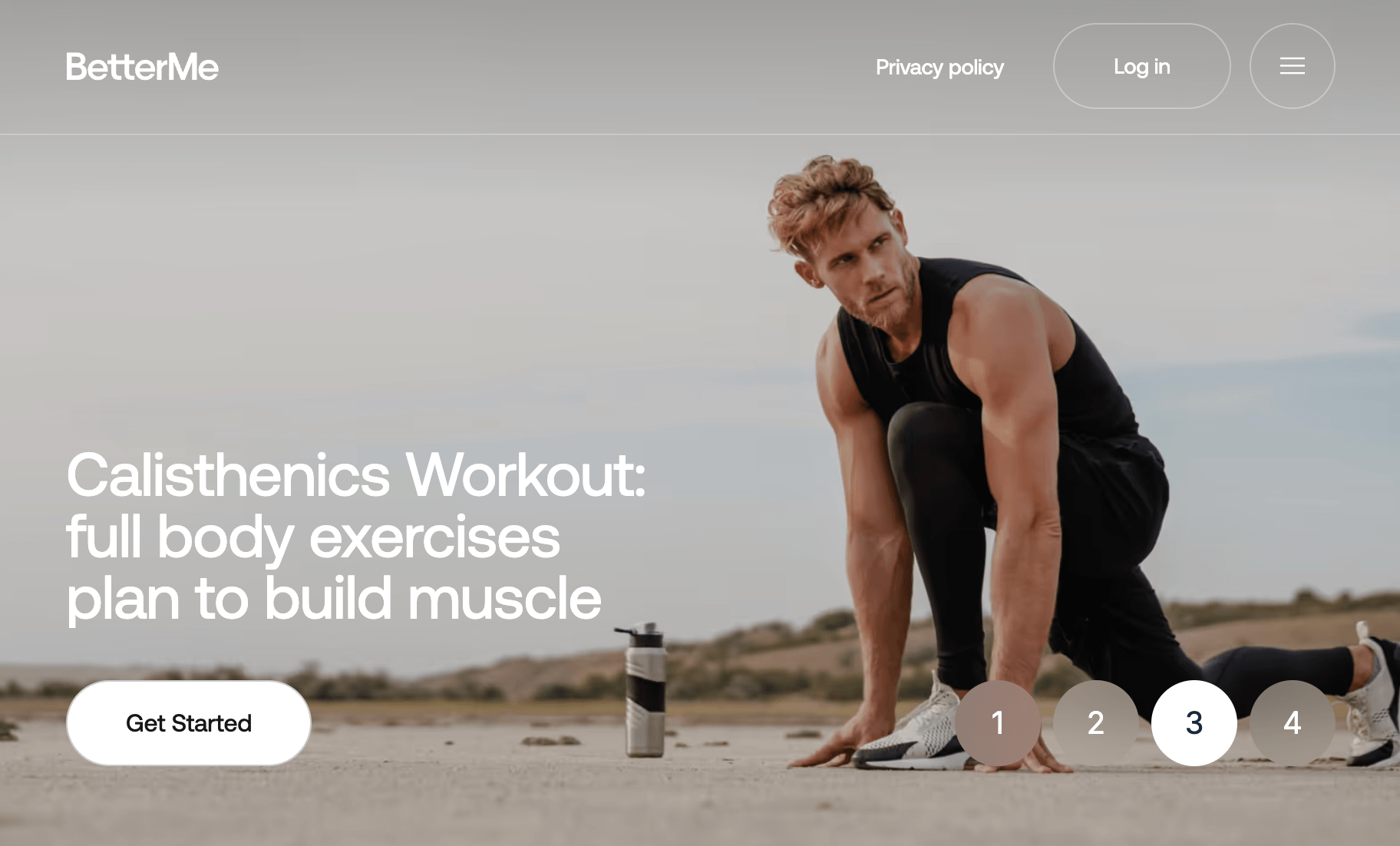
BetterMe bundles 3,000+ no-equipment workouts, meal plans, tracking and mindfulness into one beginner-friendly app — its viral Wall Pilates program alone is used by tens of millions.
Key Features and Technology
BetterMe packs a lot into one app, but it organizes cleanly into a handful of pillars. Here’s how the platform actually breaks down — including where it shines and where it falls short.
The Onboarding Quiz and “Personalized” Plans
Everything starts with a lengthy quiz. BetterMe asks about your age, gender, height, weight, goals (lose weight, build muscle, improve wellbeing), activity level, diet preferences, injuries and even your “dream body,” then generates a plan from your answers. The intake is thorough — reviewers say it takes eight to ten minutes — and it does a good job of making the plan feel tailored. The honest caveat: independent testers who compared notes found the “personalization” is largely template-based, with different quiz answers often producing very similar plans. The recommendations are perfectly reasonable starting points, but they’re closer to well-organized presets than a truly custom engine.
The Workout Library: Wall Pilates, Calisthenics and More
This is BetterMe’s strongest area. The 3,000+ workout library covers wall Pilates (the program that made it go viral), calisthenics and bodyweight strength, HIIT, yoga, stretching, chair-based routines and walking workouts. Sessions use clear video demonstrations and structured weekly schedules, and most need no equipment at all. Difficulty scales as you progress, and the emphasis on low-impact, modifiable movements makes it especially friendly for beginners, older users and anyone easing back into exercise. Reviewers repeatedly single out the workout variety and follow-along clarity as the app’s biggest wins.
Meal Plans, Recipes and Nutrition Tracking
On nutrition, BetterMe offers a large recipe collection and meal plans across many diets, plus calorie, water and weight tracking and an intermittent-fasting timer. The meal-plan and recipe side is solid for ideas and structure. The food-logging side, however, is the app’s clearest weak spot: the database is limited and awkward to search, portions can be hard to match, and serious calorie-counters consistently find it frustrating compared with dedicated trackers. If precise macro tracking is your priority, treat BetterMe’s food diary as a rough tool rather than the main event.
Mindfulness and BetterMe: Mental Health
BetterMe’s wellbeing side lives partly in the main app and partly in a separate BetterMe: Mental Health app. Together they offer guided meditations, breathing exercises, relaxation techniques, sleep sounds and deep-sleep programs, all aimed at stress, focus and rest. The Mental Health app is well-reviewed in its own right, averaging around 4.6/5, and the overall “mind and body” positioning is a genuine selling point. Note that the Mental Health app is generally a separate subscription from Health Coaching — a detail worth checking before you assume one purchase covers everything.
Coaching, Challenges and the BetterMe Band
For extra accountability, BetterMe sells one-on-one coaching, where a human coach provides daily guidance via chat — and coaching plans include a BetterMe Band fitness tracker (valued around $69.99) and even a weight-loss guarantee. Alongside coaching sit the app’s signature challenges and gamified goals. The important nuance is that these are mostly add-ons: the base subscription covers workouts and plans, but personal coaching, some challenges and coach messaging carry additional costs on top of your plan.
Pricing, Plans, and Package Structure
Pricing is BetterMe’s most controversial aspect, and it’s genuinely hard to pin down. The prices aren’t published on the site — you only see them after completing the quiz — and the number you’re shown varies by region, device, the ad funnel that brought you in, active promotions, and sometimes seemingly random factors, so different users are quoted very different prices. The app is free to download with a limited free version, and it typically offers a 7-day free trial (which requires payment details upfront and auto-renews into a paid plan). The figures below are approximate, based on 2025–2026 reviewer reports across markets, and are illustrative only — always confirm the exact price and renewal terms on your own quiz result screen before you pay.
| Plan / Product | Price (USD, approx.) | What It Is | Best For |
|---|---|---|---|
| Free version | $0 | Limited workouts and basic trackers | Trying the app before committing |
| 7-day free trial | $0 (card required) | Full access; auto-renews to a paid plan | Testing premium features risk-aware |
| 1-month plan | ~$19.99–$24.99+ | Monthly Health Coaching subscription | Short-term, maximum flexibility |
| Multi-week welcome offer | ~$15–$95 (varies) | Discounted 4- to 12-week intro plan | First-time sign-ups after the quiz |
| 12-month plan | ~$149.99 reg. (often heavily discounted) | Annual Health Coaching, best per-month rate | Committed long-term users |
| One-on-one coaching | +~$29.99 (incl. Band, ~$69.99 value) | Human coach + weight-loss guarantee | Users who want accountability |
| BetterMe: Mental Health | Separate subscription | Meditation, breathing and sleep app | Stress, focus and better sleep |
How BetterMe Compares to Alternatives
| Factor | BetterMe | Noom | Simple |
|---|---|---|---|
| Primary focus | All-in-one fitness, nutrition & mindfulness | Psychology-based weight loss | AI-guided fasting & weight loss |
| Workout content | 3,000+ workouts; viral Wall Pilates | Limited (add-on fitness) | Minimal |
| Human coaching | Paid add-on (+ per-message chat) | Included in plan | No human coach (AI “Avo”) |
| Nutrition tracking | Basic food diary + fasting | Color-coded, 3M+ food database | Fasting-first + food logging |
| Entry price (approx.) | ~$15–$50/mo; ~$150/yr reg. | ~$70/mo; ~$209/yr | Free tier; ~$50–$60/yr Premium |
| Free tier | Yes (limited) | Trial only (pay-what-you-can) | Yes (limited) |
| Best for | Beginners wanting variety & home workouts | Habit & mindset-driven weight loss | Fasting-first, budget AI coaching |
vs. Noom: Noom is the heavyweight in psychology-led weight loss, built around daily CBT-style lessons, a color-coded food system with a 3-million-plus food database, and human coaching included in the plan — but it’s pricier (roughly $70/month or ~$209/year) and focused almost entirely on weight, not workouts. BetterMe is broader and cheaper on its annual rate, with far more exercise content and a mindfulness app, but its coaching is a paid add-on and its food tracking is weaker. Choose Noom if behavior-change coaching and serious food logging are the point; choose BetterMe if you want workouts, variety and an all-in-one hub.
vs. Simple: Simple is a fasting-first app with an AI coach (“Avo”) and a genuinely useful free tier, with Premium landing around $50–$60 a year — cheaper than BetterMe and less aggressive on upsells, but much narrower, with minimal workout content and no human coaching. If intermittent fasting on a budget is your main goal, Simple is the leaner pick; if you want guided workouts and a self-love, whole-lifestyle approach, BetterMe covers far more ground.
vs. free and single-purpose apps: A committed DIYer can approximate BetterMe for less — Nike Training Club offers hundreds of free workouts, MyFitnessPal (free, or ~$19.99/month premium) does far deeper food tracking, and Calm or Headspace handle meditation. The trade-off is convenience: BetterMe’s value is putting fitness, nutrition and mindfulness in one guided place for a beginner who doesn’t want to assemble a stack of apps. If you value that consolidation and hand-holding, BetterMe earns its keep; if you’d rather optimize each piece and pay less, the à-la-carte route wins.
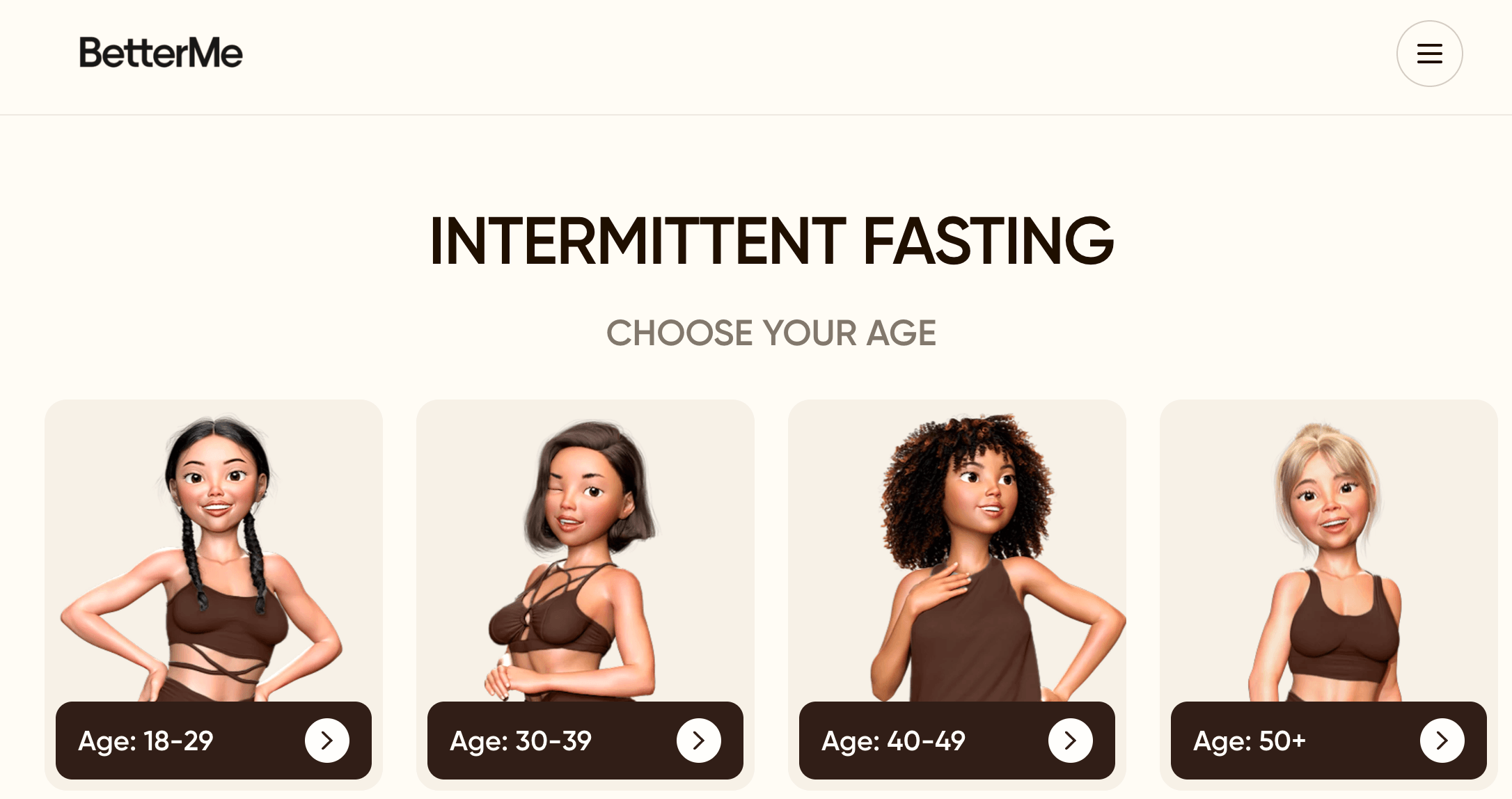
BetterMe’s edge is breadth and convenience — workouts, meal plans, tracking and mindfulness in one app — while rivals like Noom go deeper on coaching and food logging.
Pros and Cons
What Users Love
Approachable and genuinely inclusive: The most consistent praise across reviews is how welcoming BetterMe feels. People returning from injury, older users, complete beginners and those with mobility limits repeatedly say it’s one of the few apps that didn’t feel intimidating — modifiable workouts and a self-love framing lower the barrier to just starting.
Huge workout variety, especially Wall Pilates: Owners love that they rarely run out of new routines. The library spans Pilates, calisthenics, HIIT, yoga, stretching and walking, and the viral Wall Pilates program in particular gets credit for making low-impact exercise feel doable and even fun at home.
All-in-one convenience: Having workouts, meal ideas, tracking and mindfulness in a single app is a recurring favorite. For beginners who feel overwhelmed by juggling multiple fitness tools, that consolidation is exactly what keeps them engaged.
Motivating challenges and gamification: Streaks, step goals and time-boxed challenges are among the most-praised features. Users say the short, achievable targets and progress celebrations give them the accountability and momentum they need to actually stay consistent.
A healthier, self-love mindset: Many reviewers specifically chose BetterMe because it emphasizes self-acceptance over restriction. The modules on self-talk, body image and a better relationship with food resonate with people who’ve burned out on harsh diet apps.
Customer service that often comes through: Despite the billing criticism, a striking number of recent Trustpilot reviews describe fast, polite support — replies within about 30 minutes, and refunds or extra trial time offered when charges were disputed. When users actually reach the team, the resolution is frequently positive.
Limitations Worth Knowing
Opaque, variable pricing: This is the number-one frustration. Prices aren’t shown until after a long quiz, and they change based on region, device, funnel and promotion, so users are quoted wildly different amounts for the same app. It’s genuinely hard to know the “real” price, which erodes trust before you even subscribe.
Aggressive auto-renewal and hard cancellation: BetterMe has accumulated thousands of complaints about unexpected charges after trials, difficulty cancelling, and a trial-to-subscription funnel designed to convert quickly. It’s not accredited by the Better Business Bureau and carries an “F” rating there. Deleting the app doesn’t stop billing — you must cancel through your app store settings.
“Personalization” is template-based: The onboarding quiz implies a deeply custom plan, but testers who compared results found different answers often yield very similar plans drawn from a template library. The plans are fine starting points — they’re just not the bespoke experience the marketing suggests.
Weak food and nutrition tracking: The food database is limited and clunky to search, portions are hard to match, and dedicated calorie-counters find logging frustrating. If accurate nutrition tracking matters to you, BetterMe’s diary won’t satisfy — you’ll likely want a separate tracker.
Many features cost extra: One-on-one coaching, certain challenges and coach messaging (reported around $3.99 each) sit on top of the base subscription, and even printing some workouts has been gated behind payment. The all-in-one promise comes with a lot of à-la-carte upsells that can inflate your real monthly cost.
Not for advanced users or live-class fans: There are no live classes, no real-time human community, and limited depth for experienced athletes chasing progressive programming. Some reviewers also note the app’s marketing leans on idealized body imagery. Serious lifters, data-driven trackers and people who want a coach-led community will hit BetterMe’s ceiling quickly.
Who Should Use BetterMe
Complete beginners and returning exercisers: This is BetterMe’s sweet spot. If you’re starting from zero, coming back after a long break, or easing around an injury, the modifiable workouts, gentle pacing and self-love framing make it one of the least intimidating ways to build a habit.
Home and no-equipment workout seekers: If you want to exercise at home without a gym or gear — and especially if the viral Wall Pilates trend is what drew you in — the enormous, no-equipment library delivers plenty of variety to keep you going.
People who want one wellness hub: If juggling separate apps for workouts, meals and meditation feels like too much, BetterMe’s consolidation is the draw. It’s for the person who wants a single, guided starting point rather than a curated stack of best-in-class tools.
Those motivated by structure and challenges: If you thrive on streaks, daily reminders, short challenges and progress celebrations, BetterMe’s gamified approach is built for you. The accountability layer is a big reason casual users stick with it.
Who should look elsewhere: Serious calorie-counters, experienced athletes chasing progressive programming, people who want live classes or a real human community, and strictly budget-focused users will hit BetterMe’s limits. For those, a dedicated tracker like MyFitnessPal, a coaching-led program like Noom, free workout libraries like Nike Training Club, or a budget fasting app like Simple will fit better — and anyone wary of auto-renewal funnels should go in clear-eyed about the billing.
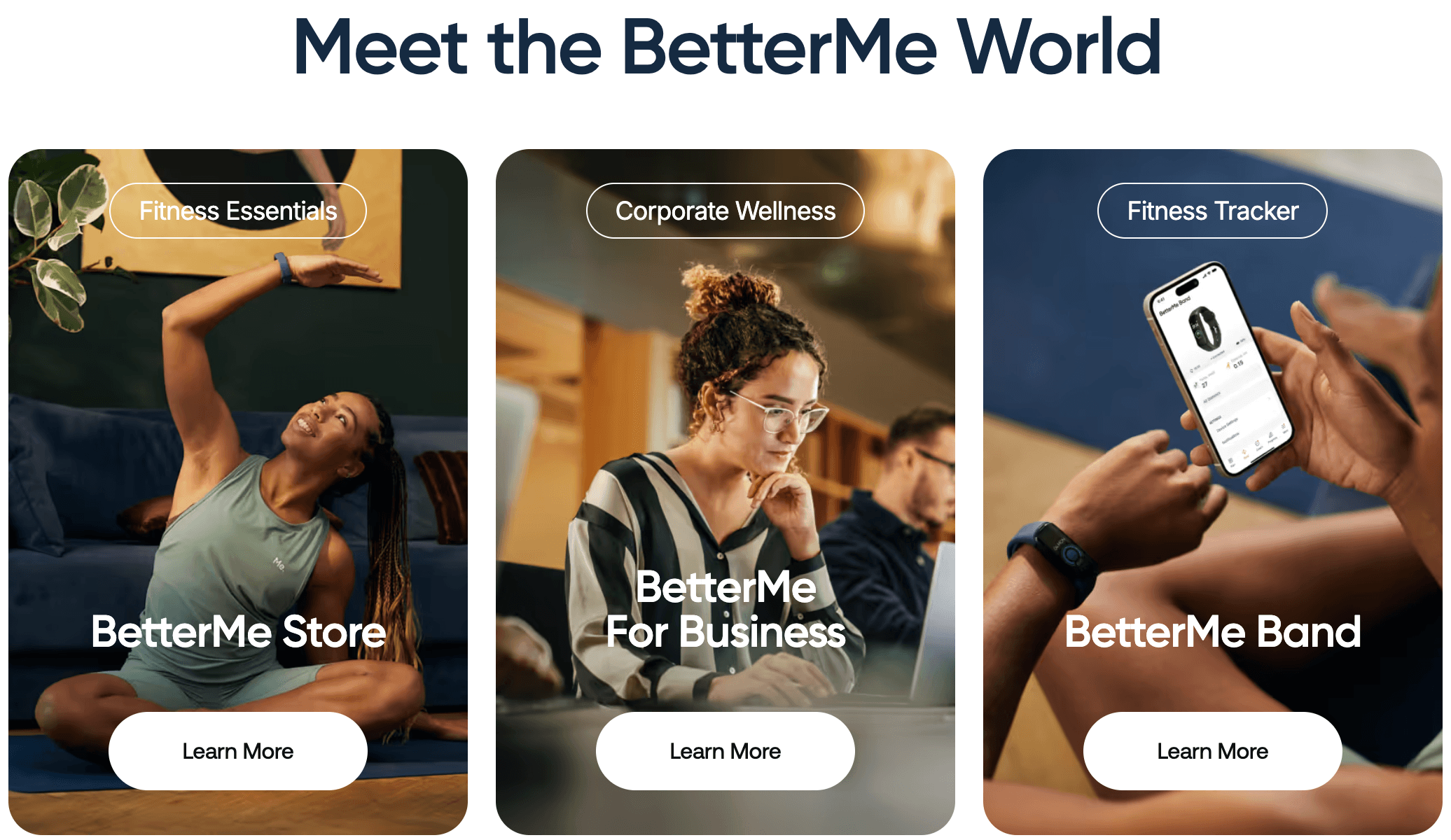
BetterMe shines as a low-pressure on-ramp for beginners — approachable home workouts, meal ideas and mindfulness in one place, with challenges to keep you consistent.
Getting Started: Step by Step
- Pick your app and start on mobile. Decide whether you want BetterMe: Health Coaching (workouts, meals, tracking) or BetterMe: Mental Health (meditation and sleep) — or both. Reviewers recommend signing up on your phone rather than desktop, as the mobile flow is smoother and faster.
- Complete the onboarding quiz honestly. Answer the questions on your goals, activity level, diet preferences and any injuries. The intake is long (about 8–10 minutes), but thorough answers produce a more sensible starting plan.
- Read the price screen carefully. Your actual price only appears after the quiz and can differ from what others pay. Compare the plan options, note whether a free trial is attached, and decline any upsells (coaching, extra challenges) you don’t need right now.
- Enter payment and set a cancellation reminder. If you take the 7-day trial, add a calendar reminder a day or two before it ends. To avoid a charge, you must cancel through your app store at least 24 hours before the trial or period renews.
- Start your plan. Open the Trainings section for your assigned workouts (or explore the full library), then use the trackers for steps, water, calories and fasting, and try a guided meditation. Consistency beats intensity early on — short daily sessions build the habit.
- Manage your subscription from your app store. Remember that deleting the app does not cancel billing. On iPhone, go to Settings > your name > Subscriptions > BetterMe; on Android, Google Play > Subscriptions > BetterMe. Cancel there if it’s not for you, and contact support at support@betterme.world for any billing questions.
Tips for Getting Maximum Value
Always finish the quiz to reveal your real offer, then pick the longest plan you’re genuinely confident you’ll use — the per-month cost drops sharply on multi-month and annual terms, and BetterMe runs frequent seasonal sales (New Year, Black Friday, back-to-school) plus occasional coupon codes, so timing your purchase around a promotion pays off. Lean into what’s included in the base plan — the huge workout library, meal ideas and mindfulness content — and think twice before adding paid coach chat (around $3.99 a message) or extra challenges that quietly push the monthly total toward $30–$40. Use the free trial fully to decide if the app fits your routine, and set a reminder to cancel through your app store settings if it doesn’t, since deleting the app won’t stop billing. And if precise nutrition tracking matters to you, pair BetterMe’s workouts with a dedicated food logger like MyFitnessPal rather than relying on its basic diary — you’ll get the best of both without overpaying for features one app does poorly.
Future Outlook and Final Assessment
The digital-wellness market in 2026 is crowded and maturing fast, and BetterMe sits near the top of it on sheer reach — 100 million-plus downloads, tens of millions of Wall Pilates users, and a marketing machine few rivals can match. Its strategic advantages are real: a genuinely all-in-one platform, a strong inclusivity and self-love positioning that resonates with beginners, and a broad ecosystem spanning fitness, nutrition, mental health, corporate wellness and hardware. As AI personalization improves across the category, BetterMe’s scale and content depth give it room to keep refining plans and expanding programs.
The honest caveats remain, and they’re mostly about trust rather than content: opaque, variable pricing, an auto-renewal system that has generated an “F” BBB rating and thousands of billing complaints, template-based “personalization,” and weak food tracking. Cheaper, more focused rivals like Simple undercut it on price, while coaching-led programs like Noom go deeper on behavior change and food logging. But within its lane — getting a beginner moving at home with variety, structure and a kinder mindset — BetterMe remains one of the most complete and approachable options available, provided you go in with clear eyes about the billing.
Conclusion
BetterMe isn’t trying to be the deepest fitness tracker or the most clinical weight-loss program — it’s trying to be the friendliest front door to a healthier life, and at that job it’s remarkably effective. By combining a vast, no-equipment workout library, flexible meal plans, guided mindfulness and a self-love philosophy in one app, it removes the biggest obstacle most beginners face: knowing where to start. It rewards realistic expectations and a little diligence around pricing, and it’s not the right call for advanced athletes, serious calorie-counters or anyone who dislikes aggressive auto-renewal funnels. But for the everyday reality of starting at home and staying consistent, few wellness apps make it easier. Finish the quiz to see your real price, time your purchase around a promotion, manage the subscription through your app store — and BetterMe can turn “someday” into a routine you actually keep.
Ready to start a healthier routine you’ll actually stick with?
Explore more honest reviews, tutorials and tech comparisons to find the right gear for the way you work, travel and live — at World Of Tech, where we make everything easy.
👉 Try BetterMe: https://betterme.world/
👉 Our YouTube Channel: youtube.com/@world_tech79
👉 Our Facebook Fanpage: Facebook
👉 Our X (Twitter): @worldoftech79
Pricing, specifications and policy details in this review were verified against betterme.world and independent review sources (including Trustpilot, the Apple App Store, Google Play and hands-on reviewer testing) as of July 2026. Wellness-app pricing, plans and promotions change frequently and vary by region, device and offer, so confirm current details on the official site before purchasing. Competitor prices are approximate and subject to change.