
Landing in a new country and watching your phone hunt for a signal — or worse, seeing a roaming warning pop up before you’ve even left the jet bridge — is one of travel’s small but persistent headaches. eSIMX is built to remove that moment entirely. It’s a digital SIM marketplace covering 190+ countries and regions, where you pick a destination, buy a data plan from your browser or the mobile app, and get a QR code by email that activates the instant you land. No SIM tray, no airport kiosk, no juggling a tiny piece of plastic in a foreign currency. Backed by Skylark Connect LLC and priced from as little as $2.50, eSIMX positions itself as a budget-friendly alternative to the bigger, more expensive eSIM brands travelers already know by name.
For backpackers, digital nomads, business travelers and anyone tired of “bill shock” roaming charges, the pitch is straightforward: keep your home number for calls and texts, add a cheap local data plan for the trip, and stay online the moment you touch down. But eSIMX isn’t the market leader for a reason, and an honest look turns up a genuinely mixed customer-service track record alongside the low prices. This 2026 review walks through how eSIMX actually works, its full pricing structure across regions like Japan, Europe and Global plans, how it stacks up against Airalo and Holafly, the real pros and cons based on independent reviews, and exactly who should — and shouldn’t — buy in.
eSIMX Review 2026: The Budget Travel eSIM Covering 190+ Countries
Overview and Background
eSIMX is a prepaid travel eSIM service operated by Skylark Connect LLC, listed at 222 Pacific Coast Hwy, El Segundo, CA. It isn’t a mobile network in its own right — like every eSIM reseller, it partners with local carriers in each destination and packages that access into simple, prepaid data plans you activate with a QR code. The company describes itself as a digital channel that connects travelers to local mobile offers rather than a telecom operator, which is the standard structure for this category of product.
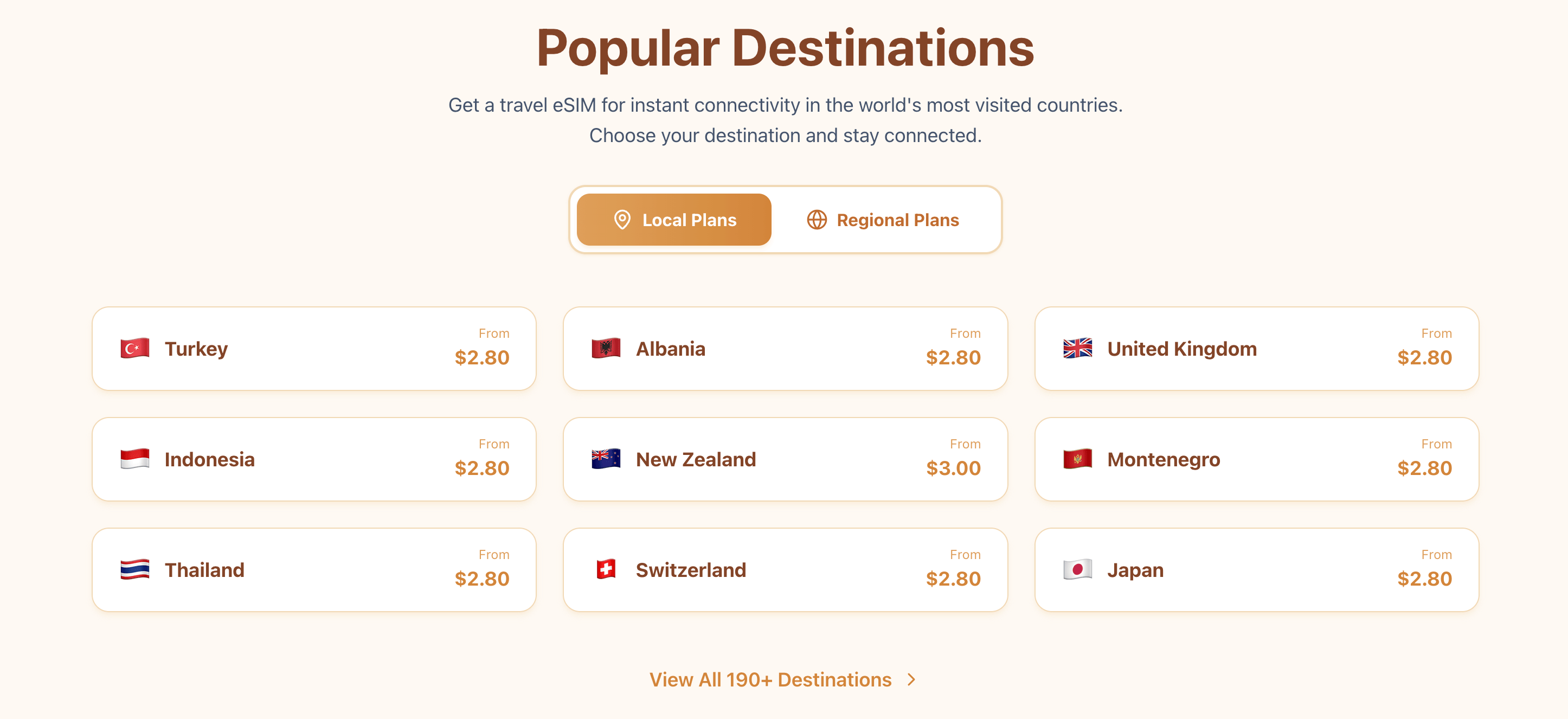
The core value proposition is coverage plus price. eSIMX advertises data plans in 190+ countries and regions, with entry-level pricing starting around $2.50 — noticeably below the household-name brands. It also leans into a few differentiators most competitors skip: cryptocurrency payment support (USDT and other major coins), a 10% cashback rewards program paid in its own “XCoins” currency for future purchases, and the ability to bundle up to five eSIMs into a single order for group or family trips. The service is available through both a website checkout and dedicated iOS and Android apps, and the app listings (App Store and Google Play) give travelers who prefer managing everything from their phone a native option rather than relying purely on the mobile web checkout.
On independent review platforms, eSIMX sits in a very different tier from the market leaders. Trustpilot lists the company as “Average” with a 3.2 out of 5 score across 36 reviews — 55% five-star, but a striking 33% one-star, with the platform noting eSIMX “hasn’t replied to negative reviews.” That’s a smaller, more polarized review base than giants like Airalo (roughly 33,000 reviews, around 4.0/5) or Holafly (over 100,000 reviews, 4.7/5), and it’s the single most important data point to weigh before you buy.
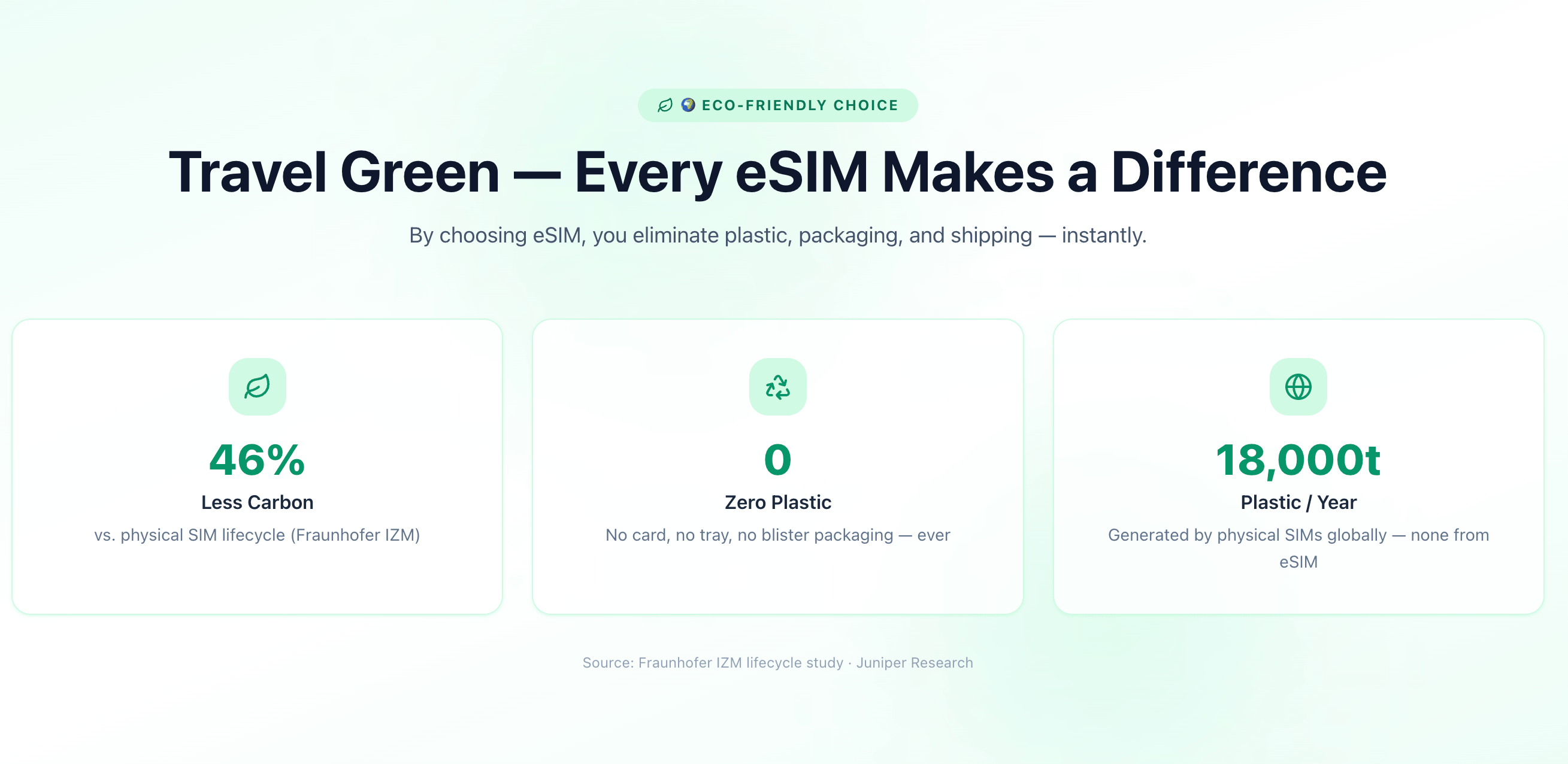
eSIMX also runs a referral program on top of its standard cashback, letting existing customers earn extra XCoins for bringing in new travelers — a fairly common growth mechanic in this category, but one more small incentive layered on top of an already low base price. The company markets itself heavily around eco-friendly positioning too, framing every eSIM sold as a small win against the roughly 18,000 tonnes of plastic that physical SIM cards generate worldwide each year, and citing third-party lifecycle research to back the claim. None of this replaces the core question of whether the connection actually works when you land — but it does show a company trying to differentiate on more than price alone in a crowded field of near-identical eSIM resellers.
Why eSIMX Stands Out in 2026
Genuinely low entry pricing: eSIMX’s headline plans start around $2.50–$2.80, and even full-country plans with several gigabytes of data routinely land under $10. For short trips or travelers who mainly need maps and messaging, this undercuts most of the recognizable brand names by a meaningful margin.
Cryptocurrency payment support: Alongside standard credit cards and Apple Pay/Google Pay, eSIMX accepts USDT and other major cryptocurrencies at checkout — a genuinely rare option among travel eSIM providers and a real convenience for crypto-native travelers or those in regions with limited card access.
10% cashback in XCoins: Every purchase earns 10% back as XCoins, redeemable against future eSIM orders. It’s a modest but real incentive for repeat travelers who buy a new eSIM for every trip.
Up to five eSIMs in one order: Group trips and family vacations are handled in a single checkout — everyone gets their own eSIM and QR code without placing separate orders, which is a small but genuinely useful workflow improvement.
Broad, granular plan menu: Destinations like Japan offer a dense matrix of options — daily-capped “unlimited” tiers, fixed 3GB to 30GB packages, and multiple validity windows (7, 15, 30 days) — so you can match a plan closely to trip length instead of overpaying for unused data.
Dual-SIM number retention: Like every serious eSIM provider, eSIMX plans run as a second, data-only line, so your home number stays active for calls and texts while the eSIM handles data — no missed messages, no need to notify contacts of a temporary number.
Eco-conscious positioning: eSIMX cites Fraunhofer IZM lifecycle research claiming roughly 46% less carbon impact than a physical SIM, and points to the roughly 18,000 tonnes of plastic physical SIM production generates globally each year. It’s a genuine, if secondary, byproduct of the eSIM format rather than a unique eSIMX feature — but the company puts real emphasis on it as a brand pillar.
eSIMX delivers a QR code by email within seconds of purchase — install it before you fly and it activates automatically the moment you land.
Key Features and Technology
eSIMX’s product is simpler than a phone plan by design — there’s no contract, no physical card, and no carrier store visit. Here’s how the platform actually works under the hood.
QR-Code Activation and Instant Delivery
After checkout, eSIMX emails a QR code within seconds. You scan it under Settings > Cellular/Mobile Data > Add eSIM on a compatible device, and the profile installs immediately. Crucially, the plan itself doesn’t start counting down until you arrive and connect to a local network — so there’s no risk in installing the eSIM at home on stable Wi-Fi days before you fly.
Three Plan Types: Fixed, Unlimited, and Voice+SMS
Most destinations offer fixed-data plans (a set number of GB valid for a set number of days) alongside “unlimited” plans that provide full-speed data up to a daily cap — typically around 2GB per day — before dropping to a reduced but still usable minimum speed of 128 kbps. Select destinations, including Global and Europe plans, also offer voice-and-SMS bundles with a limited number of minutes and texts alongside the data allowance, useful if you need a functioning local-style number rather than pure data.
Device Compatibility
eSIMX supports the standard modern eSIM device range: iPhone XS, XS Max, and XR onward (including the 11 through 15 series), Google Pixel 3 and newer, and Samsung Galaxy S20/Note 20 and newer. Your device also needs to be carrier-unlocked — a phone still locked to your home carrier can’t add a second provider’s eSIM, regardless of how new it is.
Hotspot, Multi-Device, and No Top-Ups
Most plans support personal hotspot/tethering so you can share the connection with a laptop or tablet, though unlimited plans may cap hotspot data separately from the main allowance — check the specific plan page. One real limitation: eSIMX currently does not support topping up a plan once you’re using it. If you run out of data or need more time, the fix is buying an entirely new eSIM rather than extending the existing one, which is less flexible than providers offering in-app top-ups.
Payment Options and Support Channels
Checkout accepts standard credit cards, Apple Pay, and Google Pay, plus USDT and other major cryptocurrencies — a combination most competitors don’t offer side by side. eSIMX states its support team is available 24/7 by email, live chat on the website, and WhatsApp, with a stated response target of around five minutes during business hours and up to an hour otherwise. In practice, the Trustpilot review record tells a more mixed story: some customers describe fast, helpful responses that resolved coupon or activation issues, while others report emails going unanswered for days after a failed purchase. Independent third-party testers have also noted the web checkout experience feels a step less polished than app-first competitors, even though a dedicated eSIMX app does exist for both iOS and Android.
Pricing, Plans, and Package Structure
eSIMX is a prepaid, one-time-purchase model — there’s no subscription and no auto-renewal to worry about. Pricing varies significantly by destination and data volume, but the pattern holds across regions: small, short-validity plans start under $5, and pricing scales up with data volume and validity window. The table below uses Japan and Global plans as representative examples pulled directly from eSIMX’s live pricing pages; European country pricing follows a similar structure starting around $2.80 for entry-level plans.
| Product | Price (USD) | What It Is | Best For |
|---|---|---|---|
| eSIM Europe | From ~$2.80 | Regional data plan, 30+ countries | Multi-country European trips |
| eSIM Japan – 3GB / 7 Days | $3.50 | Fixed-data country plan | Short weekend Japan trips |
| eSIM Japan – 10GB / 30 Days | $10.80 | Fixed-data country plan | Standard 1–2 week Japan trip |
| eSIM Japan – 20GB / 30 Days | $15.80 | Fixed-data country plan | Heavier data users, longer stays |
| eSIM Japan – Unlimited Daily 2GB / 7 Days | $7.90 | Daily-capped unlimited data | Travelers who don’t want to track usage |
| eSIM Global – 3GB / 30 Days | $10.00 | Multi-region fixed data, data-only | Light use across multiple countries |
| eSIM Global – 20GB / 30 Days w/ Calls | $33.80 | Global data + 15 min calls + 50 SMS | Long, multi-country business trips |
How eSIMX Compares to Alternatives
| Factor | eSIMX | Airalo | Holafly |
|---|---|---|---|
| Japan 10GB/30-day price (approx.) | $10.80 | ~$18.00 | Unlimited only — from ~$74.90/30d |
| Trustpilot score | 3.2 / 5 (“Average,” 36 reviews) | ~4.0 / 5 (~33,000 reviews) | 4.7 / 5 (“Excellent,” 100,000+ reviews) |
| Unlimited data plans | Yes, daily-capped (~2GB/day) | Yes, daily-capped (~3GB/day) | Yes — unlimited-only brand |
| Top-up support | Not supported | Yes, in-app | Yes, via app |
| Crypto payment support | Yes (USDT + major coins) | No | No |
| Cashback / rewards | 10% back in XCoins | Referral credit only | HolaCoins on referral |
| Best for | Budget-conscious, low-stakes trips | Balance of price, app polish and support | Long stays needing worry-free unlimited data |
eSIMX vs. Airalo: Airalo is the more established, better-reviewed marketplace, with a polished app, in-app top-ups, and a much larger review base to lean on. eSIMX generally undercuts it on price — sometimes by close to half on fixed-data country plans — but gives up the top-up flexibility and the reassurance of tens of thousands of independent reviews. If price is the deciding factor and you’re comfortable buying a fresh eSIM instead of topping up, eSIMX is the cheaper route; if you want a safer bet backed by broad review volume, Airalo is the more conservative choice.
eSIMX vs. Holafly: These two aren’t really competing for the same buyer. Holafly sells unlimited-only plans at a real premium and backs them with a 4.7/5 Trustpilot score across over 100,000 reviews — it’s built for travelers who want to stop thinking about data entirely and are willing to pay for that peace of mind. eSIMX is the budget, pay-for-what-you-use alternative: cheaper on a per-GB basis, but with a far thinner and more mixed review record. For long-stay digital nomads who value reliability above all else, Holafly’s price premium buys real assurance; for a short trip where a data hiccup is an inconvenience rather than a crisis, eSIMX’s lower price is easier to justify.
Pros and Cons
What Users Love
Genuinely cheap plans: The most consistent praise across reviews is price — travelers repeatedly note eSIMX comes in noticeably lower than the recognizable brand-name providers for comparable data.
Fast, painless setup when it works: Multiple reviewers describe activation as quick and straightforward, with the eSIM connecting automatically on arrival and no unusual configuration required.
Responsive support for some customers: A share of reviewers specifically credit eSIMX’s customer service team for resolving coupon and connectivity issues promptly, including proactive replies to public reviews acknowledging problems and offering refunds.
Solid real-world performance in Southeast Asia and parts of Europe: Several travelers report reliable connectivity across Thailand, Tunisia, and Turkey specifically, describing consistent 4G/5G access without major dropouts.
Useful group-trip and payment flexibility: The ability to order up to five eSIMs at once, plus support for cryptocurrency payments, are two small features that repeat travelers and privacy-conscious buyers specifically call out as reasons to choose eSIMX over a bigger brand.
Limitations Worth Knowing
A meaningful share of failed activations: Trustpilot’s 33% one-star rate isn’t noise — multiple reviewers report eSIMs that never activated on the provider’s end, with no working connection for the entire trip.
Inconsistent support responsiveness: Trustpilot itself flags that eSIMX “hasn’t replied to negative reviews,” and several one-star reviews describe unanswered emails and messages after a failed purchase — a sharp contrast with the prompt support other reviewers describe, and hard to predict in advance.
Refund friction after activation: The 30-day money-back guarantee only applies cleanly to unactivated eSIMs; once you’ve used the eSIM, refunds are evaluated case by case, and several reviewers report promised refunds that were delayed or never processed.
No top-up option: Running low on data mid-trip means buying an entirely new eSIM rather than extending your current plan — a real inconvenience compared to Airalo and Holafly, both of which support in-app top-ups.
Variable network quality by region: Reviews describe speed and stability that varies meaningfully by destination — solid in some countries, frustratingly intermittent in others (Bali and parts of Eastern Europe are specifically called out), which is common across budget resellers but worth factoring into a high-stakes trip.
eSIMX’s plan menu spans 190+ destinations, from single-country data packages to multi-region Global plans with optional calling minutes.
Who Should Use eSIMX
Budget travelers on short trips: If you need a few gigabytes of data for a week or two and want the cheapest reasonable option, eSIMX’s pricing is hard to beat, and the downside of a failed activation is limited to a short window.
Group and family trips: The five-eSIMs-per-order feature genuinely simplifies buying for a family or small group traveling together, saving repeated checkouts.
Crypto-native travelers: If you already hold USDT or other major cryptocurrencies and prefer not to route travel purchases through a credit card, eSIMX is one of the few providers in this category that accepts crypto directly.
Repeat travelers who’ll use the cashback: The 10% XCoins reward only compounds in value if you’re buying eSIMs regularly — occasional travelers won’t get much benefit from it.
Travelers who can tolerate some risk for a lower price: If you’re the type who’s comfortable troubleshooting a settings menu or buying a quick backup plan if something doesn’t work, the savings on eSIMX are easy to justify. If a connectivity hiccup would genuinely ruin your trip, that risk tolerance matters more than the price difference.
Who should look elsewhere: If you’re traveling for business, on a long-term nomad stint, or on a trip where losing connectivity for even a few hours is genuinely costly, the review record makes a stronger case for Airalo or Holafly — both carry far larger, more consistent review bases and, in Holafly’s case, unlimited data with a real support infrastructure behind it. Travelers who specifically need in-app top-ups, since eSIMX doesn’t offer that, should also look at a competitor first.
Getting Started: Step by Step
- Confirm your device is eSIM-compatible and unlocked. Check Settings for an “Add eSIM” or “Add Cellular Plan” option, and confirm with your home carrier that the device isn’t locked.
- Pick your destination and plan. Browse esimx.com or the app, choose your country or region, and select a fixed-data, unlimited, or voice+SMS plan based on your trip length and expected usage.
- Check out with your preferred payment method. Pay by card, Apple Pay/Google Pay, or cryptocurrency (USDT and other major coins are supported).
- Install the eSIM before you fly. Open the confirmation email, scan the QR code under Settings > Cellular/Mobile Data > Add eSIM, and complete setup while still on home Wi-Fi — the plan won’t start counting down yet.
- Land and turn on data roaming. Your eSIM activates automatically once it connects to a local network at your destination — no manual switch needed beyond enabling data roaming for that line.
- Keep a backup plan for anything critical. Given the mixed activation track record, consider testing connectivity soon after landing, and have hotel Wi-Fi or a backup option in mind if you’re relying on the eSIM for something time-sensitive.
Tips for Getting Maximum Value
Because top-ups aren’t supported, round your data estimate up rather than down — buying a 10GB plan instead of a tight 5GB estimate costs a few extra dollars but avoids the hassle of purchasing an entirely new eSIM mid-trip if you run out. If your itinerary spans several countries in the same region, compare a regional plan (Europe, Asia, Global) against buying single-country eSIMs separately — the regional option is often cheaper once you’re crossing three or more borders, even though the per-GB rate on the label looks higher. Install your eSIM at home on Wi-Fi a few days before departure, not at the airport gate, since installation issues are much easier to troubleshoot with a reliable internet connection and time to spare. If you’re a frequent traveler, register an account before your first purchase so your 10% XCoins cashback accrues and compounds across trips rather than starting from zero each time. And given the mixed support record on record, keep your purchase confirmation email and take a screenshot of your QR code immediately after buying — if you do need to escalate a support issue, having your order details ready speeds up any resolution.
It’s also worth testing your connection within the first hour after landing rather than waiting until you actually need it — if the eSIM hasn’t activated properly, you’ll want that discovered at the airport with Wi-Fi and information desks nearby, not an hour later when you’re already checked into a hotel with no way to look up troubleshooting steps. If you’re traveling to a destination with dense carrier competition — much of Western Europe and East Asia — check whether eSIMX lists the specific network it partners with on that country’s plan page; a named, well-known carrier (Orange, KDDI, Vodafone) is generally a stronger signal of reliable coverage than a plan page that stays vague about which network you’ll actually be on.
Future Outlook and Final Assessment
The eSIM category as a whole is only getting more competitive, and budget resellers like eSIMX are racing established brands on price while trying to close the gap on reliability and support infrastructure. eSIMX’s differentiators — crypto payments, XCoins cashback, and multi-eSIM ordering — are smart, low-cost additions that make sense for its target audience, and its 190+ country footprint is genuinely comparable to the bigger names. The company’s own testing note about daily-capped “unlimited” plans suggests a team paying attention to real usage patterns rather than just copying competitor pricing sheets.
Where eSIMX still has real ground to cover is consistency — both in network activation success and in how reliably support responds when something goes wrong. A 3.2/5 Trustpilot score with a third of reviews at one star, alongside the platform’s own note that the company hasn’t replied to negative reviews, is a legitimate red flag next to competitors sitting at 4.0-4.7/5 with far larger review bases. None of that erases the genuinely positive reviews describing fast, glitch-free trips — but it does mean the experience is less predictable than with a more established provider.
Adding in-app top-up support and investing more visibly in customer support response times would go a long way toward closing the gap with Airalo and Holafly without sacrificing the pricing advantage that makes eSIMX worth considering in the first place. With a still-small review base of 36 on Trustpilot, the company’s trajectory over the next year or two — whether the negative-review rate improves as it scales, and whether it starts replying to public complaints — will say more about its long-term trustworthiness than any single trip report can.
Conclusion
eSIMX earns its place in the conversation on price alone — 190+ destinations, plans starting under $3, crypto payment support, and a straightforward QR-code activation flow that works the way every eSIM should. It’s a legitimate option for budget-minded travelers, group trips, and anyone who wants to try the eSIM format without paying premium-brand prices. Just go in with clear eyes about the trade-off: a smaller, more mixed independent review record than Airalo or Holafly means a real chance of hitting an activation or support snag, so it’s better suited to a short vacation than a trip where connectivity failure isn’t an option.

With coverage across 190+ countries and regions, eSIMX aims to be a budget-friendly stand-in for roaming almost anywhere you travel.
Ready to skip the roaming fees on your next trip?
Explore more honest reviews, tutorials and tech comparisons to find the right gear for the way you work, travel and live — at World Of Tech, where we make everything easy.
👉 Shop eSIMX: https://worldoftech.space/esimx
👉 Our YouTube Channel: youtube.com/@world_tech79
👉 Our Facebook Fanpage: Facebook
👉 Our X (Twitter): @worldoftech79
Pricing, specifications and policy details in this review were verified against esimx.com and independent review sources including Trustpilot as of July 2026. eSIM pricing and plan availability change frequently and vary by destination, so confirm current details on the official site before purchasing. Competitor prices are approximate and subject to change.