If you have ever tried to make sense of your own cycle — guessing when your period will arrive, wondering whether a wave of fatigue is hormonal, or trying to time conception — you already know how much invisible mental work it takes. Flo was built to take that guesswork off your plate. It is a women’s health app that tracks your period, predicts ovulation and your fertile window, follows a pregnancy week by week, and now supports perimenopause, all wrapped around a huge library of doctor-reviewed content and an AI health assistant that answers questions in plain language. With more than 420 million downloads, around 77 million people using it every month, over 7 million five-star ratings, and a 4.8/5 App Store and 4.7/5 Google Play average, Flo isn’t a niche tool — it is the most-used women’s health app in the world and, in July 2024, the first purely digital women’s health app to reach a billion-dollar “unicorn” valuation.
For anyone who wants to understand their body better — whether you are simply tracking periods, actively trying to conceive, pregnant, or navigating the lead-up to menopause — the appeal is obvious: one well-designed app that turns scattered symptoms into patterns you can actually use, and conversations you can take to your doctor. But Flo is not flawless, and an honest look reveals real trade-offs around subscription billing, the line between “tracking” and genuine medical accuracy, and a privacy history that every prospective user deserves to know about. This 2026 review walks through everything Flo does — the full feature set across periods, fertility, pregnancy and perimenopause, the free-versus-Premium split and real-world pricing, how it stacks up against Clue and Natural Cycles, the genuine pros and cons drawn from hundreds of user reviews, the privacy story in full, and exactly who should (and shouldn’t) make it their tracker of choice.
Flo Review 2026: The World’s #1 Period, Ovulation and Pregnancy Tracker — Honestly Reviewed
Overview and Background
Flo is a women’s health app built by Flo Health Inc. (with a UK arm, Flo Health UK Limited). It is not a single-purpose period calendar — it is designed to follow a user across an entire reproductive life, from a first period through trying to conceive, pregnancy, postpartum and into perimenopause. The core idea is simple but powerful: you log what is happening in your body — period dates, flow, symptoms, mood, temperature, intimacy and more — and Flo turns that raw data into predictions, personalized insights, and educational content reviewed by medical professionals. Tracking and the community are free; deeper insights, the full content library and the AI health assistant sit behind an optional Premium subscription.
The company was founded in 2015 by brothers Dmitry Gurski (CEO) and Yuri Gurski, originally out of Belarus, and is today headquartered in London with its largest engineering hub in Vilnius, Lithuania, plus offices in Amsterdam and the United States. Flo grew from a straightforward period tracker into the category leader, overtaking rivals such as Clue and Glow. In July 2024 it raised more than $200 million in Series C funding from General Atlantic at a valuation above $1 billion, making it the first purely digital consumer women’s health app — and the first European femtech company — to hit unicorn status. (For context, that milestone also sparked a wider industry debate, because a women’s health company that prominent was founded and led by men; the funding itself, however, has been broadly welcomed as overdue investment in an under-funded field.)
Flo’s credibility rests heavily on its medical and scientific backing. The company says all health information it publishes is reviewed by a team of more than 100 doctors, scientists and medical experts, and it positions itself as the cycle-tracking app most recommended by obstetricians and gynecologists, citing its own survey of US OB-GYNs. It is a partner of the United Nations Population Fund on reproductive health, has published peer-reviewed research and launched clinical trials, and is the first period and ovulation tracker to earn dual ISO certifications for information security (ISO 27001) and privacy (ISO 27701). On Trustpilot the picture is more mixed — Flo sits at roughly four out of five stars across about 4,100 reviews, with glowing praise for accuracy and content offset by a steady stream of billing complaints — but its App Store (4.8/5) and Google Play (4.7/5) ratings, built on millions of reviews, are exceptionally high.
Why Flo Stands Out in 2026
It covers your whole reproductive life, not just your period: This is Flo’s defining advantage. Most trackers do one thing; Flo handles period and cycle tracking, an ovulation and fertility mode for trying to conceive, a full week-by-week pregnancy tracker, postpartum support and now perimenopause — all in a single app that adapts as your needs change. You don’t have to switch tools every time your life stage does.
Predictions that actually learn from you: Flo uses your logged history to forecast your next period, your fertile window and your likely ovulation day, and reviewers consistently describe the accuracy as the standout feature — often correct within a day or two once the app has a few cycles of data. It tracks more than 70 symptoms, so the longer you use it, the more personal and useful the picture becomes.
Doctor-reviewed content, not internet guesswork: Flo’s health library runs to hundreds of articles, videos and audio courses, co-created with a team of 100-plus health and medical experts. Instead of falling down a search-engine rabbit hole at 2 a.m., you get answers about your symptoms, fertility, pregnancy and menopause that have been vetted by clinicians — a genuine point of difference from free trackers that offer data in but little insight out.
An AI health assistant in your pocket: Flo’s virtual Health Assistant (sometimes branded “Ask Flo”) is an interactive chatbot, increasingly powered by large language models, that answers health questions and surfaces patterns based on your own data. Reviewers frequently describe it as feeling like a knowledgeable, judgment-free friend — and for sensitive questions people might hesitate to ask aloud, that matters.
A community built for candid conversations: Secret Chats is Flo’s anonymous, in-app community space — free to use — where members discuss topics they might not raise anywhere else, from irregular cycles and PCOS to fertility struggles and intimacy. It turns a solo tracking app into a place where users feel less alone, which comes up again and again in positive reviews.
Privacy features that lead the category: After a rocky data history (covered honestly below), Flo invested heavily in privacy. It is the only women’s health app with dual ISO certifications for security and privacy, complies with the UK’s GDPR regime, and offers a free Anonymous Mode that strips your name, email and technical identifiers from your health data — so that if Flo ever received a legal request to identify an Anonymous Mode user, it could not fulfil it. That feature won an IAPP privacy award and a spot on TIME’s Best Inventions list.
Tools to share the load — and give back: Flo for Partners lets you share insights with a partner, who receives clinician-verified content about your cycle so you don’t have to explain everything yourself, while Flo for Family supports group plans (for example, a parent and teenage daughters tracking together). Through its Pass It On Project, Flo also gives Premium away free to tens of millions of women in dozens of underserved countries — a scale of social initiative few rivals match.
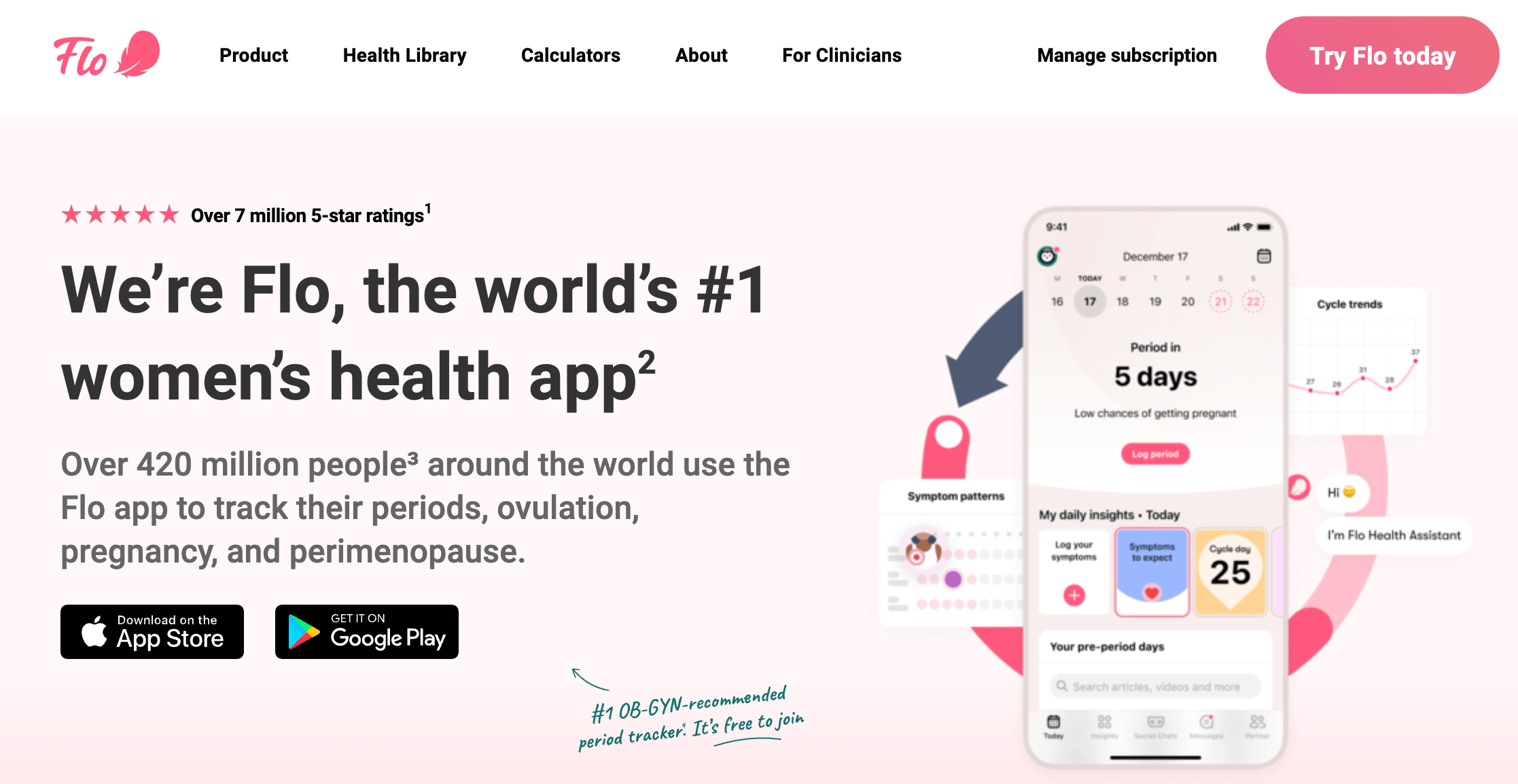
Flo turns the symptoms you log into period and ovulation predictions, doctor-reviewed insights and an AI health assistant — covering periods, fertility, pregnancy and perimenopause in one app.
Key Features and Technology
Flo packs a lot into one app, but it organizes cleanly around the life stages it supports and the tools that run across all of them. Here is how the platform actually breaks down.
Period and Cycle Tracking
The foundation of the app. You log the start and end of your period, flow intensity, and any of more than 70 symptoms — cramps, mood, skin, energy, sleep, libido and many more — and Flo predicts when your next period and PMS are likely to arrive. Over a few cycles it builds a personal baseline of what is normal for you, flags when something looks different, and (on Premium) analyzes cycle patterns so you can see, for example, how your mood, energy or skin shift across the month. For anyone who just wants to stop being caught off guard, the free tier alone handles this well.
Ovulation and Fertility Mode
Switch Flo into “getting pregnant” mode and it focuses on your fertile window and likely ovulation day, layering in daily conception tips from its experts and guidance on reading your body’s fertility signals. Flo says millions of users have conceived while using it, and it is a recurring favorite among people managing PCOS or irregular cycles, where understanding patterns is harder. Important honest note: Flo’s fertility predictions are estimates to help you time conception, not a clinical guarantee of ovulation — and they are explicitly not a birth-control method.
Pregnancy Tracker
Once you mark a pregnancy, Flo becomes a week-by-week companion: it shows how your body and baby are developing, flags upcoming milestones, and provides a weekly checklist of what to do and when. Reviewers who used Flo throughout pregnancy frequently rate this mode as a highlight, praising the detail and the reassurance of having credible information in one place. The app also offers a suite of free calculators — due date, hCG, implantation, pregnancy-test timing and more — that you can use on the web without even installing it.
Perimenopause and Later-Life Support
One of Flo’s newer expansions addresses the often-overlooked perimenopause transition, helping users make sense of changing symptoms and feel less in the dark about what their body is doing. Several long-time users in their late 30s and 40s specifically credit this for keeping them oriented as cycles become less predictable, and for generating reports they can print and hand to a doctor. It is a deliberate move to keep users across their whole reproductive lifespan rather than losing them once family planning ends.
AI Health Assistant, Symptom Checker and Reports
Across every mode, Flo’s virtual Health Assistant chatbot answers questions and offers personalized tips based on your latest data, and a newer Symptom Checker helps you make sense of what you are experiencing. On Premium, Flo compiles personalized health reports — including a doctor’s report on iOS summarizing recent cycle and symptom history — that you can email, print and share with a healthcare provider. These tools are where Flo’s data-plus-content approach pays off, turning raw logs into something you can act on.
Privacy, Security and Integrations
Flo encrypts your data as standard, holds dual ISO certifications for security and privacy, and complies with GDPR as a UK-registered data controller. Its free Anonymous Mode lets you use the app without any personal identifiers attached to your health data — though it comes with trade-offs (no data recovery if you lose your phone, no Flo for Partners or Family, no wearable pairing, and limited account support). The app integrates with Apple Health and Google Health Connect, can pull temperature and other signals from wearables like the Apple Watch, and is FSA/HSA eligible in the US, letting many users pay for Premium with pre-tax health dollars.
Pricing, Plans, and Package Structure
Flo runs on a freemium model: a genuinely useful free tier, with an optional Premium subscription that unlocks the deeper insights, the full content library and unlimited AI assistant access. There is no one-time purchase — Premium is billed monthly or annually, with the yearly plan paid in a single upfront payment and usually working out far cheaper per month. Pricing varies noticeably by country, plan and promotion, and Flo runs frequent seasonal sales, so the figures below are approximate and you should always confirm the live price (and any active coupon) during sign-up before you commit.
| Plan | Price (USD, approx.) | What It Is | Best For |
|---|---|---|---|
| Flo Free | $0 | Period & ovulation tracking, predictions, Secret Chats community, Anonymous Mode | Anyone who just wants reliable cycle tracking |
| Flo Premium (Monthly) | From ~$9.99/mo | All Premium features, billed month to month (rate varies by region) | Short-term or trial users |
| Flo Premium (Annual) | ~$39.99–$49.99/yr | All Premium features for a year, paid upfront (best per-month value) | Committed long-term users |
| Flo for Family | Varies (group plan) | One Premium subscription shared across multiple members | Parents & teens, or households tracking together |
| What Premium adds | — | Cycle & symptom pattern analysis, full health library, video courses, unlimited AI assistant, personalized reports | Deeper insight beyond basic tracking |
| Pass It On Project | Free | Free Premium in dozens of underserved countries (Android, time-limited) | Users in eligible regions with limited health access |
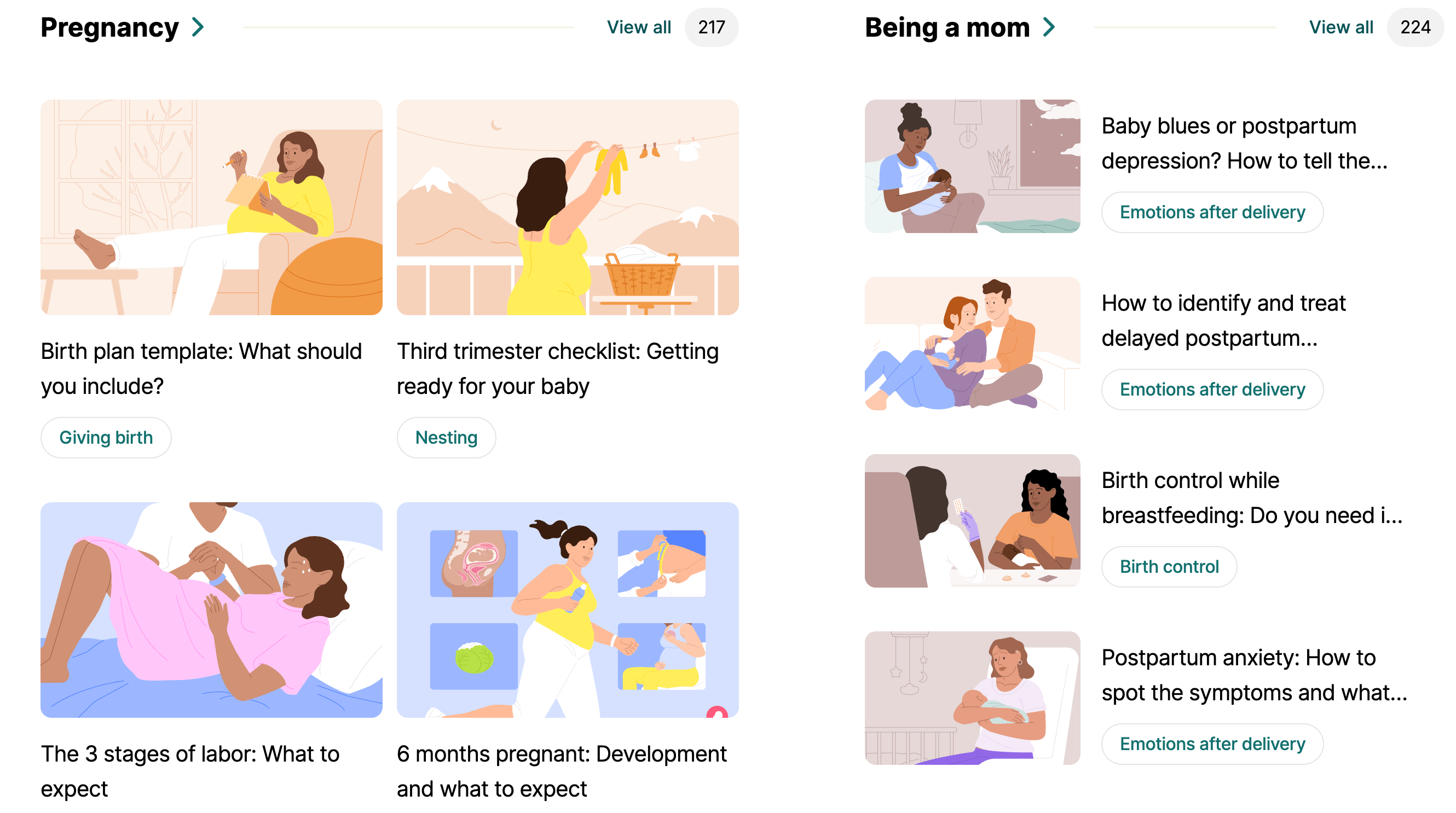
Flo Premium unlocks deeper pattern analysis, the full doctor-reviewed library and unlimited AI Health Assistant access, while free features like Secret Chats and Anonymous Mode stay available to everyone.
How Flo Compares to Alternatives
| Factor | Flo | Clue | Natural Cycles |
|---|---|---|---|
| Main focus | All-in-one women’s health | Science-based cycle tracking | Hormone-free birth control |
| Free version | Yes — robust free tier | Yes — free tier | No — subscription only |
| Approx. paid price | ~$40–50/yr Premium | ~$60/yr (Clue Plus) | ~$90–100/yr (+ thermometer) |
| FDA-cleared as contraception | No | Separate birth-control product (region-dependent) | Yes — first & only (since 2018) |
| Content & community | Huge library + Secret Chats + AI assistant | Solid science-led articles | Minimal — contraception-focused |
| Privacy approach | Cloud + free Anonymous Mode, dual ISO | Cloud, strong privacy reputation | Cloud, regulated medical device |
| Platforms | iOS & Android | iOS & Android | iOS & Android (+ wearables) |
| Best for | All-in-one tracking + education across life stages | Privacy-minded, science-first trackers | App-based hormone-free contraception |
vs. Clue: Berlin-based Clue is Flo’s most direct rival and the go-to for users who want a science-first, gender-neutral, privacy-conscious tracker. Its free tier is strong and Clue Plus (around $60/year) is reasonably priced. Where Flo pulls ahead is breadth and engagement — the far larger content library, the Secret Chats community, the AI assistant, and the polished pregnancy and perimenopause modes. Where Clue appeals is a quieter, more clinical feel and a long-standing reputation for handling data carefully. If you want depth, content and community, Flo wins; if you want a leaner, science-led tool, Clue is excellent.
vs. Natural Cycles: This is not really a like-for-like comparison, and that distinction is the whole point. Natural Cycles is the first and only app cleared by the FDA as a contraceptive (93% typical-use, 98% perfect-use effectiveness), built around daily basal body temperature readings from a thermometer or a compatible wearable. It has no meaningful free tier and costs more (roughly $90–100/year with a thermometer). If your primary goal is hormone-free birth control, Natural Cycles is the regulated medical device built for it and Flo is not the right tool. If your goal is to understand your cycle, conceive, follow a pregnancy or navigate perimenopause with rich content and community, Flo is the far broader, cheaper and more engaging choice.
vs. Apple Cycle Tracking and on-device apps: If you own an iPhone, Apple’s built-in Cycle Tracking is free, private and stores data on your device — and an Apple Watch Series 8 or later can add retrospective ovulation estimates from wrist temperature. It is basic, with no community, AI assistant or rich content, but for minimalists who prioritize privacy it is hard to beat on cost. A wave of newer on-device trackers (such as Euki, Floriva and similar apps) also emerged specifically to keep cycle data off company servers entirely. The honest trade-off is depth versus data footprint: Flo stores your data in the cloud to power its advanced features, while these alternatives keep your data local but offer far less insight in return.
Pros and Cons
What Users Love
Accuracy that earns trust: The most consistent praise across reviews is how reliably Flo predicts periods and fertile windows once it has a few cycles of data — often within a day or two. Users describe feeling genuinely prepared month to month, and many with irregular cycles or PCOS say it finally helped them make sense of an unpredictable body.
It feels like a knowledgeable friend: Between the AI Health Assistant, the daily insights and the doctor-reviewed content, owners repeatedly say Flo makes them feel understood and cared for rather than just logged. For sensitive questions people are reluctant to ask anyone else, that judgment-free tone is a recurring highlight.
Genuinely useful through pregnancy and perimenopause: Users who stayed with Flo across life stages praise the week-by-week pregnancy detail and, increasingly, the perimenopause support — including the ability to generate reports to share with a doctor. The app’s willingness to adapt to changing needs keeps people loyal for years.
A real, supportive community: Secret Chats comes up again and again as a place where users feel less alone — sharing experiences anonymously and getting peer support on topics that can feel isolating. It is a feature free trackers rarely match.
Strong, clearly-communicated privacy options: Many privacy-conscious users specifically value Anonymous Mode and Flo’s dual ISO certifications, noting that the app lets them track sensitive data without tying it to their identity — a meaningful reassurance in the current climate around reproductive data.
A polished, capable free tier: Even without paying, users get reliable tracking, predictions and the community. Plenty of long-time members happily use the free version indefinitely, upgrading only when they want the deeper insights — and they appreciate that the essentials stay free.
Limitations Worth Knowing
Subscription and billing frustration: This is by far the number-one complaint, and it dominates Flo’s Trustpilot reviews. Users report being charged after they believed they had cancelled, surprise renewals after a trial, difficulty finding the cancel option, and confusion when a subscription bought on the website keeps billing after the app one is cancelled. Whatever the cause, the volume of these reports is significant — go in knowing exactly which subscription you have and how to cancel it.
A past privacy failure you should know about: Between 2016 and 2019, Flo shared sensitive health data — including period and pregnancy information — with third parties such as Facebook and Google via embedded analytics tools, despite privacy promises. The US FTC took action and Flo settled in 2021 (without admitting wrongdoing), and in 2025 a related class action involving Flo, Google and others was resolved for $59.5 million. Flo has since stopped that sharing, says it has never sold user data, earned dual ISO certifications and built Anonymous Mode — but the history is real, and it is why some users remain cautious.
It is a tracker, not a medical device: Flo’s predictions are statistical estimates, not clinical certainties, and accuracy can suffer for people with very irregular cycles, certain conditions, or those on hormonal birth control. Crucially, Flo is not cleared as contraception and should not be relied on to prevent pregnancy. It is a tool to inform conversations with a clinician, not to replace one.
The best features sit behind Premium: Several reviewers feel the most valuable insights — detailed pattern analysis, the full content library, unlimited assistant access — are locked to paying users, and that the monthly price (which varies a lot by region) can feel steep for what is, at heart, a tracking app. The free tier is good, but the app nudges hard toward upgrading.
Cloud storage is the trade-off for the smart features: Because Flo stores your data on its servers (even in Anonymous Mode, minus identifiers) to power predictions and AI, that data could in principle be subject to legal requests — which is exactly why privacy-focused users sometimes prefer on-device alternatives. Anonymous Mode mitigates this meaningfully, but it is a choice worth understanding rather than assuming.
Some feature and support gaps: A minority of users report occasional glitches (predictions or insights failing to load, difficulty correcting pregnancy dates), reaching only a chatbot when they want human support, and limited symptom or mood options. Switching to Anonymous Mode also disables several conveniences, including data recovery and certain account help — useful to know before you flip it on.
Who Should Use Flo
Anyone who wants one app for the whole journey: This is Flo’s sweet spot. If you would rather not juggle separate tools for periods, conception, pregnancy and perimenopause, Flo handles all of them in one place and adapts as your needs change — which is precisely why so many users stay for years.
People trying to conceive: The fertility mode, daily conception tips and fertile-window predictions make Flo a popular companion for TTC, including for those with irregular cycles or PCOS who need help spotting patterns. Just treat its forecasts as guidance, not a clinical guarantee.
Anyone who wants to learn, not just log: If you value understanding the “why” behind your symptoms, Flo’s doctor-reviewed library, AI assistant and pattern analysis turn raw data into real education — a clear edge over barebones calendar apps.
Couples and families: Flo for Partners helps a partner learn how to support you without you having to explain everything, and Flo for Family lets households — for example, a parent and teens — track together under one plan. For shared understanding, these tools are genuinely useful.
Who should look elsewhere: If your main goal is reliable birth control, choose an FDA-cleared option like Natural Cycles rather than Flo. If you want your cycle data to never leave your phone, a privacy-first on-device app (or Apple’s built-in tracker) is a better fit. And if you are wary of subscription apps or want to avoid billing hassles entirely, lean on Flo’s free tier — or pick a tracker with a simpler payment model. Flo is outstanding at what it is built for; it just isn’t the right tool for every single job.
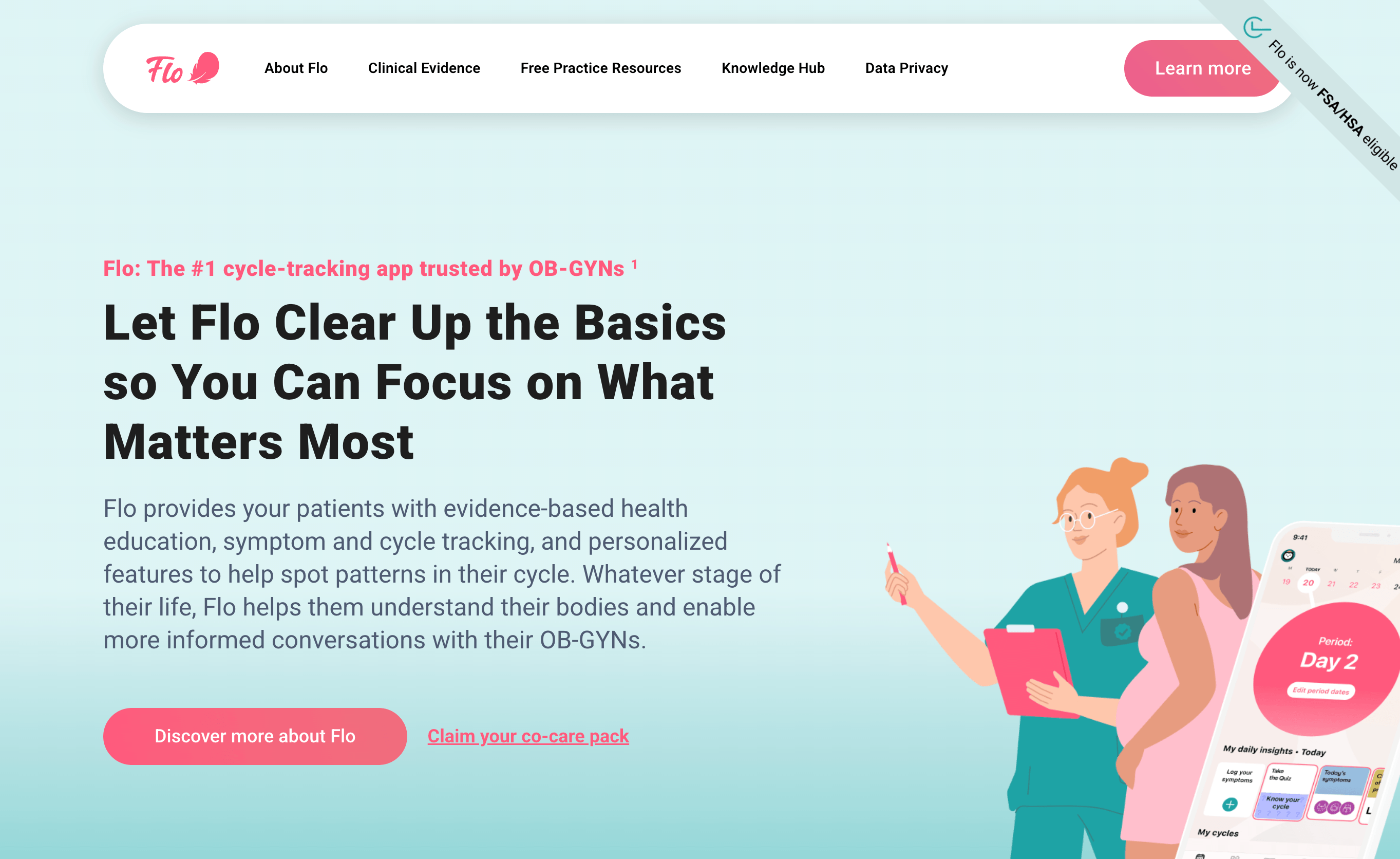
From cycle tracking to a week-by-week pregnancy companion and perimenopause support, Flo adapts to each life stage — backed by content reviewed by a team of 100-plus medical experts.
Getting Started: Step by Step
- Download and choose your goal. Install Flo from the App Store or Google Play and tell it what you are using it for — tracking your cycle, getting pregnant, following a pregnancy, or managing perimenopause. This sets up the right mode from the start, and you can switch later as your needs change.
- Decide how private you want to be. You can register with an email to enable data backup and recovery, continue with minimal information, or turn on Anonymous Mode (free) to use the app with no personal identifiers attached. Just note that Anonymous Mode disables data recovery and some account features, so weigh the trade-off up front.
- Log your recent history. Enter your last period date and typical cycle length to seed the predictions, then start logging daily — flow, symptoms, mood, temperature and anything else relevant. The more consistently you log, the faster and more accurate the forecasts become.
- Connect your devices (optional). Link Apple Health or Google Health Connect, or pair a wearable like an Apple Watch, to bring in temperature and other signals automatically. (Wearable pairing isn’t available in Anonymous Mode.)
- Explore free first, then weigh Premium. Use the free tier for a cycle or two to judge accuracy and see whether the community and basic insights are enough. If you want pattern analysis, the full content library and unlimited AI assistant access, consider Premium — ideally the annual plan, timed to a sale, and using FSA/HSA funds in the US.
- Manage your subscription carefully. If you do upgrade, note exactly where you subscribed (app store or flo.health) and how to cancel there, since the two bill separately. Set a reminder before any trial ends, and keep an eye on your statements — this is the single best way to avoid the billing surprises other users report.
Tips for Getting Maximum Value
Log consistently for the first two or three cycles before you judge Flo’s accuracy — the predictions only get sharp once the app has learned your personal rhythm, so the early effort pays off quickly. Lean on the free tier to decide whether Premium is worth it for you, and if you upgrade, choose the annual plan over the rolling monthly one and time your purchase to one of Flo’s frequent seasonal sales, checking for a promo code first; in the US, see whether FSA/HSA dollars can cover it. Take advantage of the doctor’s report and pattern analysis to prepare for appointments — printing a summary and handing it to your clinician turns months of logging into a genuinely useful medical conversation. If privacy matters to you, set up Anonymous Mode (and understand its trade-offs) rather than assuming the default settings, and remember you can always export or delete your data from within the app. Finally, treat Flo’s forecasts as informed estimates rather than certainties: use them to plan and to ask better questions, but never as a substitute for contraception or professional medical advice.
Future Outlook and Final Assessment
Women’s health technology is finally getting the investment it has long lacked, and Flo sits at the center of that shift. As the first billion-dollar consumer women’s health app, with hundreds of millions of users and a serious medical and research operation behind it, Flo has the scale and resources to keep widening its lead — investing in AI-driven insights, deepening its perimenopause and menopause tools, funding clinical research, and extending free Premium to underserved communities through its Pass It On Project. Its dual ISO certifications and free Anonymous Mode have also pushed the whole category toward taking reproductive-data privacy more seriously, which benefits users everywhere.
The honest caveats remain. The billing experience needs real improvement, the past data-sharing episode still shadows the brand for privacy-minded users, the best features sit behind a subscription that varies a lot in price, and — most importantly — Flo is a tracking and education tool, not a medical device or a contraceptive. Competitors carve out clear niches around it: Clue for science-first minimalists, Natural Cycles for app-based birth control, and on-device apps for total data privacy. But for the broad, everyday job of understanding your body across a whole reproductive life, with depth, credible content and a supportive community, no rival matches Flo’s overall package.
Conclusion
Flo earned its position as the world’s most-used women’s health app for good reason: it turns the invisible work of understanding your own body into clear predictions, credible education and a supportive community, across periods, fertility, pregnancy and perimenopause, with a free tier that genuinely delivers and privacy tools that lead the category. It is not perfect — the subscription billing draws real criticism, its past data-sharing history is a fair reason for caution, and it must never be mistaken for a contraceptive or a replacement for a clinician. But used with realistic expectations and a careful eye on your subscription, Flo is a polished, deeply capable tool that helps millions of people feel more informed and in control. Start with the free version, decide for yourself whether Premium adds enough, and Flo can take the guesswork out of your cycle and make understanding your body genuinely easy.
Ready to understand your cycle and take control of your health?
Explore more honest reviews, tutorials and tech comparisons to find the right gear for the way you work, travel and live — at World Of Tech, where we make everything easy.
👉 Try Flo: https://flo.health/
👉 Our YouTube Channel: youtube.com/@world_tech79
👉 Our Facebook Fanpage: Facebook
👉 Our X (Twitter): @worldoftech79
Pricing, features and policy details in this review were verified against flo.health and independent sources (including Trustpilot, the US FTC, and hands-on reviewer testing) as of June 2026. Flo is a tracking and educational tool, not a medical device, a diagnosis, or a method of contraception, and nothing here is medical advice — consult a qualified healthcare professional for personal medical decisions. App pricing, plans and promotions change frequently and vary by region, so confirm current details on the official site before subscribing. Competitor prices are approximate and subject to change.