
If you’ve ever typed a skill into a search bar — “Python for beginners,” “Excel for finance,” “how to edit video” — chances are Udemy showed up in the first few results. Founded in 2010, it has grown into the largest open course marketplace on the internet: a place where over 80 million learners browse a catalog of more than 250,000 courses taught by tens of thousands of independent instructors, on everything from web development and data science to yoga, photography and language learning. Unlike university-style platforms, Udemy isn’t curated by one institution — anyone can publish a course, prices swing wildly with near-constant sales, and quality depends entirely on who’s teaching. That openness is both Udemy’s biggest strength and its most common complaint.
For self-directed learners chasing a specific, practical skill on a tight budget, Udemy remains one of the most cost-effective options online — individual courses regularly drop to $9.99–$14.99 during sales, and you own them for life once purchased. But Udemy is not without real trade-offs: consumer support satisfaction lags far behind its business-facing product, course quality varies course-to-course rather than platform-wide, and recent changes to instructor payouts have raised questions about long-term content freshness. This 2026 review walks through Udemy’s full offering — the marketplace model, the Personal Plan subscription, Udemy Business for teams, real pricing, head-to-head comparisons against Coursera and LinkedIn Learning, the genuine pros and cons, and exactly who should (and shouldn’t) sign up.
Udemy Review 2026: Is the World’s Largest Course Marketplace Still Worth It?
Overview and Background
Udemy (udemy.com) is an online learning marketplace, not a traditional e-learning company with a fixed curriculum. Instructors — ranging from solo freelancers to established training companies — build and price their own courses, and Udemy provides the hosting, discovery, video infrastructure and payment processing. Learners buy access to individual courses one at a time, or in select regions, subscribe to a Personal Plan for unlimited access to a curated library. Separately, Udemy Business serves companies that want a managed learning platform for their teams, with Team, Enterprise and AI-focused plan tiers.
The scale is genuinely enormous: the catalog spans over 250,000 courses across business, technology, IT and software, personal development, design, marketing, health, and lifestyle topics. Courses come with lifetime access once purchased outright, downloadable content for offline viewing, closed captions, and certificates of completion — though because Udemy is not an accredited institution, those certificates carry weight as a skills signal rather than as formal academic credit.
Where Udemy’s reputation gets genuinely split is between its two audiences. Enterprise customers using Udemy Business report around 4.5/5 satisfaction on review platforms like G2 and Capterra, with one independent study finding a $3.10 return for every $1 invested in a structured leadership program and an 87% completion rate — well above typical online-course completion benchmarks. Individual consumers, by contrast, are far more critical: Trustpilot ratings for the consumer marketplace sit in a low range, reflecting complaints about outdated courses, inconsistent quality, and self-service-only support. That gap matters — it means the “Udemy experience” looks very different depending on whether you’re buying one $12 course for yourself or your company is paying for a managed subscription.
The economics behind the marketplace are worth understanding before you buy, because they shape what you actually get. Instructors set their own list price, but Udemy runs the discounting engine on top of it — the platform can, and regularly does, discount any course to $9.99–$14.99 as part of a sitewide promotion, regardless of what the instructor originally listed. Instructors keep a share of each sale that varies by channel: a larger cut on sales they drive themselves through their own coupon links, and a smaller cut on organic marketplace sales or subscription-plan enrollments where Udemy’s own reach and algorithm did the work. That structure explains two things learners often notice — why “full price” rarely reflects what anyone actually pays, and why some instructors invest heavily in keeping a course fresh while others largely leave a course untouched after publishing it.
Udemy has also been quietly repositioning itself over the past two years. Rather than treating individual course sales and subscriptions as equally weighted products, the company has leaned harder into subscription revenue — both the consumer Personal Plan and Udemy Business — because recurring revenue is more predictable and, from Udemy’s side, more profitable per dollar collected. For learners this mostly shows up as interface nudges toward the Personal Plan and more aggressive marketing of Udemy Business to companies, rather than any change to how individual course purchases work. The open marketplace model itself — buy a course, own it forever — remains intact and is still the product most individual learners interact with.
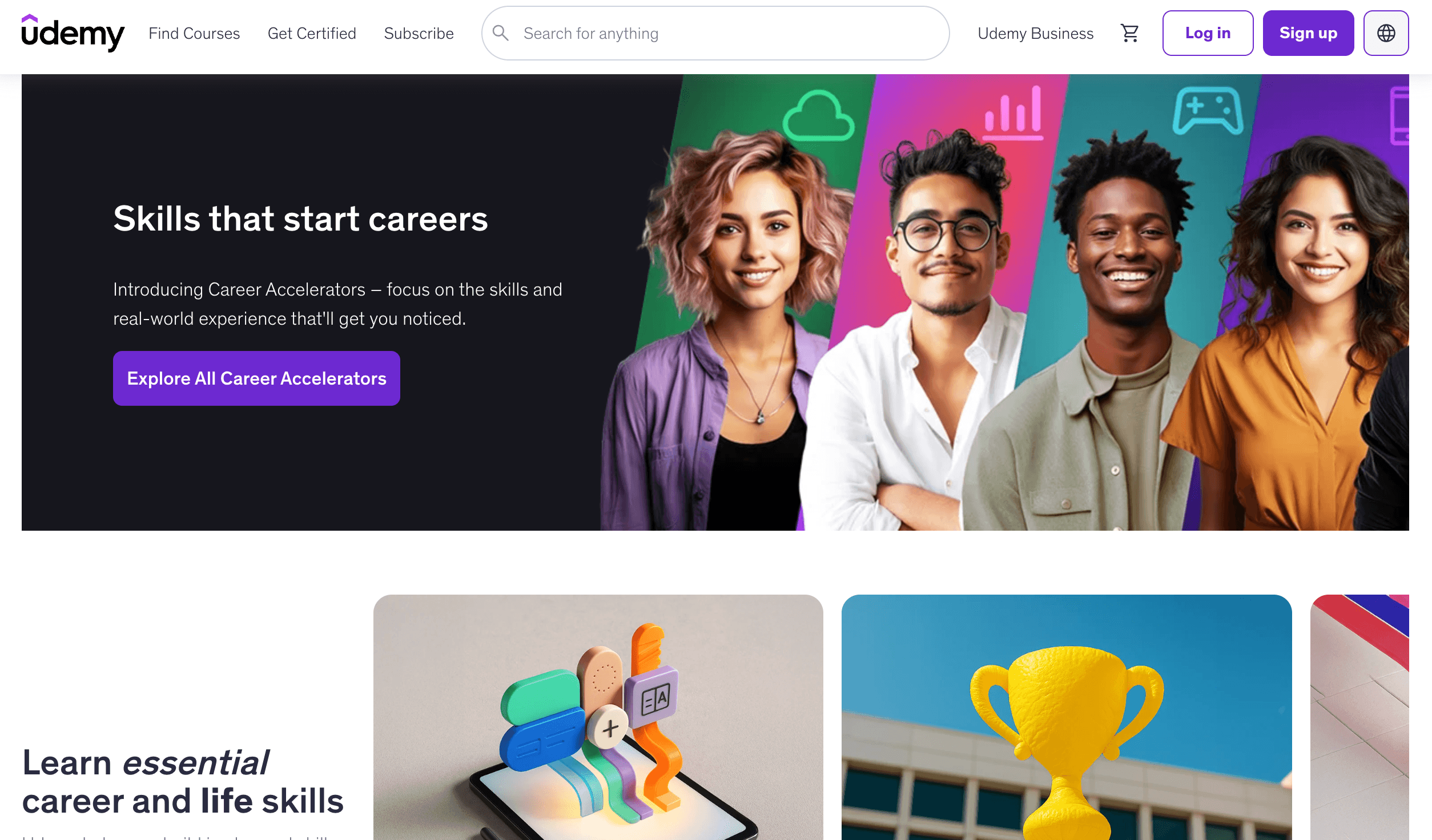
Udemy’s catalog spans over 250,000 courses across technology, business and personal development.
Why Udemy Stands Out in 2026
Unmatched catalog breadth: few platforms come close to Udemy’s range. If a skill exists — from Kubernetes to watercolor painting — there’s a strong chance multiple instructors have already built a course on it, giving you real choice instead of a single locked-in curriculum.
Aggressive, frequent discounting: Udemy runs near-constant sitewide sales that push most courses down to the $9.99–$14.99 range regardless of their listed price, making it one of the cheapest ways to access hours of expert-led video content on the open web.
Lifetime access on purchased courses: unlike subscription-only competitors, buying a course outright means you keep it — no recurring fee just to revisit material you already paid for, and no risk of losing access if you later cancel a subscription elsewhere.
Strong mobile experience: the Udemy app supports offline downloads and syncs progress across devices, and mobile ratings are consistently strong, with the iOS app holding around 4.7 stars and the Android app around 4.3–4.4 stars — a genuinely well-built companion to the desktop site.
A growing AI learning push: Udemy has leaned hard into AI-specific content, including dedicated AI Readiness and AI Growth plans for businesses, AI-powered role-play practice, and in-course AI assistants — positioning it to capture demand from teams retraining around generative AI tools.
Two distinct products for two audiences: the same platform serves solo learners buying a single course and enterprises deploying structured learning paths across thousands of employees — with Udemy Business layering admin dashboards, SSO, skills assessments and reporting on top of the same content engine.
No accreditation gatekeeping: because anyone can publish, niche and highly specific skills — a particular plugin, a regional certification exam, a very narrow coding framework — often get dedicated Udemy courses that larger, more curated platforms never bother to produce.
Practice tests and coding exercises included: beyond video lectures, many courses — especially in the Personal Plan library — bundle interactive coding exercises and practice exams, which matter more for retention than passive watching alone.
Instructor-to-learner interaction, when it happens, is direct: course Q&A sections let you ask an instructor questions directly on the lecture in question, and active instructors — again, worth checking before buying — often respond within a day or two, which is a meaningfully different experience from a fully automated learning platform.
Key Features and Technology
Udemy’s platform is built around three core products that share the same course catalog and video infrastructure but serve very different buyers.
The Open Marketplace
This is Udemy’s original model: browse the full 250,000+ course catalog, buy individual courses outright, and keep them forever. Prices swing from around $14.99 to $199.99 at list price, but frequent promotions bring almost every course down to $9.99–$14.99. Every purchase includes lifetime access, a certificate of completion, closed captions in many courses, and a 30-day refund window.
Personal Plan Subscription
Available in select regions, the Personal Plan gives unlimited monthly access to a curated library of roughly 26,000 top-rated courses — a fraction of the full catalog, hand-picked for quality — rather than lifetime ownership of specific titles. It suits learners who expect to complete two or more courses a month, since at that pace the flat subscription fee beats buying courses individually.
Udemy Business (Team & Enterprise)
Udemy’s B2B product adds admin dashboards, SSO, LMS/LXP integrations, reporting APIs, skills assessments, and hands-on labs and workspaces through the Udemy Business Pro add-on. Dedicated AI Readiness and AI Growth plans focus specifically on building foundational or advanced AI skills across a workforce, complete with curated course collections and in-course AI topic assessments, reflecting how much enterprise demand has shifted toward AI upskilling.
Mobile App and Offline Learning
The Udemy mobile app lets you download entire courses for offline viewing — useful for commutes or unreliable connections — and syncs your progress, notes and bookmarks back to your account automatically once you’re back online.
Reading Course Quality Signals
Because Udemy doesn’t centrally vet content the way an accredited platform does, the burden of quality-checking falls on the learner — but the platform does give you the tools to do it well. Every course listing shows a star rating, total review count, enrollment count, last-updated date, and a breakdown of curriculum sections before you buy. A course with a 4.6+ rating across several thousand reviews and an update within the last 6–12 months is a far safer bet than a similarly rated course with only a few dozen reviews or one that hasn’t been touched in years, particularly in fast-moving technical subjects like software development or AI tools.
Refund Policy and Support Channels
Individual course purchases carry a 30-day refund window, processed through your account’s purchase history without needing to contact anyone directly for straightforward cases. Support beyond that is handled almost entirely through a help-ticket and chatbot system rather than phone or live chat with a human — a setup that scales well for routine questions but is the most consistently cited frustration in consumer reviews when a case is unusual or a refund request gets automatically denied. Udemy Business customers get a meaningfully different support tier, with dedicated account management and faster response times, which is one reason enterprise satisfaction scores run so far ahead of the consumer marketplace experience.
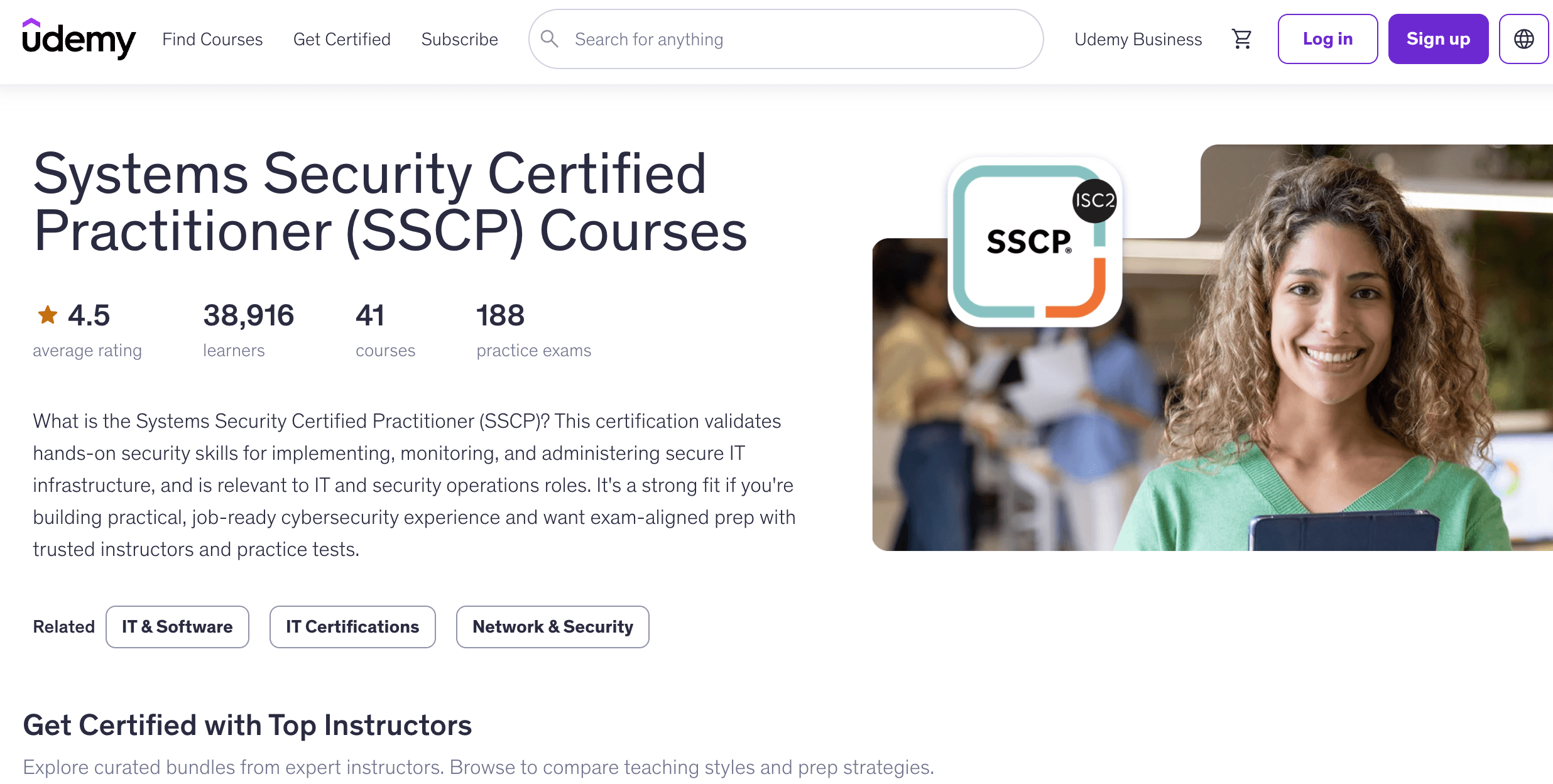
The Udemy mobile app supports offline downloads and syncs progress across devices.
Pricing, Plans, and Package Structure
Udemy’s pricing is genuinely dynamic — the price you see can vary by region, browsing history and active promotions — but the structure below reflects typical list and sale pricing in 2026. Individual courses have no subscription requirement; the Personal Plan and Udemy Business are separate, opt-in products.
| Product | Price | What It Is | Best For |
|---|---|---|---|
| Individual Course | $9.99–$14.99 (sale) / up to $199.99 (list) | One-time purchase, lifetime access | Learners buying 1–2 specific skills |
| Personal Plan (Monthly) | ~$20–$32/month (region-dependent) | Unlimited access to ~26,000 curated courses | Active learners doing 2+ courses/month |
| Personal Plan (Annual) | ~$156–$190/year | Same library, discounted annual billing | Committed year-round learners |
| Udemy Business Team | ~$24–$30/user/month, billed annually (5–20 seats) | 28,000+ curated business/tech courses + admin tools | Small to mid-sized teams |
| Udemy Business Enterprise | Custom quote, typically $240–$600/user/year | 30,000+ courses, SSO, multi-language, Pro add-on labs | Large organizations, 100+ seats |
| AI Readiness / AI Growth | Custom quote (min. 100 or 21 seats) | Curated AI-focused course collections + assessments | Companies running AI upskilling programs |
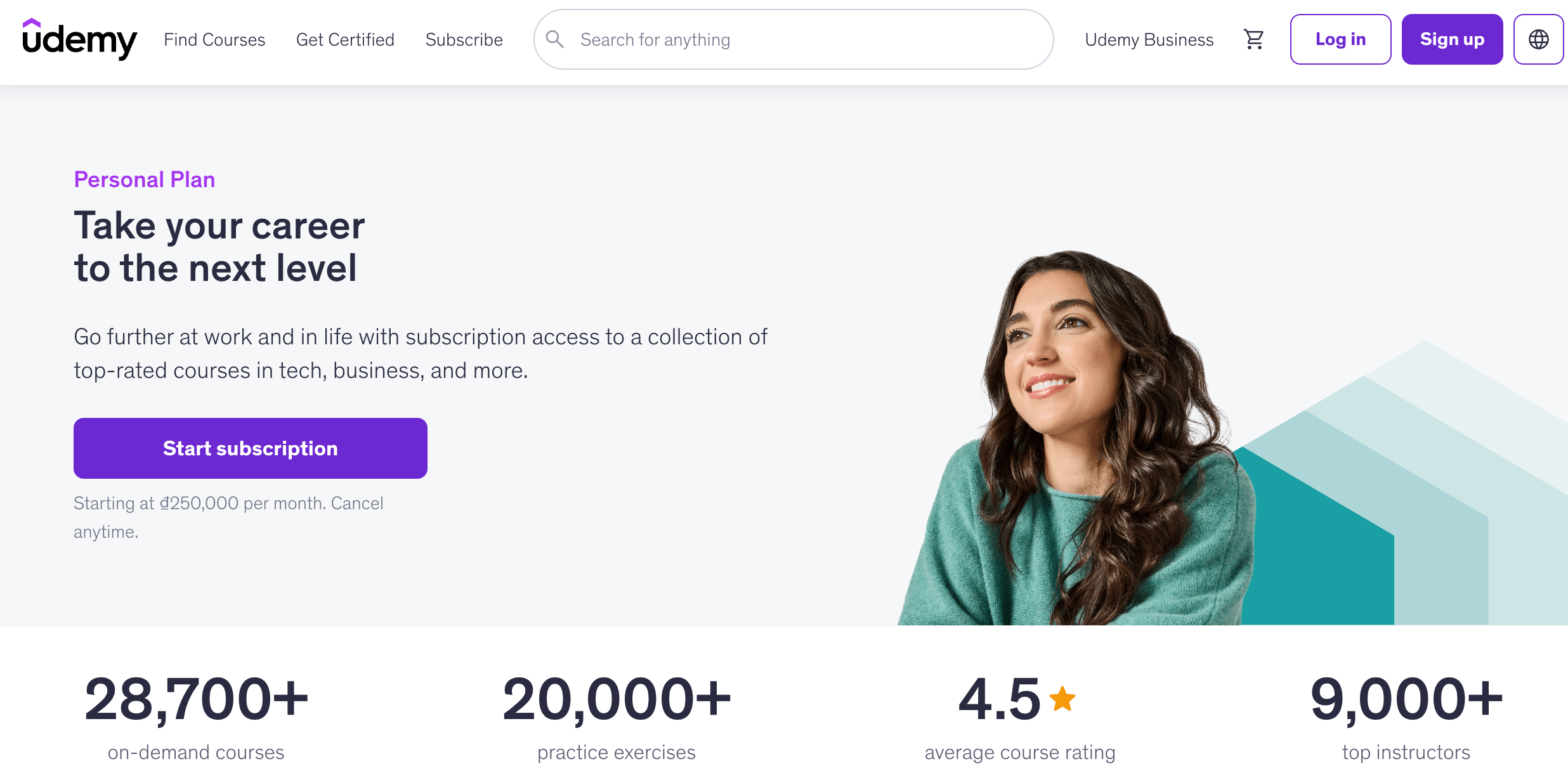
Individual course sales regularly bring prices down to $9.99–$14.99, well below list price.
How Udemy Compares to Alternatives
| Factor | Udemy | Coursera Plus | LinkedIn Learning |
|---|---|---|---|
| Pricing model | Pay-per-course ($9.99+) or Personal Plan (~$20/mo) | Subscription only (approx. $59/mo) | Subscription only (~$30–$40/mo) |
| Catalog size | 250,000+ courses, open marketplace | University & company-backed, curated | ~22,000 courses, professional focus |
| Ownership after cancel | Lifetime on individually purchased courses | Access ends on cancellation | Access ends on cancellation |
| Credential value | Completion certificate, no accreditation | University-backed certificates, some degree credit | Certificates shown directly on LinkedIn profile |
| Quality consistency | Varies widely by instructor | More consistent, institution-vetted | Consistent, professional-skills focus |
| Best for | Budget-conscious learners, niche/technical skills | Formal credentials, academic-style depth | Career-focused professionals already on LinkedIn |
Udemy vs. Coursera Plus: Coursera leans on university partnerships and structured Specializations, which suits learners who want formal, institution-backed credentials. Udemy’s open marketplace instead prioritizes breadth and price — you’ll often find a niche, highly specific course on Udemy that no curated platform bothers to offer, at a fraction of Coursera Plus’s subscription cost.
Udemy vs. LinkedIn Learning: LinkedIn Learning’s advantage is professional integration — certificates post directly to your LinkedIn profile and instructors are connectable within the same network. Udemy trades that networking layer for a dramatically larger, cheaper catalog and true one-time-purchase ownership rather than a required ongoing subscription.
The pattern across all three platforms is consistent: the more structured and career-branded a platform is, the more you pay in an ongoing subscription and the less control you have over pricing. Udemy sits at the opposite end — messier, less consistently curated, but the cheapest and most flexible entry point if you’re comfortable doing your own quality-checking before you buy.
Pros and Cons
What Users Love
Huge catalog: whatever the skill, there’s usually more than one course to choose from, letting learners pick a teaching style that fits them.
Genuinely low prices during sales: $9.99–$14.99 for a multi-hour course is hard to beat anywhere else on the open web.
Lifetime access: purchased courses stay in your library indefinitely, with no risk of losing access after a subscription lapses.
Solid mobile app: offline downloads and reliable syncing make it genuinely usable for commute- or travel-based learning, reflected in strong app store ratings.
Direct instructor access: Q&A threads on individual lectures let learners ask specific questions and get real answers from active instructors, something few large platforms offer at this scale.
Fast, flexible refunds when they work as intended: the advertised 30-day money-back window is genuinely useful for course purchases that turn out to be a poor fit, when the refund process goes smoothly.
Limitations Worth Knowing
Consumer support satisfaction is weak: Trustpilot reviews document consistent complaints about refund handling and support responsiveness for individual consumer purchases, and multiple review sources place Udemy’s consumer TrustScore below 2 out of 5, a stark contrast to its enterprise ratings.
Refund policy enforcement can feel inconsistent: a number of reviewers describe automated refund denials tied to how much of a course they’d watched, even within the advertised 30-day window, without a transparent viewing threshold being disclosed upfront.
Quality is not guaranteed: because anyone can publish a course, catalog-wide quality control is minimal — always check a specific course’s rating, review count and last-updated date rather than trusting the platform’s reputation alone.
Shrinking instructor incentives on subscription content: reduced subscription revenue share for instructors (down to roughly 15% as of January 2026) has raised concerns that some subscription-library courses may see slower updates going forward.
No formal accreditation: completion certificates demonstrate initiative and self-study but carry no academic credit, which matters if you specifically need a credentialed qualification.
Aggressive discounting can undercut instructor motivation: instructors have limited control over frequent platform-wide price drops, and some longtime instructors have publicly discussed scaling back new course production because per-sale earnings on discounted marketplace sales can be quite low.
Personal Plan availability is inconsistent: the subscription option isn’t offered in every region, so learners outside supported markets are limited to individual course purchases regardless of how many courses they plan to take.
Who Should Use Udemy
Budget-conscious self-learners: anyone chasing a specific, practical skill without wanting to commit to a monthly subscription will find Udemy’s pay-per-course, sale-driven pricing hard to beat.
Developers, IT professionals and technical learners: Udemy’s technology catalog is deep and frequently updated by an active instructor base competing for enrollments.
Small businesses and mid-sized teams: Udemy Business Team offers a genuinely affordable way to give employees structured access to thousands of courses without enterprise-level procurement overhead.
Learners exploring a niche or unusual skill: if a topic is too specific for a curated platform to bother covering, there’s a good chance an independent instructor has already built a Udemy course for it.
Career-changers testing the water before committing: the low cost of entry makes Udemy a low-risk way to sample an entirely new field — coding, design, digital marketing — before investing in a more expensive bootcamp or degree program.
Who should look elsewhere: learners who need a formally accredited credential, university-level academic rigor, or guaranteed hands-on support during their learning journey may be better served by Coursera’s degree-track programs or a platform with live instructor access — Udemy’s self-service, self-paced model isn’t built for that.
Getting Started: Step by Step
- Create a free account. Sign up with email or a social login — browsing and adding courses to your wishlist costs nothing.
- Search and shortlist courses. Use filters for rating, review count, level and last-updated date rather than picking the first result — quality varies course-to-course.
- Wait for a sale before buying. Add courses to your wishlist and purchase once the price drops into the $9.99–$14.99 range, which happens frequently.
- Decide: individual courses or Personal Plan. If you expect to complete two or more courses a month, check whether the Personal Plan subscription is available in your region and compares favorably.
- Download the mobile app. Enable offline downloads for any course you plan to study on a commute or during travel.
- Track completion and claim your certificate. Finish the course to unlock your certificate of completion, then add it to your resume or LinkedIn profile as a skills signal.
Tips for Getting Maximum Value
Never buy a Udemy course at full list price — bookmark it and wait for the next sitewide sale, which typically arrives within days to a few weeks. Before purchasing, scroll past the star rating to read a handful of the most recent reviews specifically, since older reviews may reflect outdated course content that hasn’t been refreshed. If you’re building a specific career skill set, resist the temptation to buy five courses in one sale; finish one course end-to-end before starting the next, since unused purchases sitting in a dashboard deliver zero value regardless of price. For teams, evaluate Udemy Business Team against simply buying individual courses for each employee — the admin dashboard and completion tracking often justify the premium once you’re coordinating more than a handful of people. And if you’re on the fence about the Personal Plan, calculate your likely monthly course count first: at roughly $20–$32 a month, the subscription only beats buying courses individually if you’re realistically completing two or more per month. One more habit worth building: use the free preview lectures every course offers before buying — a few minutes of an instructor’s teaching style will tell you more about fit than any star rating, and it takes less time than reading through reviews.
Future Outlook and Final Assessment
Udemy’s 2026 strategy is clearly centered on two fronts: pushing deeper into enterprise AI upskilling with dedicated AI Readiness and AI Growth plans, and gradually shifting incentives toward its subscription products over one-off marketplace sales. That’s a rational business move given how much more Udemy retains from subscription revenue, but it’s also worth watching — if reduced instructor payouts on subscription content lead top instructors to deprioritize the Personal Plan library over time, the marketplace’s individual-purchase courses may become the more reliably updated option.
On the consumer side, Udemy’s support and refund-handling reputation is its clearest area for improvement — the gap between its enterprise satisfaction scores and consumer Trustpilot ratings is too wide to ignore, and it’s the single most consistent theme across independent reviews. None of that erases what Udemy does well: at scale, breadth and price, it remains difficult to match for anyone hunting a specific, practical skill without wanting to commit to an expensive subscription.
Looking ahead, expect Udemy’s AI-focused content to keep expanding fastest, since it’s where both consumer demand and enterprise training budgets are currently concentrated. Whether that translates into better outcomes for individual learners will likely depend on how well Udemy balances its push toward subscription revenue against keeping the open marketplace — still the product most learners actually use — attractive to the instructors who make it work in the first place.
Conclusion
Udemy isn’t trying to be a university, and it isn’t trying to be a polished, single-brand learning experience — it’s an open marketplace, and that’s exactly where its value lies. For learners chasing a specific skill on a real budget, the combination of a massive catalog, near-constant sales, and true lifetime ownership on purchased courses is genuinely hard to beat. Just go in with clear eyes: check individual course quality rather than trusting the platform overall, expect self-service support rather than white-glove help if something goes wrong, and shop sales rather than paying list price. Approached that way, Udemy remains one of the most practical ways to build real skills online in 2026.
Ready to start learning a new skill for less?
Explore more honest reviews, tutorials and tech comparisons to find the right gear for the way you work, travel and live — at World Of Tech, where we make everything easy.
👉 Shop Udemy: https://worldoftech.space/udemy
👉 Our YouTube Channel: youtube.com/@world_tech79
👉 Our Facebook Fanpage: Facebook
👉 Our X (Twitter): @worldoftech79
Pricing, specifications and policy details in this review were verified against udemy.com and independent review sources as of July 2026. Online course pricing and features change frequently, so confirm current details on the official site before purchasing. Competitor prices are approximate and subject to change.