
If you have ever wished online shopping felt less like scrolling a grid of thumbnails and more like a lively auction house hosted by someone who shares your obsession, you already understand the pull of Whatnot. Whatnot is a live shopping marketplace where sellers stream video, show items one at a time and sell them through fast auctions, flash sales and Buy It Now listings, while buyers watch, chat and bid in real time from their phones. It started in 2019 around trading cards, comics, sneakers and other collectibles, and it has since grown into hundreds of categories, including designer handbags, electronics, clothing, plants and even groceries. After a reported $545 million Series G round at a $20 billion valuation in August 2026, Whatnot is the most visible name in live commerce, with a 4.2 out of 5 Trustpilot score across more than 12,000 reviews and app store ratings between 4.6 and 4.8.
For collectors hunting a specific card, resellers sourcing inventory, bargain hunters who love the thrill of a deal and small business owners who want a built-in audience, the appeal is immediate: instant entertainment, a real community and a shot at prices regular retail rarely offers. But Whatnot is not magic, and an honest look reveals real trade-offs around impulse spending, shipping costs, customer support and account enforcement that are worth knowing before you place your first bid. This 2026 review walks through how Whatnot works, its key features, the latest buyer and seller fee structure, head-to-head comparisons against eBay and Fanatics Collect, the genuine pros and cons, and exactly who should (and shouldn’t) join the show.
Whatnot Review 2026: The Live Shopping Marketplace Where Collectors Bid, Chat and Buy in Real Time
Overview and Background
Whatnot is a US-based live shopping platform founded in 2019. It is not a traditional fixed-price storefront and it is not a static listing site. The core idea is simple: a seller goes live, holds up an item, describes it on camera and opens a bid. Buyers watching the stream, many of whom are chatting with the host at the same time, tap to bid or buy. You need a payment method on file before you can bid, auctions typically run anywhere from about 15 seconds to 2 minutes, and a late bid extends the timer unless the seller has switched on sudden death mode. Sellers can also run a Buy It Now shop that stays open when they are not streaming.
The company has grown at remarkable speed. Coverage of the August 2026 Series G round reports $545 million raised at a $20 billion valuation, up from roughly $11.5 billion after the Series F in October 2025, with about $1.5 billion raised since founding and lead investors including ICONIQ Growth, Lightspeed Venture Partners and Avra. Whatnot says more than 20 million accounts were created in 2025 and that over 650,000 new users join each week. Reported sales figures vary by outlet, with 2025 live sales cited anywhere from about $6 billion to more than $8 billion. All of these growth numbers are self-reported by the company and have not been independently audited, so treat them as directional rather than precise.
On the independent side, the picture is positive but not spotless. Trustpilot shows a 4.2 out of 5 “Great” score from more than 12,000 reviews, with roughly 70% five-star and 14% one-star ratings. The app stores are friendlier, with the Apple App Store near 4.8 and Google Play between 4.6 and 4.7. That gap is normal for a marketplace, because app store ratings tend to reflect the app experience while Trustpilot attracts people with order, shipping and support problems. Sellers must apply and be approved before going live, complete a short onboarding and quiz, and ship within 2 business days using prepaid labels.
Why Whatnot Stands Out in 2026
Shopping that feels like an event: Instead of reading a listing, you watch a real person show you the actual item from every angle, answer questions in chat and react to each bid. That live proof is the entire reason the format works, and it makes buying collectibles and one-of-a-kind items feel far more trustworthy than a photo and a paragraph.
Hundreds of categories under one roof: Whatnot began with trading cards, Pokemon, comics and sneakers, and it now spans designer handbags, electronics, vintage clothing, toys, coins, plants and more. Whatever you collect, there is almost certainly a stream running right now for it.
Deals, giveaways and a deal-hunter culture: Trustpilot reviewers repeatedly praise brand-name and collectible items at affordable prices, along with frequent giveaways and flash deals. Patient buyers who watch a few shows can sometimes win items well below typical retail, though prices ultimately depend on who else is bidding.
Buyer Protection that covers the basics: Whatnot’s Buyer Protection covers items that arrive damaged, counterfeit, not as described or missing, and you file a claim directly in the app. It is not a blank check, but having a built-in dispute path is a major step up from buying from a stranger off a social feed.
Lower seller fees than the big incumbents: With no listing fees and no monthly subscription, Whatnot charges sellers an 8% commission on most categories plus standard 2.9% + $0.30 payment processing, which works out to roughly 11% all-in. That undercuts eBay’s final value fee on many sales, and it is a big reason sellers keep moving over.
Seller tools that remove friction: Prepaid shipping labels, automatic bundling of multiple wins into one shipment, a dedicated Seller Hub, optional shipping protection and an Early Payout option make the operational side surprisingly smooth for a live marketplace.
Real scale and momentum: With tens of millions of accounts, fresh funding for marketing, trust and safety, and expansion across the US, UK and Europe, Whatnot has the audience that live sellers need and the resources to keep improving the platform.

Whatnot turns shopping into a live show: sellers present items on camera, buyers chat and bid in real time, and the winning bid goes straight to checkout.
Key Features and Technology
Whatnot looks simple from the outside, but the platform is really a bundle of several selling formats stitched into one app. Here is how it breaks down in practice.
Live Auctions, Buy It Now and Pre-Bidding
The signature format is the timed live auction. A seller shows one item, opens bidding and a countdown starts, and every bid near the end adds time to the clock. Beyond that, sellers can run fixed-price Buy It Now sales during a show, keep a standing Buy It Now shop open around the clock, and let buyers set a maximum bid in advance through pre-bidding so they can win items without watching every second. Buyers must have payment information on file, and sellers never see a buyer’s financial details.
Categories, Discovery and Personalization
The home feed surfaces live shows by category, and you can follow sellers and topics so the app alerts you when a favorite host goes live. Because every show is tagged to a niche, discovery works much like finding a channel on a streaming service, only every item is for sale. The breadth is the point: a collector of vintage watches and a buyer of sealed trading card boxes can both find an active community in minutes.
Buyer Protection, Shipping and Payments
Buyers pay for shipping and applicable sales tax at checkout, and tracking appears in the app once the seller prints a label. Buyer Protection covers items that are damaged, fake, not as described or missing, and Whatnot recommends filing through the app with photos or video. On the seller side, Whatnot offers optional shipping protection through partners Shippo and XCover, USPS and UPS automatically include up to $100 of coverage on lost packages, and Whatnot’s High Value Loss Reimbursement Policy covers losses above the $10,000 insured limit.
Seller Hub, Prepaid Labels and Payouts
Approved sellers manage inventory, shows, orders and earnings in Seller Hub. Whatnot generates prepaid labels after each sale, and packages must be scanned by the carrier, because a printed label alone does not count as shipped. Earnings reach the available balance up to about 4 hours after confirmed US delivery, and payouts typically land in 1 to 2 business days after you request them. Eligible sellers can also use Early Payout to receive earnings when the shipping label is created.
Community, Giveaways and Breaks
Chat is the social engine of the platform. Hosts reward regulars with giveaways and shout-outs, and many sellers run “breaks,” where sealed boxes or packs are opened live and the contents are assigned to buyers.
Pricing, Plans, and Package Structure
Whatnot has no subscription tiers, which makes its pricing refreshingly simple. Joining and bidding are free, listing is free, and the company earns its money from a commission and payment processing fee on each sale. The figures below reflect Whatnot’s published seller rates as confirmed by independent fee guides updated between April and November 2026 and by Whatnot’s help center, but rates can change and the company regularly runs temporary promotions, so always confirm the current numbers in the app’s Seller Hub before you sell.
| Product | Price (USD) | What It Is | Best For |
|---|---|---|---|
| Buyer account and bidding | Free | No subscription or buyer fee listed. You add a payment method to bid and pay item price, shipping and sales tax at checkout. | Casual shoppers and collectors |
| Seller account | Free (approval required) | No listing fee and no monthly fee. Sellers apply, complete onboarding and a short quiz, and wait for approval. | New sellers testing the platform |
| Seller commission | 8% of sale price | Standard rate in most US categories. Seller Hub shows the exact rate applied to each sale, and new-seller or category promotions can lower it. | Most live and fixed-price sellers |
| Coins and paper money commission | 4% of sale price | Reduced commission reported for the coins and paper money category. | Coin and currency dealers |
| Payment processing | 2.9% + $0.30 per order | Charged on the full order total, including shipping and tax, for US, Canadian and Australian sellers. | All sellers (budget for it) |
| Shipping | Passed through to buyer | Buyer pays the label cost based on item weight and size. Sellers cannot mark up shipping but can offer free shipping. | Buyers and sellers planning margins |
| Signature confirmation | $4.15 (USPS) or $5.90 (UPS) | Charged to the seller on domestic shipments. Certain US shipments of $500 or more may require it automatically. | High-value sellers |
| Shipping protection (optional) | 1% of item value + shipping (US), 1.5% international | Optional insurance via Shippo and XCover for lost, stolen or damaged packages, up to $10,000 covered. | Sellers shipping pricey items |
| Worked example: $100 sale | About $11.20 in fees | $8.00 commission + $3.20 processing (2.9% + $0.30), so the seller keeps roughly $88.80 before shipping and tax. | Budgeting your margins |
How Whatnot Compares to Alternatives
| Factor | Whatnot | eBay | Fanatics Collect |
|---|---|---|---|
| Selling format | Live video auctions plus Buy It Now shop | Search-driven listings, auctions and fixed price | Auctions, fixed price, breaks and vault storage |
| Seller commission | 8% most categories (4% coins and paper money) | About 13.25% final value fee on most categories (approx.) | About 5% to 15% depending on tier (approx.) |
| Payment processing | 2.9% + $0.30 per order | Included in fee, plus about $0.30 per order (approx.) | Varies by tier |
| Buyer fees | None listed beyond shipping and tax | Typically none on most purchases | Buyer’s premium of about 10% to 18% on auctions (approx.) |
| All-in seller cost | Roughly 11% | Roughly 13% to 14% before ads (approx.) | Roughly 15% to 25% on $1,000+ cards (approx.) |
| Buyer experience | Discovery-driven, live chat and entertainment | Intent-driven search and comparison | Intent-driven, with authentication and vaulting |
| Best for | Live selling, collectibles and fast sell-through | Broad reach and steady search demand | High-value cards and secure storage |
vs. eBay: eBay is the long-standing incumbent with enormous search demand, and its final value fee of about 13.25% plus a small per-order fee is higher than Whatnot’s roughly 11% all-in. One 2026 comparison found that on a mid-priced sale a seller nets a little more on Whatnot, but also concluded that neither platform wins universally, because sell-through speed and eBay ad spend can swing the result. Whatnot rewards entertaining sellers with a live audience, while eBay rewards patient sellers with good listings.
vs. Fanatics Collect: Fanatics Collect leans into sports cards, Pokemon and comics, and adds authentication, vault storage and high-value payment infrastructure. That comes with higher effective fees, including a buyer’s premium on auctions, so it can cost a seller roughly 15% to 25% on expensive cards. Whatnot is cheaper and more entertainment-led, but Fanatics may suit you better if you are moving four-figure cards and want authentication and secure storage.
vs. other live shopping apps: Apps such as TikTok Shop and Poshmark also offer live selling, but they sit inside bigger social or fashion ecosystems. Whatnot is built around live selling from the ground up, with auction mechanics, breaks and seller tools designed specifically for it.
Pros and Cons
What Users Love
Entertainment and community: The most consistent praise is that shopping simply feels fun. Reviewers describe friendly hosts, lively chat rooms and a sense of community that traditional marketplaces cannot match, which keeps buyers returning even when they are not planning to buy.
Affordable finds and frequent deals: Trustpilot reviewers highlight brand-name and collectible items at attractive prices, along with giveaways and flash deals. Buyers who learn the rhythm of a favorite seller’s shows often report landing items below what they would pay elsewhere.
Fast, accurate shipping when it works: Many reviewers say orders arrive quickly and match what they saw on stream. When sellers follow the 2 business day rule and package well, the experience is as smooth as any mainstream retailer.
Low seller fees and no listing costs: Sellers appreciate paying only when they sell, at roughly 11% all-in, with prepaid labels, bundling and a fast payout cycle that returns cash within days of confirmed delivery.
A polished, easy-to-use app: Strong ratings on the Apple App Store and Google Play reflect a clean interface, easy checkout, pre-bidding and a live experience that works well even for first-time users.
Real Buyer Protection and an enormous catalog: Claims for damaged, fake, not-as-described or missing items are handled inside the app, and the breadth of categories means a niche hobbyist can usually find a dedicated audience on day one.
Limitations Worth Knowing
Easy to overspend: Fast timers, social pressure and binding bids are a risky mix. Winning means you must buy, there are no change-of-mind refunds, and breaks and bidding wars can turn a small budget into a large bill in minutes. Set a limit before every show.
Shipping costs and condition problems: Trustpilot’s most common complaints are items arriving damaged, late, incorrect or missing from bundles, along with high shipping fees. Quality depends heavily on the individual seller, so checking a seller’s rating before you bid matters.
Support can be hard to reach: A recurring theme in negative reviews is slow or unhelpful customer support, especially around returns and refunds. Buyer Protection exists, but several reviewers describe frustrating back-and-forth, so keep photos or an unboxing video as proof.
Account enforcement and payout complaints: Some users report suspensions or bans, including for inactivity on live or disputes tied to payments, and others describe inconsistent payouts. These cases are a minority, but they are serious for sellers who depend on the platform for income, so read the policies carefully.
Authenticity risk in some categories: Fakes are possible in categories such as sneakers, trading cards and luxury goods, and reviewers also cite bot-driven bidding. Be extra careful with expensive items, favor established sellers with strong feedback and avoid paying anything outside the app.
Tough for new sellers, with a time commitment: New sellers struggle for visibility against established hosts with large followings, the format has a learning curve if you are uncomfortable on camera, and live sales demand fixed schedules and steady sourcing.
Who Should Use Whatnot
Collectors of cards, comics, toys and memorabilia: This is Whatnot’s home turf. If you hunt specific cards, sealed boxes or vintage pieces, the live format, deep seller pool and chance to catch a good deal make it one of the best places to shop.
Resellers and side-hustle sellers: If you source inventory and want a fast sell-through with lower fees than eBay on many sales, Whatnot can turn stock quickly. It rewards sellers who are consistent, entertaining and organized about shipping.
Small businesses and boutique owners: Shops with a story or a personality can build a loyal audience on stream and sell directly, with prepaid labels and Seller Hub handling the logistics.
Deal hunters who enjoy the thrill: If you love auctions, friendly chat and a bit of competition, Whatnot is genuinely fun, as long as you set a budget in advance and treat winning as a purchase rather than a game.
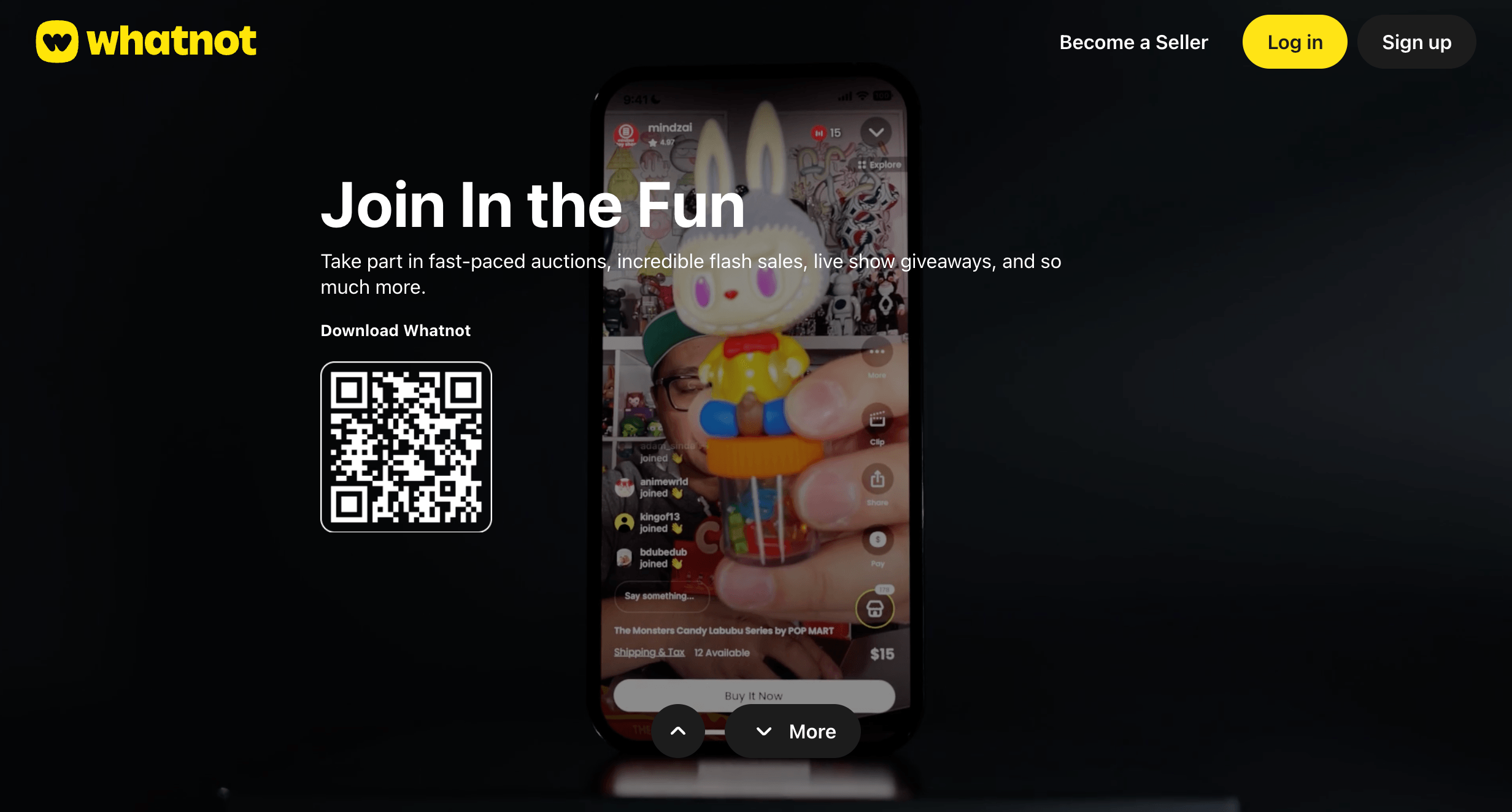
Whatnot rewards personable, well-prepared hosts and disciplined buyers who set a budget before the first bid.
Who should look elsewhere: Shoppers who want slow, calm price comparison, anyone who struggles with impulse spending, and buyers who need guaranteed change-of-mind returns should look at traditional retailers or fixed-price marketplaces. Sellers of very high-value cards who need authentication and vaulting may prefer Fanatics Collect, and anyone who dislikes being on camera or cannot commit to regular streaming schedules will find the live model hard to sustain.
Getting Started: Step by Step
- Create your account. Download the Whatnot app on iOS or Android or sign up on the web, then follow a handful of categories you actually care about so your feed fills with relevant live shows.
- Watch before you bid. Join a few shows without buying anything. Learn how auctions run, how sellers describe condition and how fast the timer moves so the pace does not surprise you.
- Add payment and set a budget. Add a payment method (required before bidding) and decide on a firm limit per show, remembering that shipping and sales tax are added to every winning bid.
- Bid or buy smartly. Use pre-bidding to set a maximum, avoid bidding wars, read item details and check the seller’s rating. Use Buy It Now when you want a certain price without the competition.
- Track and inspect. Follow tracking in the app and record yourself opening every package. If an item is damaged, fake, not as described or missing, file a Buyer Protection claim with photos or video.
- Ready to sell? Apply. Apply to become a seller, complete the short onboarding and quiz, and wait for approval. Once live, ship within 2 business days with Whatnot’s prepaid labels, make sure the carrier scans every package, and describe items accurately.
Tips for Getting Maximum Value
Build a habit of watching first and buying second, because the best deals usually go to buyers who know a seller’s style, typical prices and shipping rules. Follow a few trusted sellers in your niche and turn on alerts so you catch their shows, use pre-bidding to avoid getting swept up in the final seconds. Combine wins from the same seller in a single show to share shipping, record every unboxing in case a claim is needed, and keep all communication and payments inside the app. If you sell, price with roughly 11% fees in mind, ship within 2 business days, photograph and describe condition carefully, consider shipping protection and signature confirmation for expensive items, and build a regular schedule so your followers know when to show up.
Future Outlook and Final Assessment
Live shopping is no longer a novelty, and Whatnot is the clear category leader. With a reported $20 billion valuation, a fresh $545 million to spend on marketing, trust and safety, new categories, new markets and AI-assisted seller tools, the company is positioned to widen its lead. The audience keeps growing, sellers with seven-figure lifetime sales have reportedly more than doubled in a year, and expansion into more categories and countries suggests the platform will keep moving well beyond trading cards.
The honest caveats remain: fast-moving auctions encourage overspending, shipping quality depends on individual sellers, customer support gets uneven reviews, and enforcement and payout complaints are a real risk for sellers. Competitors such as Fanatics Collect, eBay Live and social commerce apps are investing heavily, and fees or policies may change as the company matures. Within those limits, Whatnot delivers one of the most engaging and commercially effective marketplaces available in 2026.
Conclusion
Whatnot has done something few marketplaces manage: it made buying and selling feel like entertainment without losing the practical parts. Live video builds trust in what you are buying, auctions and Buy It Now cover different shopping moods, and a clear fee structure with no listing costs gives sellers an affordable way to reach a passionate audience. It is not perfect, and it is not for everyone, especially impulse spenders or people who need guaranteed returns. But for collectors, resellers and small businesses who value community and speed, few platforms deliver more.
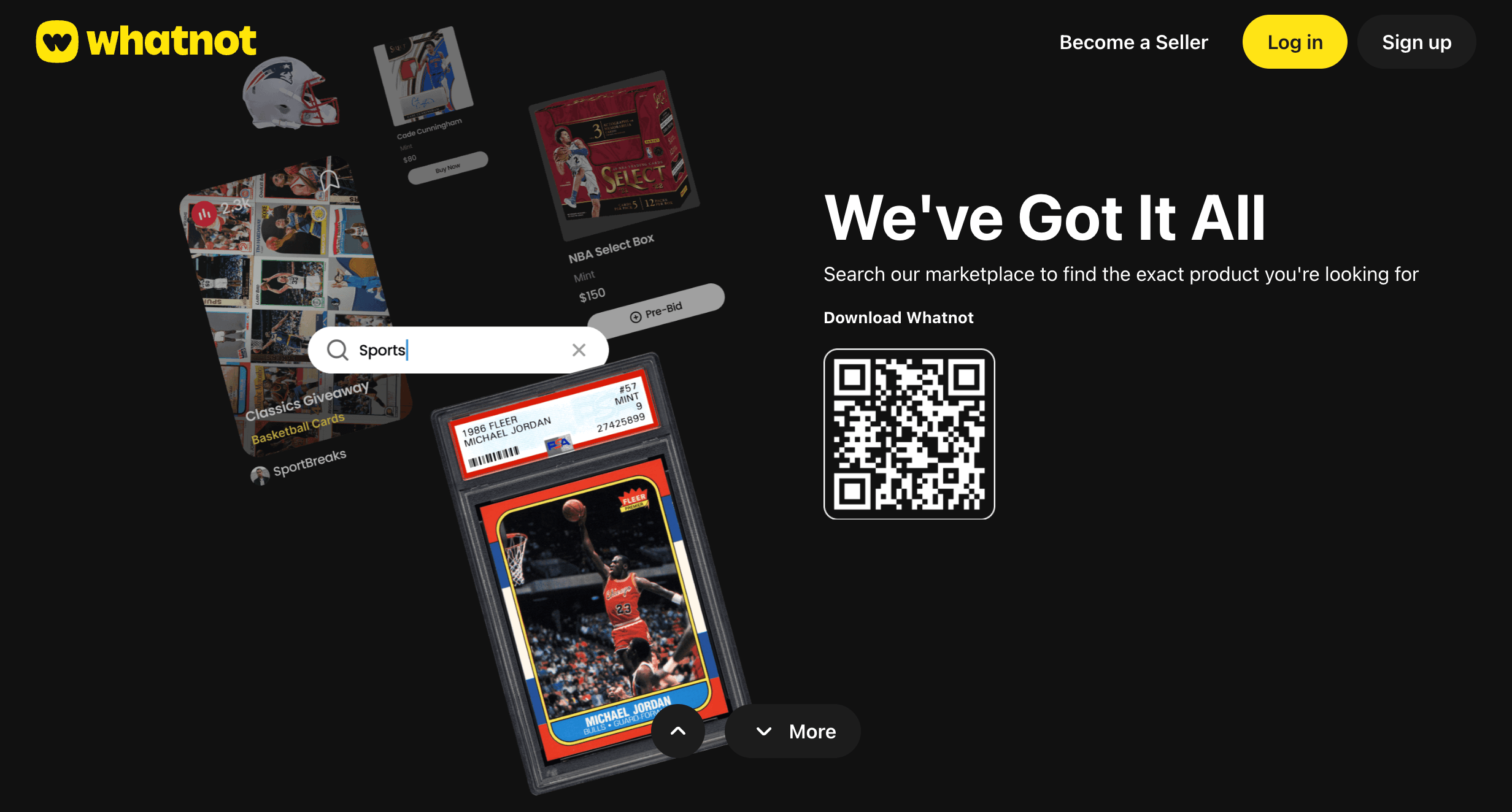 Whatnot combines live video, real-time bidding and Buyer Protection into one fast, social marketplace for collectors and sellers.
Ready to turn your next purchase into a live show?
Explore more honest reviews, tutorials and tech comparisons to find the right gear for the way you work, travel and live, at World Of Tech, where we make everything easy.
👉 Shop Whatnot: https://worldoftech.space/whatnot
👉 Our YouTube Channel: youtube.com/@world_tech79
👉 Our Facebook Fanpage: Facebook
👉 Our X (Twitter): @worldoftech79
Pricing, fees and policy details in this review were checked against whatnot.com, Whatnot’s help center and independent review sources (including Trustpilot and third-party fee guides) as of November 2026. Live shopping marketplace fees, promotions and policies change frequently, so confirm current details on the official site or in the app before buying or selling. Competitor fees are approximate and subject to change.