
If you have ever tried to buy concert, sports or theater tickets after the box office sold out, you already know the second market exists for a reason. TicketNetwork is one of the longest running names in that market. It is an online resale marketplace where independent ticket sellers list seats for concerts, NFL, NBA, NHL, MLB and MLS games, Broadway and Las Vegas shows, comedy tours and festivals, and TicketNetwork runs the storefront, the checkout and the guarantee around those listings. Under the tagline “Tickets Made Easy,” it promises safe, secure online ordering, a published buyer guarantee, a mobile app with a $10 new-user offer on the homepage, and access to events that primary sellers have already cleared out.
But TicketNetwork is also one of the most debated names in ticketing. Its Trustpilot score sits in the “average” range, the headline price you see is not always the price you pay, and the company has a documented regulatory history around pricing and marketing that every buyer should know about. This 2026 review walks through how TicketNetwork actually works, what it costs once fees are counted, how it compares with Vivid Seats, StubHub, SeatGeek and TickPick, the genuine pros and cons, and exactly who should (and should not) buy tickets here.
TicketNetwork Review 2026: The Resale Ticket Marketplace for Concerts, Sports and Theater, Fees and All
Overview and Background
TicketNetwork is a US-based online marketplace for live entertainment tickets, headquartered in South Windsor, Connecticut. The business traces its roots to 1996 as a ticket brokerage, and the TicketNetwork.com consumer site launched in 2002. It was founded by ticket broker Don Vaccaro and software developer Doug Kruse, and Vaccaro remains the best known figure behind the company. Today it operates the main TicketNetwork.com storefront, sister retail sites, a software platform that brokers use to manage inventory, and a private label program that lets other websites sell tickets from the same marketplace.
The key concept to understand is that TicketNetwork is an exchange, not a box office. Listings come from third-party ticket brokers and individual sellers. Those sellers set their own asking prices, which is why the site carries a clear note that resale ticket prices may be above face value. TicketNetwork provides the marketplace, takes payment, adds its own fees and stands behind the order with what it calls its guarantee. In its terms it positions itself as an intermediary, so the quality of any single purchase still depends partly on the seller behind the listing.
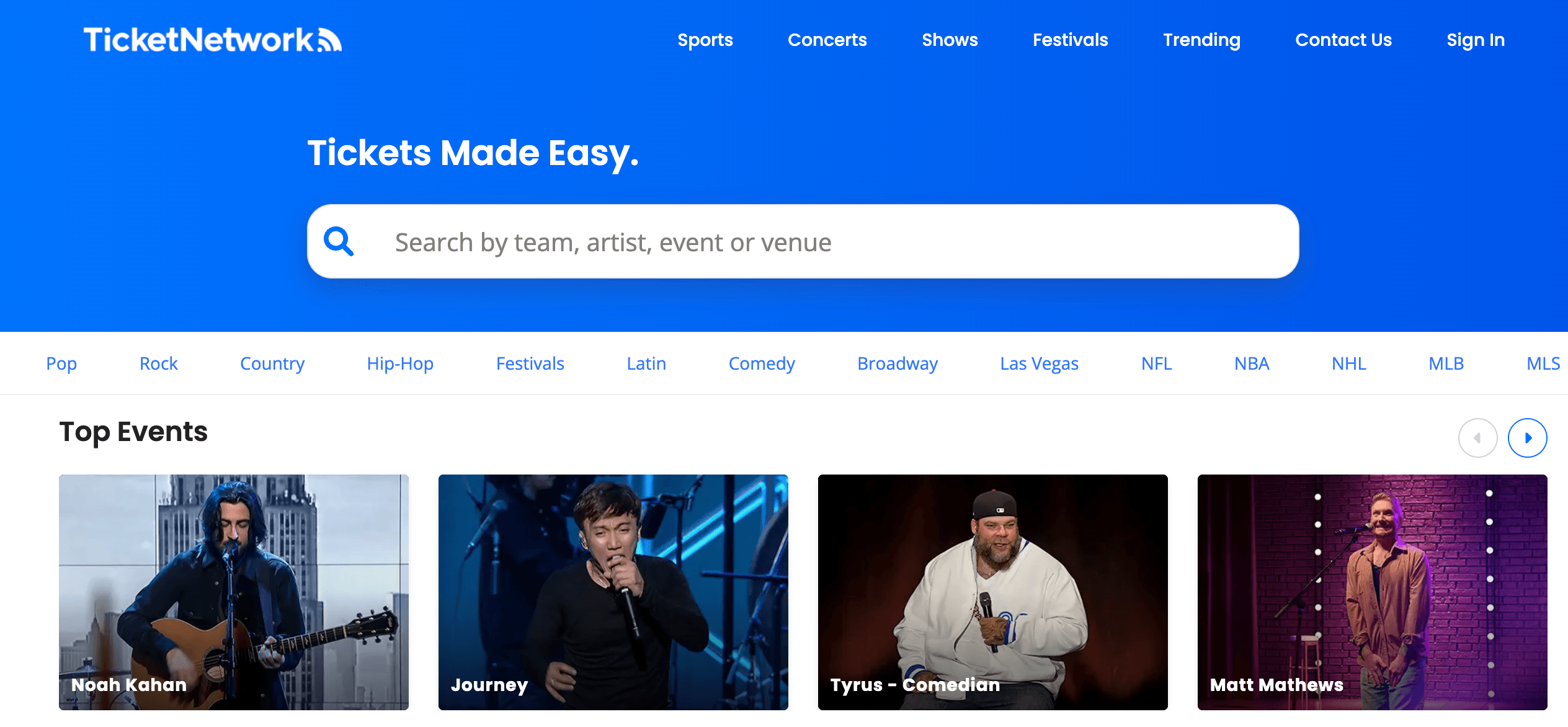
The catalog is broad. The homepage organizes inventory into Sports, Concerts, Shows and Festivals, with genre shortcuts for pop, rock, country, hip-hop, Latin, comedy, Broadway and Las Vegas residencies, and league shortcuts for the NFL, NBA, NHL, MLB and MLS. Featured listings at the time of writing include major touring acts such as Noah Kahan, Journey, Jay-Z, Ringo Starr and His All Starr Band, Riley Green, Def Leppard and Nickelback, alongside local venues in Columbus, Ohio. The site also lists gift cards and virtual experiences with performers and athletes.
Why TicketNetwork Stands Out in 2026
Access to sold-out events: The main reason people use any resale marketplace is access. When a tour date, playoff game or Broadway hit is gone from the primary seller, TicketNetwork’s broker network is often where seats still exist. That is the entire value of the platform, and it is a real one.
A very wide catalog: From NFL Sundays and MLS matches to Las Vegas residencies, festivals and comedy tours, the site covers the mainstream categories most buyers search for. You rarely need to look elsewhere just because a category is missing.
A published buyer guarantee: TicketNetwork publishes a guarantee that tickets will be valid for entry, match what you ordered and arrive before the event, with a refund if an event is permanently canceled. Many resale sites make a similar promise, but having it written down and linked from the homepage gives buyers something concrete to point to if an order goes wrong.
Seat maps and easy browsing: Independent reviewers consistently describe the website as easy to use, with venue maps, seat selection and filters that make it simple to compare sections. Several Trustpilot reviewers also describe checkout as quick and say delivery was fast when a mobile transfer was used.
Flexible ways to pay: The site lists Affirm among its services, so buyers who prefer to split a larger order into installments can look for that option at checkout. It also advertises a $10 discount for new customers who download the mobile app, which takes a small bite out of the fee load.
An established company with a real address: This is not a pop-up reseller. TicketNetwork has operated since 2002 from a physical headquarters in Connecticut, has a Better Business Bureau profile with an A+ rating (it is not BBB Accredited), and has been through enough regulatory scrutiny that its practices are well documented. That track record cuts both ways, as the sections below explain, but it is far easier to research than an anonymous seller.
A big ecosystem behind the scenes: TicketNetwork also supplies the technology that many brokers use to list inventory and sells marketplace tickets through a private label program to other sites. That scale is part of why its catalog is so large.
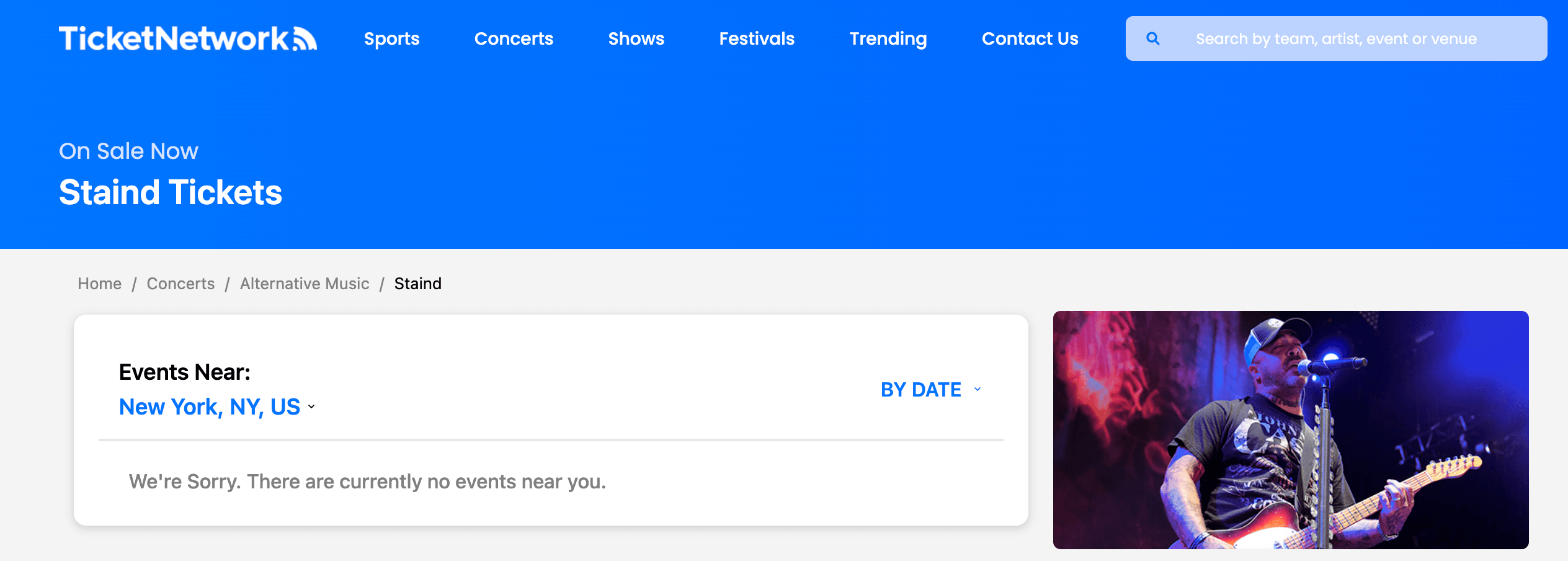
TicketNetwork aggregates seats from independent ticket sellers across concerts, sports, theater and festivals, giving buyers a second chance at sold-out events.
Key Features and Technology
TicketNetwork’s product is simple on the surface, but a few moving parts decide whether a purchase feels smooth or stressful. Here is how the platform breaks down.
The Resale Marketplace Model
Every listing is posted by a third-party seller. You choose an event, pick a section and price from the seat map, and TicketNetwork processes the order and passes it to the seller to fulfill. Because inventory belongs to the sellers, prices move with demand, and the exact seats you see are not held by TicketNetwork itself. The guarantee refund promise applies once the seller confirms your order, which is why you should always watch for the confirmation after checkout.
Search, Categories and the All-In Price Toggle
The homepage groups events by Sports, Concerts, Shows and Festivals and offers shortcuts by genre and league. Consumer reporting on the site notes that TicketNetwork offers an “all in” view that shows fees from the start of a search, but that many new users do not know to switch it on and it may not be the default. Turn it on first. Sorting by the price without fees can make some listings look cheaper than they really are.
Ticket Delivery Options
Delivery is chosen at purchase and depends on the event and seller. Many tickets are now delivered as mobile transfers, which can arrive within hours, while some orders rely on other methods with longer lead times. Trustpilot reviews show that this is where friction appears: one buyer had to install a separate ticketing app to view tickets sent through a mobile transfer, and others reported tickets arriving very close to showtime. The practical lesson is to read the delivery method and expected arrival window at checkout instead of assuming instant delivery.
Mobile App and Payment Options
TicketNetwork has apps on the Apple App Store and Google Play, and the homepage promotes $10 off tickets for downloading the app. The services section also lists Affirm for installment payments and Allianz, which is commonly associated with event ticket protection. Availability and pricing of these options can vary by event and by order, so confirm what is offered at checkout.
Pricing, Plans, and Package Structure
TicketNetwork has no subscription, membership or plan tiers. Instead, what you pay is a combination of the seller’s asking price and TicketNetwork’s buyer fees, and neither is a fixed number. The company does not publish a fee rate. The homepage states only that resale prices may be above face value, and fees appear as line items during checkout. The table below therefore lays out the real cost components rather than plans, using what is stated on the official site as of October 2026 and clearly labeling figures reported by third parties as approximate.
| Cost Component | Price (USD) | What It Is | Best For |
|---|---|---|---|
| Concert tickets | Set by seller, varies by event | Resale tickets for tours and shows; may be above or below face value | Fans chasing sold-out dates |
| Sports tickets | Set by seller, varies by game | NFL, NBA, NHL, MLB and MLS seats from resale inventory | Fans buying close to game day |
| Theater and Broadway | Set by seller, varies by show | Broadway, Las Vegas residencies and touring shows | Trip planners and gift buyers |
| Buyer service fees | Not published; third parties report roughly 20% to 40% on top (approximate) | Per-ticket and per-order charges added at checkout | Know before you buy, compare totals |
| Delivery or transfer fee | Shown at checkout | Charge tied to the chosen delivery method | Choose mobile transfer when offered |
| New app offer | $10 off tickets | Promotion shown on the homepage for downloading the app | First-time buyers |
| Installment payments | Via Affirm (terms set by Affirm) | Pay over time on larger orders where offered | Big-ticket seats and groups |
| Gift cards | Chosen by buyer | Gift cards listed on the site | Last-minute presents |
How TicketNetwork Compares to Alternatives
| Factor | TicketNetwork | Vivid Seats | TickPick |
|---|---|---|---|
| Model | Resale marketplace of brokers and sellers | Resale marketplace | Resale marketplace with no buyer fees |
| Typical buyer fees | Not published; reported roughly 20% to 40% (approximate) | Reported roughly 15% to 30% (approximate) | $0 buyer fees, listed price is the total |
| Price transparency | All-in toggle exists but may not be default | Fees added at checkout | Price shown is price paid |
| Buyer guarantee | Published guarantee; refund via seller | Advertises a buyer guarantee | Buyer protection program |
| Trustpilot (approx.) | 3.6 of 5, about 3,250 reviews | Varies, check live | Varies, check live |
| Event range | Concerts, sports, shows, festivals | Very large catalog | Concerts, sports, theater |
| Best for | Sold-out events when you compare totals | Wide selection and familiar brand | Fee-averse buyers |
vs. Vivid Seats: Vivid Seats is the closest comparison. Both add fees at checkout, both draw from broker inventory, and both can show the same seats at different final prices. One third-party comparison rated Vivid Seats far above TicketNetwork on reputation, while noting that TicketNetwork’s lower starting price excluded fees. The honest takeaway is that neither is automatically cheaper, so price the same seats on both before buying.
vs. StubHub and SeatGeek: StubHub and SeatGeek are the household names of resale. SeatGeek builds fees into the listed price on many events, and StubHub typically adds a buyer fee of roughly 10% to 20% (approximate). Both tend to feel more polished and carry stronger brand recognition. TicketNetwork’s edge is its broker depth and occasional listings that undercut larger competitors, but you give up some brand comfort.
vs. TickPick: TickPick’s pitch is simple: no buyer fees, with the listed price equal to the price you pay. If fee surprises are your biggest worry, that model removes the problem entirely, though TickPick’s inventory for a given event may differ. For fee-sensitive shoppers it is the first alternative to check.
vs. buying from the primary seller: Face value from the official box office or the venue will almost always be cheaper than resale. TicketNetwork makes sense only when the primary seller is sold out, the show is imminent, or you want specific seats that are no longer available.
Pros and Cons
What Users Love
Fast, easy checkout: The most common praise on Trustpilot is that buying is simple and quick. Reviewers describe an easy process and some say there were fewer surprises than at the largest primary seller.
Quick delivery when it works: Many buyers report receiving tickets very soon after purchase, especially with mobile transfers, which is exactly what the resale market promises when it goes right.
Sometimes better prices: Some reviewers found lower prices or a useful discount compared with other sellers, which fits the reality that broker pricing varies listing by listing.
Helpful customer service: A meaningful group of reviews describe customer service as friendly, professional and helpful, particularly when an order needed attention.
Wide selection and good seat maps: Independent reviewers credit the website with clear venue maps and a large selection of sports, concerts and theater events.
A written guarantee: Having a published guarantee covering validity, matching seats, arrival before the event and refunds for permanently canceled events gives buyers a clear standard to hold the company to.
Limitations Worth Knowing
Fees that arrive late: This is the central complaint. The company publishes no fee rate, and consumer reports describe fees adding a large percentage at the end of checkout. In 2023, Canada’s Competition Bureau reached an $825,000 settlement with TicketNetwork over advertised prices that regulators said could not actually be obtained because mandatory charges were added later, and the company agreed to change its price advertising.
A mixed reputation: Trustpilot shows about 3.6 out of 5 across roughly 3,250 reviews, with 54% five-star but 24% one-star. That polarized split is a warning sign in itself, and cached snapshots of the page have shown lower scores at other times, so check the live number. Another independent review site rated the company far lower. The BBB lists an A+ rating but not accreditation, with dozens of closed complaints over three years.
Delivery timing and app friction: Reviewers report tickets arriving late on the day of the show, tickets requiring a separate ticketing app, and tickets not provided until the day before an event. Because delivery depends on the seller, the experience is less predictable than buying from a primary seller.
Seat quality surprises: Some buyers say details such as an obstructed view were not clear until after payment. Always read the listing notes, which can include restrictions that the seat map does not show.
Sales are final: The terms state that changes, exchanges and cancellations are not allowed, and rescheduled events generally do not qualify for refunds. Delivery fees are also excluded from refunds. Only permanently canceled events trigger the refund promise.
A regulatory track record: Public reporting describes a 2014 settlement with the FTC and Connecticut over marketing that implied resale tickets came from venues, a $1.55 million settlement with the New York Attorney General in 2019 over listings for tickets sellers did not yet hold, the 2023 Canadian pricing settlement, and a small 2025 Connecticut privacy settlement. These are historical, and the company has since changed practices in places, but they are part of the picture for a buyer deciding how much to trust the site.
Who Should Use TicketNetwork
Fans chasing sold-out events: If the primary seller shows sold out and you really want to be there, TicketNetwork is a legitimate place to look, as long as you accept resale pricing and compare totals.
Last-minute planners: When a game or show is days away and you need seats together, broker inventory can fill the gap, especially if you choose a mobile transfer and confirm the delivery window.
Careful comparison shoppers: Buyers who open two or three marketplaces, switch on all-in pricing and compare final totals can find a real saving on TicketNetwork some of the time.
Travelers and gift buyers: People planning Las Vegas, Broadway or festival trips, or buying a gift, can use the wide catalog and gift card option, provided they order well ahead of the date.
Who should look elsewhere: Anyone who can still buy at face value from the box office, anyone who hates checkout surprises, and anyone who needs a guaranteed same-day delivery with no uncertainty will do better elsewhere. Fee-averse shoppers should look at a no-buyer-fee marketplace first, and buyers who want the strongest brand recognition may prefer StubHub or SeatGeek.
For the right event, a resale marketplace is the difference between watching from home and being in the building, as long as you plan for fees and delivery.
Getting Started: Step by Step
- Check the primary seller first. Look up the event at the official box office or venue. If face-value tickets exist, buy there and skip the resale premium.
- Search on TicketNetwork and turn on all-in pricing. Find your event through the Sports, Concerts, Shows or Festivals menus, and switch on the all-in price view so fees show from the first screen.
- Compare the same seats elsewhere. Open the same section on one or two other marketplaces and compare the final checkout total, not the headline price.
- Read the listing notes and delivery method. Look for view restrictions, the delivery type and the expected arrival window. Choose a mobile transfer when it is offered and make sure you know which app will be needed.
- Pay with a credit card and apply any offer. Use a credit card for chargeback rights. If you are new, download the app to claim the $10 offer, and consider Affirm only if installment terms make sense for you.
- Save the confirmation and track delivery. Keep your order email, watch for the seller confirmation and contact support early if tickets have not arrived on schedule.
Tips for Getting Maximum Value
Buy as early as your plans allow, because the worst reported experiences involve tickets that arrived hours before a show or not until the day before. Always compare the final total across at least two marketplaces, and use the all-in view so fees are visible before you commit. Prefer mobile transfer delivery when it is offered and check which ticketing app the venue uses so you are not installing something in the parking lot. Use the new-user app offer, pay by credit card, and keep every confirmation email. Watch prices for popular events as the date approaches, since resale prices can fall for weaker shows and rise for hot ones. And if a listing mentions restricted or obstructed views, treat that as a reason to compare other sections rather than a detail to ignore.
Future Outlook and Final Assessment
The ticket resale market in 2026 is moving toward price transparency. Regulators have pushed marketplaces to show all-in prices, competitors have built their brands around lower or zero buyer fees, and consumers are far more fee-aware than they were a few years ago. TicketNetwork has the catalog, the history and the technology to compete, and its all-in toggle shows that it understands the demand for clarity. The open question is whether it makes full price visibility the default.
The honest caveats remain: fees that are not published, a polarized Trustpilot profile, delivery timing that depends on the seller, final-sale terms and a regulatory history that buyers should know about. Competitors such as TickPick and SeatGeek are strongest exactly where TicketNetwork is weakest. But for sold-out events, with a careful buyer who compares totals and plans ahead, TicketNetwork can be a workable option.
Conclusion
TicketNetwork does one job well: it connects buyers with a huge pool of broker-listed seats for concerts, sports, theater and festivals that would otherwise be out of reach. It also carries the classic weaknesses of the resale model, namely fees that are not published, a reputation that splits reviewers into happy and unhappy camps, and delivery that depends on the seller. A buyer who uses the all-in price view, compares totals, plans ahead and pays by credit card can use the platform with confidence. Check the live price, compare it with a second marketplace, and TicketNetwork can be the way you get into the show.

Compare the all-in price, confirm delivery and book early, and a resale marketplace can put you in the arena on game day.
Ready to get into the show that sold out?
Explore more honest reviews, tutorials and tech comparisons to find the right gear for the way you work, travel and live, at World Of Tech, where we make everything easy.
👉 Shop TicketNetwork: https://worldoftech.space/ticketnetwork
👉 Our YouTube Channel: youtube.com/@world_tech79
👉 Our Facebook Fanpage: Facebook
👉 Our X (Twitter): @worldoftech79
Pricing, specifications and policy details in this review were verified against ticketnetwork.com and independent review sources (including Trustpilot, the Better Business Bureau and consumer reporting) as of October 2026. Ticket pricing, fees and promotions change frequently, so confirm current details on the official site before purchasing. Competitor prices and fee ranges are approximate and subject to change.