
Most AI platforms force a choice between a friendly chat assistant and a serious developer tool. Z.ai tries to be both. Built by Zhipu AI, the Beijing lab that became the first publicly listed large language model company when it debuted on the Hong Kong exchange in January 2026, Z.ai bundles a free web chatbot, a growing set of task agents for slides, translation and video effects, a pay-as-you-go API, and a flat-rate GLM Coding Plan that starts at $18 a month and plugs straight into tools like Claude Code, Cline, OpenCode and Cursor. At the center of it all sits GLM-5.3, the flagship model released in August 2026, with a one-million-token context window, always-on reasoning and API pricing of $1.40 per million input tokens and $4.40 per million output tokens.
For independent developers, agencies, startups and anyone who has watched their AI coding bill climb, the pitch is easy to understand: near-frontier agentic coding at a fraction of the usual price. But Z.ai is not a flawless product, and an honest look reveals real trade-offs around peak-hour throttling, quota complexity, customer support and a Trustpilot score that sits at just 2.0 out of 5. This 2026 review walks through Z.ai’s background and model lineup, the platform’s features, verified pricing for the free chat, the Coding Plan and the API, head-to-head comparisons against Claude Code and MiniMax, the genuine pros and cons, and exactly who should (and shouldn’t) sign up.
Z.ai Review 2026: The GLM-5.3 Powered AI Platform for Coding, Agents and Budget-Friendly API Access
Overview and Background
Z.ai is the international brand of Zhipu AI, a Chinese foundation-model company spun out of Tsinghua University’s Knowledge Engineering Group in 2019. The company adopted the Z.ai name for global audiences in mid-2025 and has since built a full stack around its GLM model family: a consumer chat product at chat.z.ai, a developer API platform with documentation at docs.z.ai, and a subscription called the GLM Coding Plan aimed squarely at AI-assisted programming. It is not a wrapper around someone else’s model. Z.ai trains its own models, publishes its own pricing and, for several earlier GLM generations, has released open weights that anyone can download and run.
The corporate story adds credibility that many AI start-ups cannot claim. Zhipu listed in Hong Kong on January 8, 2026 at HK$116.20 per share, raising roughly HK$4.35 billion at a valuation near HK$51 billion, and it is widely described as the first pure large-language-model company to go public anywhere. Since then it has shipped a rapid cadence of models: GLM-5 in February 2026, GLM-5.1 in the spring, GLM-5.2 in June, and GLM-5.3 on August 14, 2026. The company has also been reported to be on the US Entity List, a detail that matters for some American enterprise buyers and is worth checking against your own compliance rules.
What separates Z.ai from a typical chatbot site is how the pieces fit together. A single account gives you the free web assistant, an API key for pay-as-you-go calls, and (if you subscribe) a credit-based Coding Plan that works inside third-party coding agents. On July 30, 2026, Z.ai moved new subscribers to that credit system, replacing the older prompt-count plans, so any guide you read that talks about “80 prompts per five hours” is describing a legacy structure that is no longer sold to new customers.
Why Z.ai Stands Out in 2026
A flagship model that closes much of the gap: Z.ai reports that GLM-5.3 lifts Terminal-Bench 3.0 from 4.6 to 28.3, DeepSWE v1.1 from 46.2 to 66.9, and its private Z.ai Code Bench from 23.4% to 34.5% at maximum effort compared with GLM-5.2. Independent analysts describe it as the strongest open coding model measured so far. (Honest note: on Z.ai’s own Code Bench, Claude Fable 5 still leads at 39.5%, and most of these figures are vendor-reported.)
Aggressive pricing for the capability: GLM-5.3 costs $1.40 per million input tokens and $4.40 per million output tokens through the API, while the lighter GLM-5.3-Flash drops to $0.15 and $0.50. The Coding Plan begins at $18 a month. For heavy agent workloads, that is a small fraction of what comparable closed models typically cost.
A one-million-token context window: GLM-5.3 supports up to 1M tokens of context and 128K tokens of output. That is enough to load a large repository, a long specification or a full document set into a single session, which suits the long-horizon agent tasks Z.ai is optimizing for.
Works inside the tools developers already use: The Coding Plan is designed for Claude Code, Cline, OpenCode, Cursor, Kilo Code and Z.ai’s own ZCode, so there is no need to abandon your existing workflow. You swap the model backend, not the editor or terminal agent you already know.
Genuinely free ways to start: The chat at chat.z.ai is free to use, and several models, including GLM-4.7-Flash, GLM-4.5-Flash and GLM-4.6V-Flash, are listed at zero cost on the API pricing page. You can evaluate the ecosystem without entering a card number.
Built-in tools and off-peak discounts: Every Coding Plan tier includes Vision, Web Search, Web Reader and Zread MCP servers. Usage during off-peak hours (outside Monday to Friday, 14:00 to 18:00 UTC+8) is charged at half the credit rate, and from September 25 to October 7, 2026 Z.ai is applying the off-peak rate around the clock.
Real company backing and an open-weight track record: A Hong Kong listed parent, a steady release cadence and a history of publishing model weights make Z.ai a more durable bet than a typical AI start-up. That track record matters if you want the option of self-hosting or switching providers later.
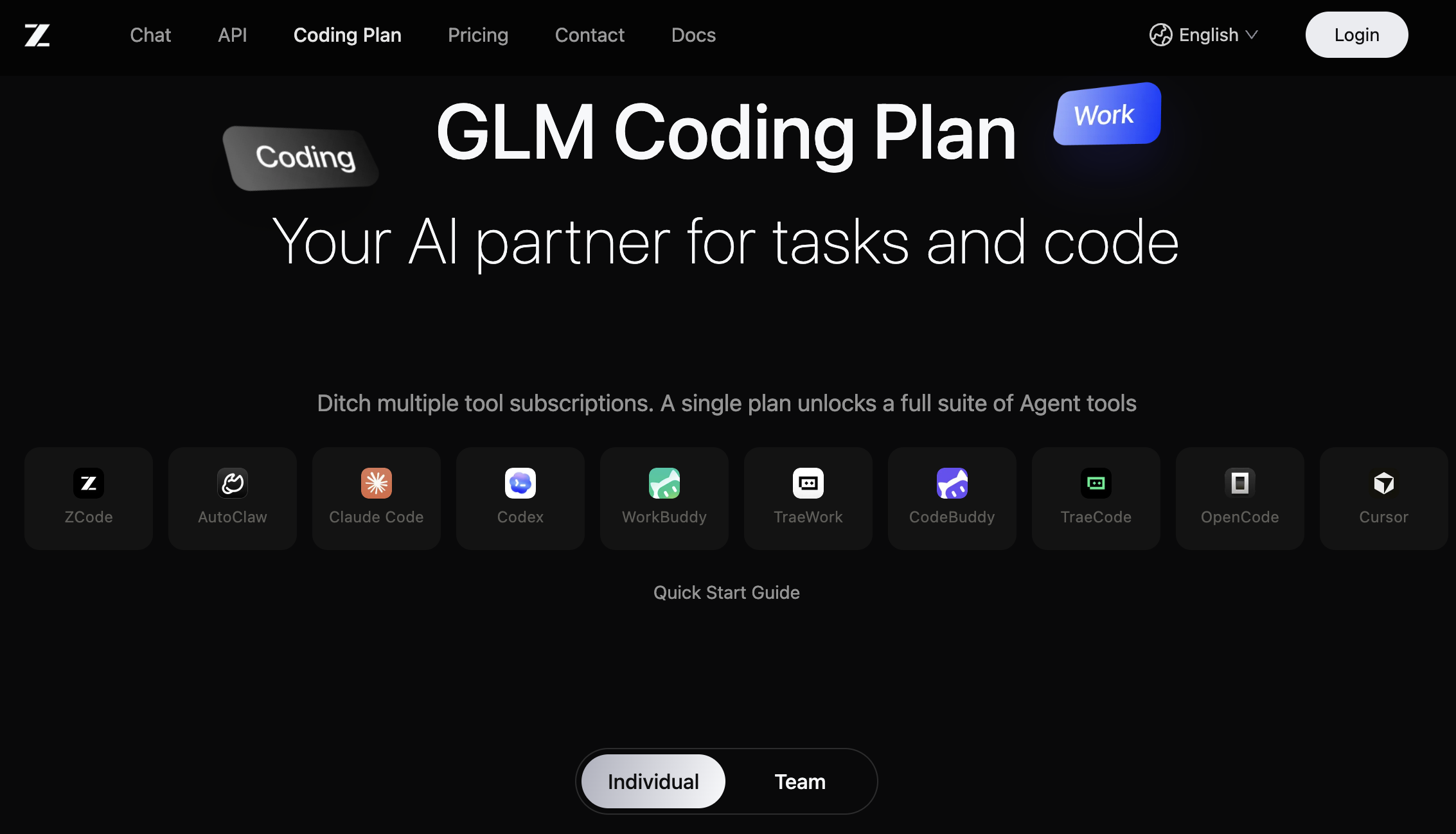
Z.ai combines a free chat assistant, a pay-as-you-go API and a credit-based GLM Coding Plan, all powered by the GLM-5.3 model family with a one-million-token context window.
Key Features and Technology
Z.ai’s platform looks sprawling at first glance, but it organizes into a handful of clear pillars. Here is how the product actually breaks down.
GLM-5.3 and the GLM Model Family
GLM-5.3 is the current flagship. It uses the same base model as GLM-5.2, with every improvement coming from post-training, and it accepts text-only input. Reasoning is always on, and you control depth through a reasoning_effort setting with three levels: low, high and max. Z.ai recommends max for complex coding. Alongside it sit GLM-5.3-Flash and GLM-5.3-FlashX for cheaper, faster work, plus older options such as GLM-5.2, GLM-5.1, GLM-5 and GLM-4.7. On the Coding Plan, requests for GLM-5.2 or GLM-5.1 are automatically routed to GLM-5.3, and requests for GLM-4.7 are routed to GLM-5.3-Flash, so the plan effectively runs on the two newest models.
The GLM Coding Plan and Supported Tools
The Coding Plan is a flat monthly subscription measured in credits rather than tokens or prompts. Each tier has a five-hour credit window and a weekly window, and credits are calculated from input, cached input and output tokens using published multipliers (for GLM-5.3, 6.9 for input, 1.7 for cached input and 24 for output, divided by 10,000). Off-peak calls cost half. The plan is limited to officially supported tools, which include Claude Code, Cline, OpenCode, Cursor, Kilo Code, Roo Code, OpenClaw and ZCode. Z.ai also states that account sharing is prohibited and that violations can lead to rate limiting or account freezes.
Z.ai Chat and Built-In Agents
The consumer side of the product lives at chat.z.ai, currently powered by GLM-5.3-Flash. It handles everyday writing, coding help, research and long-task requests, and the platform markets features such as AI presentation building, full-stack code generation and image or document analysis. For developers, the docs also list a GLM Slide and Poster Agent (beta) that combines retrieval, content structuring and layout design, a translation agent with glossary support, and a video effect template agent priced per video.
API, Multimodal and Media Models
Beyond text, the API covers vision models (GLM-4.6V and GLM-5V-Turbo), GLM-OCR for document parsing, GLM-ASR-2512 for audio transcription, GLM-Image and CogView-4 for image generation, and CogVideoX-3 for video. The API speaks the OpenAI Chat Completion protocol and also offers an Anthropic-style message endpoint, and official Python and Java SDKs are available, so migrating an existing application usually means changing a base URL and a model name. Built-in web search is billed at $0.01 per use.
Security and Vulnerability Research Capability
One of the more unusual claims around GLM-5.3 is its cybersecurity strength. Z.ai reports 84.5% on the CyberGym vulnerability discovery benchmark, ahead of the closed models it compared against, and says the model helped identify 2,436 vulnerabilities across 269 real projects after expert review. On the harder ExploitBench, GLM-5.3 reaches 54.4%, well below the 78.0% Z.ai lists for Mythos 5. Treat these as vendor-reported results, and remember that a model this capable at finding flaws is dual-use by nature.
Pricing, Plans, and Package Structure
Z.ai uses three pricing layers: a free chat product, a subscription for coding tools, and pay-as-you-go API rates. The Coding Plan is billed monthly with a 20% discount for quarterly billing and 30% for yearly billing. Z.ai’s official documentation confirms plans start at $18 a month and publishes the credit allowances and API rates below. The Pro and Max monthly prices reflect the current subscription page as reported by multiple recent trackers, and some older third-party guides still list lower figures, so always confirm the live price at checkout. Z.ai also runs frequent promotions, so the effective price you pay can differ from the list rate.
| Product | Price (USD) | What It Is | Best For |
|---|---|---|---|
| Z.ai Chat (chat.z.ai) | Free | Web assistant powered by GLM-5.3-Flash with built-in agents | Casual use and testing the models |
| GLM Coding Lite | $18/mo ($12.60/mo billed yearly) | 2,000 credits per 5 hours, 10,000 per week, GLM-5.3 and GLM-5.3-Flash | Solo developers on one project |
| GLM Coding Pro | $80/mo ($56/mo billed yearly) | 12,000 credits per 5 hours, 60,000 per week (6x Lite), faster generation and peak-hour priority | Daily professional coding |
| GLM Coding Max | $168/mo ($117.60/mo billed yearly) | 28,000 credits per 5 hours, 140,000 per week (14x Lite) | Heavy multi-project agent use |
| GLM Coding Team Plan | Seat-based (see subscribe page) | Standard and Premium seats with per-seat token allowances | Small teams and agencies |
| GLM-5.3 API | $1.40 in / $4.40 out per 1M tokens | Flagship model, cached input $0.26 per 1M | Production apps and agents |
| GLM-5.3-Flash API | $0.15 in / $0.50 out per 1M tokens | Fast, low-cost model (FlashX: $0.37 / $1.25) | High-volume, routine tasks |
| Free API models | $0 | GLM-4.7-Flash, GLM-4.5-Flash, GLM-4.6V-Flash | Prototyping and experiments |
| Tools and media | From $0.01 per use | Web search $0.01, GLM-Image $0.015 per image, CogVideoX-3 $0.20 per video | Add-on capabilities |
How Z.ai Compares to Alternatives
The closest rivals for Z.ai’s Coding Plan are Anthropic’s Claude Code subscriptions and MiniMax’s Token Plan. The table below compares entry pricing, top-tier pricing and the trust signals visible on Trustpilot. Competitor prices are approximate and change often.
| Factor | Z.ai (GLM Coding Plan) | Claude Code (Anthropic) | MiniMax Token Plan |
|---|---|---|---|
| Entry paid price | $18/mo (Lite) | ~$20/mo (Pro) | From ~$20/mo |
| Top individual tier | $168/mo (Max) | ~$200/mo (Max 20x) | ~$120/mo |
| Flagship model | GLM-5.3 and GLM-5.3-Flash | Claude Opus and Fable tiers | MiniMax M3 |
| Usage system | Credits, 5-hour and weekly windows, off-peak 50% | 5-hour and weekly limits shared with chat | Monthly quota with 5-hour windows |
| Works in third-party agents | Yes (Claude Code, Cline, OpenCode, Cursor) | Primarily its own Claude Code | Yes (multiple agents) |
| Trustpilot score (approx.) | 2.0 (38 reviews) | 1.5 (about 2K reviews) | 1.8 (28 reviews) |
| Best for | Lowest cost per agentic coding task | Top model quality and polish | Parallel agent loops and media |
Z.ai vs. Claude Code: Claude Code remains the benchmark for raw model quality and a more polished experience, and Z.ai’s own numbers show Claude Fable 5 ahead on the hardest coding tasks. But a Z.ai Max plan costs less than a Claude Max 20x subscription, and Lite costs slightly less than Pro, so budget-focused developers can get a large allowance for less money. Many developers use both: Claude for the trickiest reasoning, Z.ai for high-volume grunt work.
Z.ai vs. MiniMax: MiniMax’s Token Plan targets parallel agent loops and bundles media generation into the same quota, while Z.ai concentrates on coding depth and a very large context window. Both undercut Western vendors, and both draw mixed reviews on reliability. If you need a shared quota for coding and media, MiniMax deserves a look; if long-horizon coding is the priority, GLM-5.3 is the stronger fit.
Subscription vs. pay-as-you-go API: Z.ai claims that using off-peak discounts on the Coding Plan can save up to 92% compared with paying standard GLM-5.3 API rates for the same tokens. That figure is vendor-reported and depends on how heavily you use the plan, but it shows why the subscription is aimed at continuous, agent-driven work while the API suits occasional or production traffic.
Pros and Cons
What Users Love
Exceptional value for money: Reviewers who use the Coding Plan as a workhorse describe getting a large volume of tokens for a modest price. One Pro subscriber on Trustpilot called it an okay service at a good price, comfortable for everyday tasks though not a Claude replacement.
Strong agentic coding for an open-weight family: GLM-5.3 posts large gains on Terminal-Bench, DeepSWE and Z.ai’s own Code Bench, and one third-party test (KingBench 3) scored it at 91.25%. Analysts consistently place it at or near the top of open coding models.
Huge context and long output: A one-million-token window with 128K output tokens makes repository-scale tasks and long-running agents practical without constant context juggling.
Drop-in compatibility: Working with Claude Code, Cline, OpenCode, Cursor and OpenAI-style SDKs means very little migration effort, and Z.ai publishes step-by-step setup guides for each tool.
Transparent credit math: Z.ai documents its input, cached and output multipliers and its peak versus off-peak rules openly, so you can estimate costs rather than guess. Free models and a free chat also lower the barrier to trying it.
Limitations Worth Knowing
Reliability and peak-hour throttling: Trustpilot reviews from June through September 2026 repeatedly cite “currently in peak hours” messages, timeouts, empty responses and rate-limit errors, including from paying subscribers. Some of this may reflect surging demand after a major launch, but it is a recurring theme rather than a one-off.
Slow or missing support: Several reviewers report emails, tickets and social posts going unanswered for weeks, and one described a corrupted conversation with no response. If you rely on fast human support, this is a genuine risk.
A weak public reputation score: Z.ai holds a 2.0 out of 5 TrustScore from 38 Trustpilot reviews, with about 66% giving one star. In fairness, the profile is unclaimed, the company has not invited reviews, the sample is small, and other major AI services also score poorly on that platform. Still, the divergence between strong benchmark claims and unhappy users is a material finding.
Billing rules are strict: Plans auto-renew, refunds are not supported, cancellation must happen at least three days before renewal, and use outside supported tools can restrict your benefits. Some reviewers also allege that marketing about quota multiples overstated real-world usage, particularly once peak multipliers apply.
Narrower fit than the marketing suggests: GLM-5.3 is text-only, always reasons, and is less suited to instant autocomplete, latency-sensitive tasks or visual development. Many benchmark results come from Z.ai itself, including a private benchmark that cannot be independently reproduced.
Behind the top closed models and a jurisdiction question: On the hardest coding, Claude Fable 5 still leads by Z.ai’s own admission, and the company is Chinese, listed in Hong Kong and reported to be on the US Entity List. Teams with strict data-residency or procurement rules should review the privacy policy and terms before routing sensitive code through the service.
Who Should Use Z.ai
Budget-conscious solo developers: If you code most days and want an agent-friendly model without a $100 to $200 monthly bill, the Lite or Pro plan offers unusually generous allowances for the price.
Developers already using Claude Code, Cline or OpenCode: You can keep your tools and swap in GLM-5.3 as a cheaper backend for routine work, saving your premium model for the hardest problems.
Startups and agencies running high-volume agents: The API rates and Flash tier make batch automation, code review pipelines and long-running agents affordable at a scale where closed-model pricing would sting.
Teams that value open-weight optionality: Z.ai’s history of publishing weights for earlier GLM generations gives you a path toward self-hosting or provider diversification down the line.
Security researchers and code auditors: The strong reported results on vulnerability discovery make GLM-5.3 worth evaluating for authorized code auditing, provided you validate its findings carefully.
Curious learners and casual users: The free chat and free API models let students, writers and hobbyists explore a capable model family at no cost.
Who should look elsewhere: Anyone who needs guaranteed uptime, service-level commitments or responsive human support should hesitate, as should regulated organizations with strict data-residency rules, and users who need image or audio input on the flagship model. If you want a refund window or a no-risk trial before committing money, Z.ai’s no-refund policy is also a poor match, and a more established provider may serve you better.
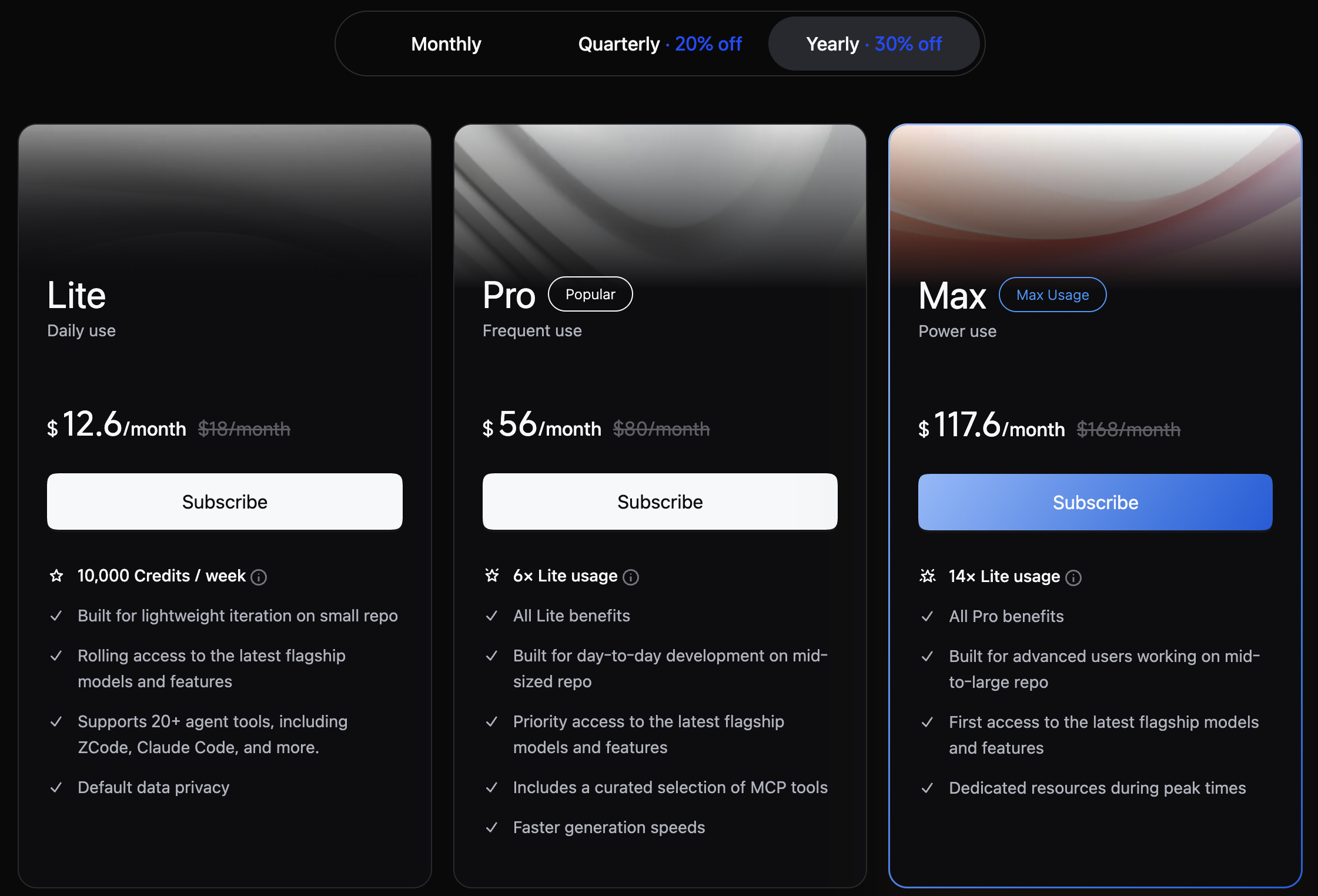
The GLM Coding Plan lets developers keep their favorite coding agents while swapping in GLM-5.3 as a low-cost model backend.
Getting Started: Step by Step
- Try the free chat first. Open chat.z.ai and test GLM-5.3-Flash on a few real tasks. It costs nothing and shows you the model’s style, speed and limits before you spend a cent.
- Create your Z.ai account. Sign up at z.ai and open the API Platform, where your keys, billing and subscription settings all live in one console.
- Choose a plan conservatively. Start with Lite or Pro billed monthly, even though yearly saves 30%. Confirm the live price on the subscribe page and only commit to a longer term once you trust the reliability.
- Generate an API key. Create a key from the API Keys page, and keep it private. Never paste it into shared repositories or unsupported tools.
- Connect your coding tool. Follow the Coding Plan quick start in the docs for Claude Code, Cline, OpenCode or Cursor, and point the tool at Z.ai’s endpoint with your key and the glm-5.3 model.
- Monitor usage and set a renewal reminder. Check the usage statistics and charge-type pages to see how credits are consumed, and calendar a cancellation reminder at least three days before renewal if you decide not to continue.
Tips for Getting Maximum Value
Schedule your heaviest agent sessions during off-peak hours, which means any time outside Monday to Friday 14:00 to 18:00 UTC+8 and all weekend, because that halves the credit cost and often avoids the congestion that frustrates reviewers. Use GLM-5.3-Flash for routine edits, refactors and boilerplate, and reserve GLM-5.3 at high or max reasoning effort for genuinely hard debugging or architecture work, since the credit multiplier for the flagship is roughly three times higher. Keep prompts and project context stable so cached input keeps working in your favor, trim unnecessary files from the context window, and use low reasoning effort for simple questions. Always keep a fallback model or provider configured so a busy period or timeout does not stall your work, and take advantage of promotional windows such as the September 25 to October 7 all-day off-peak period and the GLM-5.3-Flash overnight campaign for paid subscribers.
Future Outlook and Final Assessment
Z.ai’s trajectory is steep. In under a year the company has gone from GLM-4.5 to GLM-5.3, listed on the Hong Kong exchange, restructured its subscriptions into a transparent credit system and pushed hard into agentic coding and cybersecurity. If its model releases keep closing the gap with closed frontier labs while holding prices low, it will keep pressuring Western vendors on cost. The open-weight tradition is another strategic strength, although reports about the timing and license of GLM-5.3 weights differ, so check the current status if self-hosting matters to you.
The main risk is operational rather than technical. Rapid growth has clearly strained capacity and support, and the gap between the impressive benchmarks and the frustrated user reviews is the story to watch. If Z.ai can stabilize throughput, answer support tickets and keep its usage rules clear, it could become a default choice for cost-efficient agents. Until then, it is best treated as a high-value, high-variance option rather than a guaranteed-uptime utility.
Conclusion
Z.ai is a compelling platform for developers and teams who want near-frontier agentic coding without frontier prices. GLM-5.3 delivers real gains, the one-million-token context is genuinely useful, the Coding Plan works inside the tools people already use, and the free chat and free API models make experimentation easy. Against that, the 2.0 Trustpilot score, repeated complaints about peak-hour throttling and unresponsive support, the no-refund policy and the fact that the top closed models still lead on the hardest tasks are all worth taking seriously. Go in with realistic expectations, test it on a monthly plan, and Z.ai can be one of the smartest ways to cut your AI coding costs in 2026.
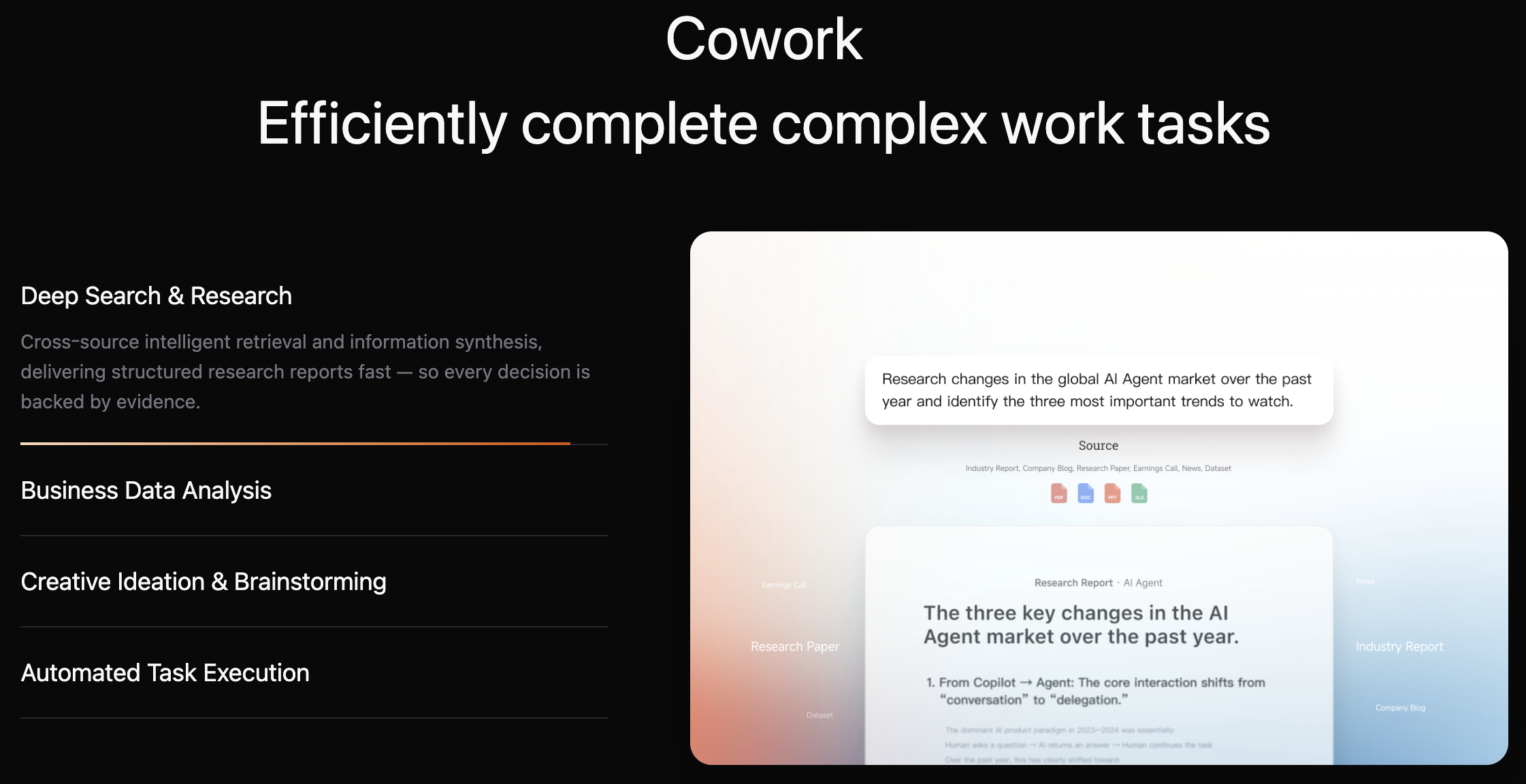
Z.ai pairs low prices and strong coding benchmarks with real questions about reliability and support, so testing it on a monthly plan is the smart way to begin.
Ready to cut your AI coding bill without giving up a powerful model?
Explore more honest reviews, tutorials and tech comparisons to find the right gear for the way you work, travel and live, at World Of Tech, where we make everything easy.
👉 Try Z.ai: https://worldoftech.space/z.ai
👉 Our YouTube Channel: youtube.com/@world_tech79
👉 Our Facebook Fanpage: Facebook
👉 Our X (Twitter): @worldoftech79
Pricing, specifications and policy details in this review were verified against z.ai, docs.z.ai and independent review sources as of September 2026. AI platform pricing, credit rules and model availability change frequently, so confirm current details on the official site before purchasing. Benchmark figures are largely vendor-reported, and competitor prices are approximate and subject to change.