
Smart glasses have spent years promising to replace the phone in your pocket, and most of them quietly settle for a camera and a speaker. Rokid takes a wider swing. Its lineup spans display-free AI glasses that you talk to, display glasses that float live captions, translation and navigation prompts in your field of view, and AR glasses that turn a phone, laptop or console into a private big screen. The range is anchored today by the 38.5g Rokid Ai Glasses Style at $299, the 49g Rokid Glasses with a dual-eye Micro LED display at $699, and the Rokid Max 2 and Rokid AR Spatial at $279 and $449 during the brand’s current Fall Sale, all backed by a 1-year limited warranty, a 30-day return window and a shelf of design awards the brand displays on its own store.
For travelers, remote workers, commuters, people who wear prescription lenses and anyone who wants information without staring down at a phone, the pitch is immediate: AI help, translation and capture that stay in your line of sight. But an honest look at Rokid also reveals real trade-offs, including a single-color display, a small battery, subscription-gated navigation and, most importantly, a customer service and delivery reputation that independent reviewers rate far lower than the products themselves. This 2026 review walks through Rokid’s full lineup, the AI and AR technology, current official pricing, head-to-head comparisons against Meta and XREAL, the genuine pros and cons, and exactly who should (and shouldn’t) buy in.
Rokid Review 2026: AI Glasses and AR Displays That Put Translation, Captions and a Private Big Screen in Your Line of Sight
Overview and Background
Rokid is a China-based wearable technology company that has been building augmented reality hardware for years. Its global store, global.rokid.com, serves international buyers and splits the catalog into two lines. The AI Line covers the Rokid Glasses (with display) and the Rokid Ai Glasses Style (without display). The AR Line covers the Rokid Max 2, the Rokid AR Spatial bundle and the Rokid AR Joy 2 bundle. Around those sit accessories such as charging cases, a power capsule, clip-on sunglasses, a prescription frame, a Rokid Hub and a GameSir-branded controller.
The brand describes itself as the world’s number one display AI glasses brand, claims more than 2,000 patents worldwide, and shows badges for Best of CES 2026, the Red Dot Design Award, Milano Design Week and the Global Design Awards 2025. Those are the company’s own claims on its own site, so treat them as marketing context rather than independent verification. Product breadth is easier to confirm: few brands sell display-free AI frames, binocular display frames and AR screens under one roof.
Two apps tie the ecosystem together. The Hi Rokid app is the control center for the AI glasses, handling pairing, settings, media management, AI features and updates, and it supports iOS 16 and later or Android 12 and later. A separate Rokid AR app focuses on transferring compatible files from your phone to the AR devices.
Why Rokid Stands Out in 2026
Real weight savings in a display frame: The Rokid Glasses with display weigh 49g, while the display-free Style weighs 38.5g without prescription lenses. For comparison, Meta’s display model is listed at 69g by independent coverage. Comfort over a full day is the first thing most wearers notice, and the store’s customer reviews repeatedly mention a light, regular-glasses feel.
A true binocular display, not a single-eye notification light: The display model uses a binocular Micro LED waveguide with a 30 degree field of view and a rated 1,500 nits of brightness, so captions and prompts appear in both eyes. It is single green and 480 by 400 resolution, which is modest, but the dual-eye approach is what makes live subtitles readable rather than tiring.
Translation built into the line of sight: The display glasses advertise real-time translation across up to 89 languages with live subtitles in view, while the Style handles up to 76 languages by voice through its open-ear speakers. For travel, international meetings and family gatherings, seeing the words as they are spoken is the feature people talk about most.
Multiple AI models behind the assistant: Say “Hi Rokid” and the glasses can answer questions, identify what the camera sees and follow up. The Style page promotes ChatGPT and Gemini, and the display model lists Qwen, ChatGPT and more. Having more than one model option is a practical advantage over single-vendor ecosystems.
Prescription friendliness across the line: Both AI glasses list prescription support from -15.00D to +15.00D, with progressive, photochromic, polarized and tinted options on the Style, and a magnetic optical insert plus an official prescription frame for the display model. The Max 2 adds built-in myopia adjustment from 0.00D to -6.00D, so many nearsighted users can wear it without extra lenses.
A creator-friendly point-of-view camera: Both AI glasses carry a 12MP Sony sensor and shoot up to 3K video, with a recording indicator light to signal nearby people. Hands-free capture of walks, trips and quick demos is genuinely useful for creators and anyone who wants to keep their hands free.
A full AR path for bigger-screen buyers: On the AR side, the Rokid AR Spatial pairs Max 2 glasses with Station 2 for three degrees of freedom spatial computing and up to three virtual screens, while the Max 2 alone offers a lightweight private screen for phones, laptops and consoles. Few brands cover both the everyday AI and the home theater use cases.

Rokid’s display glasses place live captions, translation and navigation prompts directly in your line of sight, in a 49g frame that looks like everyday eyewear.
Key Features and Technology
Rokid’s lineup is broad, but it organizes into a handful of pillars. Here is how the platform actually breaks down, product by product, using the specifications published on the official store.
Rokid Glasses: The Display AI Flagship
The Rokid Glasses are the headline product. A Snapdragon AR1 processor with 2GB of RAM and 32GB of storage drives a binocular Micro LED waveguide display, a 12MP camera, a four-microphone array and dual directional speakers. Features include real-time translation, live captions, an AI assistant, notes and meeting transcription with speaker identification, a teleprompter, notifications and navigation, plus an SDK for developers. The 210 mAh battery is rated by the brand for about 8 to 10 hours of daily use depending on recording, brightness and connection, and the optional charging case offers up to 10 full recharges with 80 percent in about 20 minutes.
Rokid Ai Glasses Style: Display-Free and Prescription-First
The Style removes the display entirely to save weight and cost. At 38.5g it uses a TR90 frame with titanium alloy hinges, air-cushion nose pads and a D-shaped design. A dual-core processor, 32GB of storage, Wi-Fi 6 and Bluetooth 5.3 power a 12MP camera that records clips of up to 10 minutes, four directional microphones and open-ear speakers for calls, music and AI answers. The brand rates typical use at up to 12 hours, and the optional charging case supports up to 13 recharges. Because there is no display, responses, navigation and translation all arrive as audio and through the Hi Rokid app.
The AR Line: Max 2, AR Spatial and AR Joy 2
The AR glasses are display devices rather than standalone computers. The Rokid Max 2 needs a compatible source, which generally means a phone, laptop or console with DisplayPort output over USB-C, or Rokid’s Station 2. The AR Spatial bundles Max 2 with Station 2 and lists 1920 by 1200 per eye, a virtual screen of up to 300 inches, IPD adjustment and up to three app windows. The AR Joy 2 bundles Max 2 glasses with the original Rokid Station and is positioned as an entertainment bundle for movies, games and cloud office use, without a spatial computing claim.
Lenses, Privacy Cues and Accessories
Rokid sells a lens service, a prescription frame and clip-on sunglasses for the display model, plus a $39 charging cable, a $99 Power Capsule and a $99 Style charging case. On privacy, both AI glasses include a recording indicator light so bystanders can see when the camera is active. Rokid has also published an explainer on how voice and translation data is handled, which is worth reading alongside the privacy policy before purchase.
Pricing, Plans, and Package Structure
Rokid sells hardware as one-time purchases, so there are no subscription tiers for the glasses themselves, with one important caveat: the display model’s page notes that full access to AR navigation requires a subscription. The prices below come from the official global store as checked in October 2026, during its Fall Sale, which advertises a free gift bag worth up to $246 with every order (the offer excludes the UK and France). Regular list prices are shown in parentheses where the store displays them.
| Product | Price (USD) | What It Is | Best For |
|---|---|---|---|
| Rokid Ai Glasses Style (Non-Display) | $299 (list $399) | 38.5g display-free AI glasses with 12MP camera, open-ear audio, voice translation and prescription support | Everyday wear, capture, calls and voice-first AI |
| Rokid Glasses (With Display) | $699 | 49g binocular Micro LED display glasses with translation, captions, teleprompter and navigation. Listed as sold out on the global store when checked, with purchase routed to B&H | Live subtitles, translation and glanceable prompts |
| Rokid Max 2 AR Glasses | $279 (list $429) | Lightweight AR display glasses that need a compatible source device | Travel, gaming and a private big screen |
| Rokid AR Spatial | $449 (list $598) | Max 2 glasses plus Station 2 for 3DoF spatial computing and up to three virtual screens | Multitasking and spatial workspaces |
| Rokid AR Joy 2 | From $499 | Max 2 glasses plus the original Rokid Station, positioned as an entertainment bundle | Movies, games and cloud office use |
| Rokid AI and AR Bundle | $719 (list $1,027) | Combined AI and AR bundle promoted as an everyday assistant plus a home theater display. Confirm exact contents on the product page | Buyers who want both lines at a bundle discount |
| Power Capsule | $99 | Optional external battery accessory for extended use | Long days and travel |
| Style Charging Case | $99 | Portable charging case for the Style, rated for up to 13 recharges | Heavy daily users |
How Rokid Compares to Alternatives
Rokid’s closest rivals depend on which line you are considering. For AI glasses with a display, the benchmark is Meta’s Ray-Ban Display, and for display-free AI glasses it is the Ray-Ban Meta Gen 2. For AR screen glasses, XREAL is the best-known alternative. The table below anchors on the Rokid Glasses with display, and the paragraphs that follow cover the rest. Competitor prices are approximate and change often.
| Factor | Rokid Glasses (Display) | Ray-Ban Meta Gen 2 | Meta Ray-Ban Display |
|---|---|---|---|
| Approx. price (USD) | $699 at the official store, availability limited | From about $379 | About $799, includes Neural Band |
| In-view display | Binocular, single green, 30 degree FOV, 1,500 nits | None | Single right lens, full color, about 20 degree FOV, up to 5,000 nits |
| Weight | 49g | Display-free, lighter than display models | 69g |
| Camera and video | 12MP, up to 3K | Up to 3K video | Built-in camera |
| Translation and AI | Up to 89 languages, Qwen, ChatGPT and more | Meta AI, live features | Meta AI with on-lens responses |
| Controls | Voice, touch and buttons | Voice and touch | Voice, touch and EMG wristband |
| Battery | About 8 to 10 hours daily use, case up to 10 recharges | Up to about 8 hours, case adds up to about 48 hours | Varies with display use, confirm with Meta |
| Best for | Live captions, translation and an open developer platform | Camera, music and the simplest everyday AI | Full-color glanceable messaging and Meta’s ecosystem |
vs. Meta Ray-Ban Display: Meta’s model offers a full-color display, a very bright panel and a gesture wristband, but only in one eye, at a higher price, at a heavier 69g, and with regional availability that has been limited. Rokid trades color for a binocular view, a lighter frame, a lower price and broader language coverage, plus an SDK. If you live inside Meta apps, Meta wins. If translation and captions matter more, Rokid is compelling.
vs. Ray-Ban Meta Gen 2: Against the display-free Style at $299, the Ray-Ban Meta Gen 2 has brand polish, a mature app and strong battery life. The Style counters with a lower sale price, a wide prescription range up to plus or minus 15.00D, a titanium hinge build and multi-model AI. Meta has the larger ecosystem and retail support network, which matters if something goes wrong.
vs. XREAL One: For AR screens, XREAL One has been listed around $399 on sale and $499 at regular price in the U.S., with a dedicated chip for three degrees of freedom tracking built into the glasses. The Rokid Max 2 undercuts it at $279 on sale, while the AR Spatial adds a dedicated Station 2 for multi-window work. Independent trust data for XREAL on Trustpilot is also thin and mixed, so compare return policies rather than assuming either brand is the safer purchase. Rokid competes mainly on price and bundles.
Pros and Cons
What Users Love
Comfort and weight: Reviewers on the store describe the Style as lighter than their regular glasses and comfortable for long wear, including people with larger heads and those who wear it through hot summer days without a sweaty feeling.
Prescription flexibility: Nearsighted wearers praise the ability to put real prescription lenses in a frame that looks like normal eyewear, with a very wide power range compared with most smart glasses.
Useful translation and voice control: Owners highlight responsive wake words, quick commands for routes, reminders and calls, and translation that is good enough for travel and basic business conversations.
Point-of-view capture: The first-person camera, up to 3K video and hands-free control are repeatedly mentioned as the reason people keep wearing the glasses every day.
Strong price positioning in the AR line: At $279 for the Max 2 and $449 for the Spatial on sale, Rokid lowers the entry price for a private big screen and spatial workspace compared with many rivals.
Responsive support for some buyers: A number of Trustpilot reviewers report fast, professional replacements for cracked lenses and correct prescriptions, so the experience is not uniformly negative.
Limitations Worth Knowing
Independent trust scores are poor: On Trustpilot, Global Rokid holds a 2.3 out of 5 rating, labeled Poor, across 118 reviews, with a polarized split of roughly 40 percent five-star and 37 percent one-star. Rokid’s own store, by contrast, shows 167 reviews on the Style with about 71 percent at the top rating and none in the bottom two rating tiers. Brand-hosted review widgets and open platforms measure different populations, so weigh both, but the gap is a material finding.
Customer service and refunds: The most common Trustpilot complaints involve unanswered emails, slow or generic replies, long refund waits and disputes over return shipping costs. Trustpilot also notes that the company has not been replying to negative reviews, and some reviewers resorted to credit card disputes.
Delivery delays and fulfillment surprises: Several reviewers, including early Kickstarter backers and European buyers who ordered through a local-looking domain, describe long delays, vague shipping promises and items shipping from overseas. Rokid’s own order tracking and shipping policy pages should be read before purchase.
A modest, single-color display: The display glasses use a green-only 480 by 400 image with a 30 degree field of view. It is excellent for captions and prompts but not for media, and at least one progressive-lens wearer reported blur at close range and discomfort.
Small battery and gated features: A 210 mAh battery is tiny, so heavy use with camera and display will drain it quickly without the case or Power Capsule. Full AR navigation also requires a subscription, which sits awkwardly beside a one-time hardware price.
Early-generation rough edges: Reviewers mention repeating the wake phrase, a very bright recording light, weak speaker volume on some units, rear reflections on one reviewed model and, in one serious case, a Rokid Station that could not be recovered after a forced shutdown with no firmware path offered. Product pages also contain inconsistent details between models.
Who Should Use Rokid
Frequent travelers and language learners: If you regularly sit in conversations in a language you only partly understand, live subtitles or voice translation are the strongest reason to buy.
Prescription wearers who want smart features: The wide lens range and regular-glasses look make the Style and the display model easier to live with than most smart glasses.
Creators and vloggers: Hands-free 3K point-of-view clips, a recording indicator and quick voice capture are well suited to walkthroughs, travel diaries and quick demos.
Presenters and meeting-heavy professionals: A teleprompter, notes, meeting transcription with speaker identification and glanceable prompts can make a real difference on stage or in calls.
Gamers and remote workers on the go: The Max 2 and AR Spatial give a lightweight private screen for flights, hotel rooms and cramped desks, especially for phone, laptop and console users with compatible USB-C output.
Developers and tinkerers: The display model’s SDK and multi-model AI make it an interesting platform for building custom glanceable apps.
Who should look elsewhere: if you want a full-color heads-up display today, a gesture wristband and a large retail support network, Meta’s ecosystem may suit you better. If you cannot tolerate any risk around shipping delays, refunds or slow support, consider buying through an authorized retailer with a strong return policy instead of ordering directly, or choose a competitor with a stronger independent reputation. And if you expect AR glasses to work like a standalone computer or a phone replacement, these are not that yet.
From prescription-friendly daily wear to travel translation and hands-free capture, Rokid aims to keep AI and information in your line of sight.
Getting Started: Step by Step
- Choose your line. Decide between the display-free Style at $299, the display glasses at $699 or the AR line starting at $279, based on whether you want audio-first AI, live captions in view or a private big screen.
- Check compatibility. The AI glasses need the Hi Rokid app on iOS 16 or later or Android 12 or later, and the Max 2 generally needs a device with DisplayPort output over USB-C or a Rokid Station.
- Plan your lenses. If you wear prescription lenses, review the lens service and prescription frame options before ordering so you do not discover a mismatch after delivery.
- Order from a clearly identified seller. Confirm the current price, stock status and gift bag terms, save your confirmation and tracking information, and note that the display glasses may route through a retail partner.
- Pair and set up. Install the Hi Rokid app, pair over Bluetooth, update firmware, set the wake phrase and choose your translation languages and display settings.
- Test inside the return window. You have 30 days from delivery to request a return, so try captions, camera, battery and comfort early and keep the original packaging.
Tips for Getting Maximum Value
Treat the first two weeks as a trial period: use translation, captions and the camera in your real routine, check the battery across a full day, and decide before the 30-day return window closes. Pair the glasses with a charging case or Power Capsule if you plan to record often, because the 210 mAh battery is the main constraint. Tune brightness and display position so captions feel natural, and review privacy settings before wearing a camera in public or at work. If you buy for the AR line, test your phone, laptop or console with the cable first, since compatibility depends on USB-C video output. Finally, save every order and tracking email, and escalate through your payment provider promptly if a delivery or refund stalls.
Future Outlook and Final Assessment
The smart glasses category is moving quickly. Meta is expanding its display model, XREAL keeps lowering prices, and Rokid is pushing a hybrid strategy of multi-model AI, a developer SDK, prescription-first design and an AR screen line with a dedicated Station 2. If Rokid can improve battery life, expand color display options and, crucially, fix its fulfillment and support reputation, it has the product breadth to become a serious global player.
Today, the hardware is the strong half of the story and the service experience is the weak half. The product pages are rich, the pricing is aggressive during the Fall Sale, and many owners genuinely enjoy the comfort, translation and capture features. At the same time, the independent Trustpilot score is low, complaints about support and delivery are consistent, and some product details are still inconsistent. Buy with eyes open, choose a seller you trust, and use the return window.
Conclusion
Rokid is one of the most interesting names in wearable AI and AR in 2026, with a clear lineup, genuinely light frames, wide prescription support and meaningful translation and capture features at prices that undercut several rivals, especially during the current Fall Sale. The weaknesses are equally clear: a single-color display, a small battery, subscription-gated navigation, inconsistent product details and a Trustpilot score of 2.3 out of 5 that reflects frustration with support and delivery. If you pick the right model, confirm stock and the seller, and use your 30-day return window, Rokid can be a rewarding way to keep AI and information in your line of sight. If service reliability is your top priority, compare carefully before you commit.
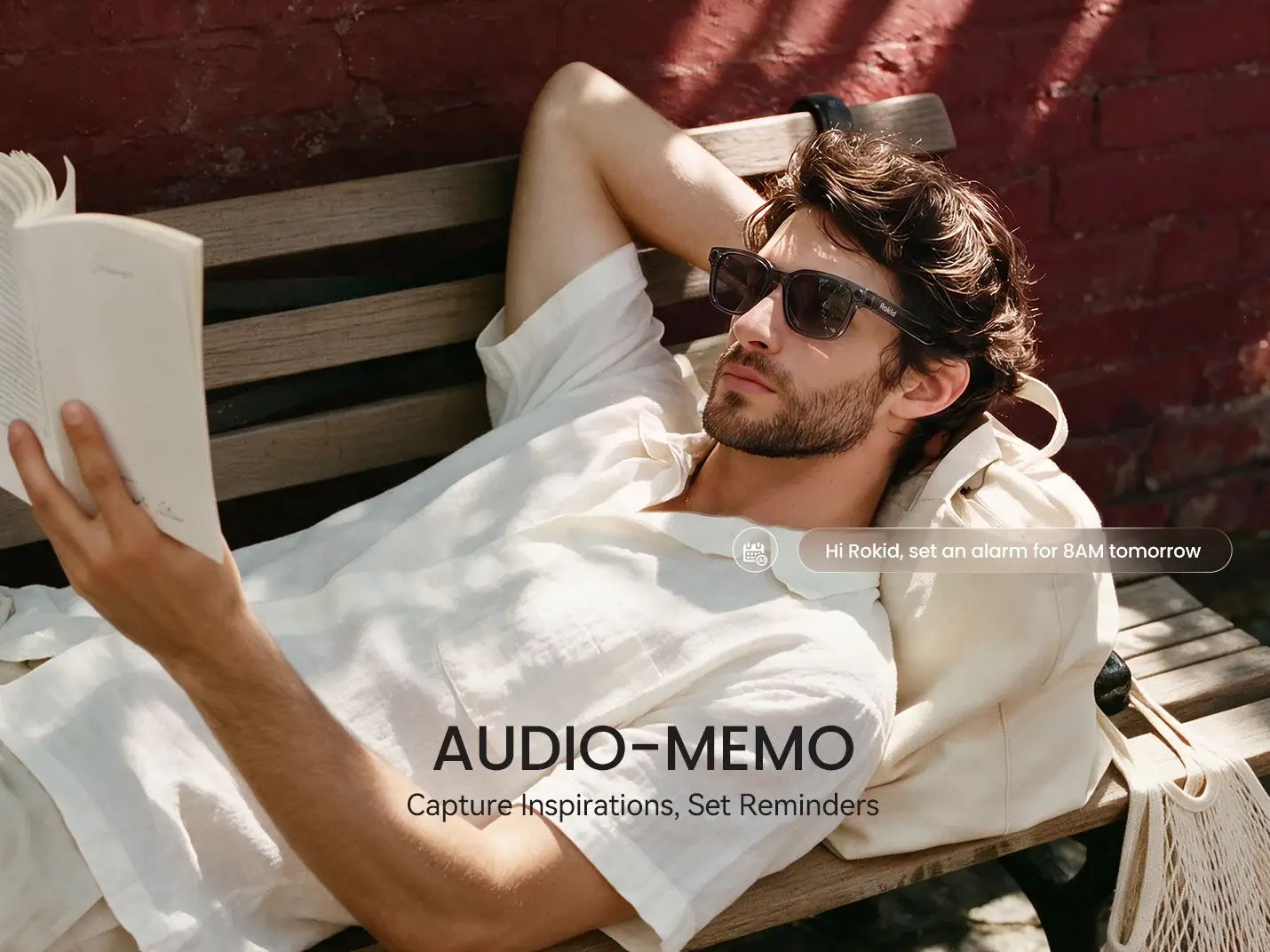
Whether it is live captions in the Rokid Glasses or a private big screen with the Max 2 and AR Spatial, Rokid is betting that the next screen is the one you wear.
Ready to put AI, live translation and a private big screen right in your line of sight?
Explore more honest reviews, tutorials and tech comparisons to find the right gear for the way you work, travel and live, at World Of Tech, where we make everything easy.
👉 Shop Rokid: https://worldoftech.space/rokid
👉 Our YouTube Channel: youtube.com/@world_tech79
👉 Our Facebook Fanpage: Facebook
👉 Our X (Twitter): @worldoftech79
Pricing, specifications and policy details in this review were verified against global.rokid.com and independent review sources (including Trustpilot) as of October 2026. Smart glasses pricing, promotions and availability change frequently, so confirm current details on the official site before purchasing. Competitor prices are approximate and subject to change.