
If you have ever tried to buy tickets to a concert, a playoff game or a Broadway show, you already know the two things that ruin the experience: the price you see is almost never the price you pay, and you have no real way to tell whether you are getting a fair deal or being quietly fleeced. SeatGeek was built to fix exactly that. It is a ticket marketplace for live events — sports, concerts, festivals, comedy and theater — that shows you an all-in price with fees included before checkout, then rates every single listing with a proprietary Deal Score from 0 to 100 so you can see at a glance whether a seat is a bargain or a rip-off. Founded in 2009 and now the official ticket marketplace of Major League Baseball across all 30 teams, SeatGeek combines a polished consumer app with primary box-office technology powering NFL stadiums and English Premier League clubs, and it carries a 4.4 out of 5 “Excellent” Trustpilot rating across roughly 16,800 reviews.
For anyone who buys tickets more than once or twice a year — and for season-ticket holders who need to resell seats they cannot use — the appeal is immediate: the cleanest seat maps in the business, real photos of the view from your seat, a 100% Buyer Guarantee, and pricing that does not jump at the final screen. But SeatGeek is not magic, and an honest look reveals real trade-offs around fee levels, refund policy, late ticket delivery and inconsistent support that are worth understanding before you buy. This 2026 review walks through SeatGeek’s full platform — the Deal Score and all-in pricing, the Buyer Guarantee, how selling and fees actually work, head-to-head comparisons against StubHub and Vivid Seats, the genuine pros and cons, and exactly who should (and shouldn’t) make it their default ticket app.
SeatGeek Review 2026: The Deal Score Ticket Marketplace That Shows You the Real Price Before You Buy
Overview and Background
SeatGeek is a US-based technology company (SeatGeek, Inc., headquartered in New York City) that operates an online marketplace for buying and selling tickets to live events. It is not a single-purpose reseller and it is not just a box office — it is both at once. On the consumer side, it aggregates and lists tickets from hundreds of sources for sports, concerts, festivals, comedy and theater, then layers its own tools on top to help you find value. On the enterprise side, it provides primary ticketing software directly to teams, venues and promoters. The core idea has stayed consistent since day one: bring transparency and intelligence to a ticket market that has historically been opaque, fee-heavy and frustrating.
The company was founded in 2009 by Jack Groetzinger (CEO) and Russ D’Souza (President), Dartmouth classmates and former management consultants, along with early co-founder and CTO Eric Waller. Frustrated that there was no objective way to tell whether a listed ticket price was fair, they built a web crawler that scraped listings across exchanges and produced a “Deal Score” to quantify value — and launched the product at the TechCrunch50 conference in San Francisco. SeatGeek began as a pure ticket aggregator and meta-search engine, expanded into its own resale marketplace, and in 2016 moved into primary ticketing to take on Ticketmaster directly. Along the way it acquired the Israeli ticketing-software company TopTix to strengthen its box-office stack and built out a genuine enterprise business.
Today SeatGeek has real credibility in the live-events world. In 2023 it became the official ticket marketplace of Major League Baseball across all 30 clubs, and it serves as the primary box-office partner for a roster of major sports teams — including the Dallas Cowboys, Baltimore Ravens, Arizona Cardinals, New Orleans Saints, Washington Commanders and Tennessee Titans in the NFL — plus the majority of English Premier League clubs (Liverpool and Manchester City among them) and large venues like AT&T Stadium and Rocket Arena. It carries a 4.4 out of 5 “Excellent” Trustpilot score across roughly 16,800 reviews (76% five-star), became BBB-accredited in May 2026, and remains a privately held company, having walked away from a planned SPAC merger in 2022. Around 70% of its audience is under 45 — a younger, mobile-first user base that fits its app-led design.
Why SeatGeek Stands Out in 2026
All-in pricing that shows fees upfront: This is SeatGeek’s headline advantage and the main reason buyers prefer it. It bundles service fees into the displayed ticket price so you never get a nasty surprise on the final screen. SeatGeek rolled this out in May 2025 — the same month the FTC’s rule on unfair and deceptive “junk” fees took effect — and was among the first secondary marketplaces to do it. The days of a sudden fee jump at checkout are largely behind it.
Deal Score — a value rating nobody else has: Every listing gets a proprietary, AI-backed score from 0 to 100, and the seat map is color-coded so good deals jump out instantly: green marks a below-average price, red marks worse value, and blue means the score could not be calculated. For first-time buyers especially, it is a genuinely useful read on whether you are overpaying — with the honest caveat that it rates value within SeatGeek’s own inventory, not across the entire market.
The best seat maps and “View From Seat” in the category: Reviewers across the board single out SeatGeek’s interactive, photorealistic 3D seat maps as the cleanest and most accurate available, paired with real panoramic photos showing the actual view from a given section. You can see what you are buying before you commit — a feature that matters enormously for big stadiums, theaters and intimate comedy venues alike.
Face-value primary tickets, not just resale: Because SeatGeek is the official box office for MLB, several NFL teams, EPL clubs and major venues, it can offer official, face-value tickets that pure resale sites simply cannot. For games involving its partner teams, checking SeatGeek first can mean buying at face value instead of a marked-up resale price.
A 100% Buyer Guarantee on every order: SeatGeek backs every purchase: your tickets will arrive in time, be valid for entry, and match what you ordered — and if anything goes wrong, you get comparable-or-better replacements or a refund, plus a full refund if an event is canceled and not rescheduled. It is the safety net that makes buying from independent sellers far less risky.
Selling is genuinely easy — and now front-of-mind: Listing a ticket you cannot use is fast: upload it, set a price (or let Smart Pricing recommend one), and SeatGeek handles the transfer automatically when it sells, paying you out in under two business days. SeatGeek Swaps even introduced one of the first return policies offered by a major ticketing platform — a real step toward treating tickets less like a final, non-refundable gamble.
It is going where discovery is going: SeatGeek has pushed hard into AI-driven discovery — launching an app inside ChatGPT (claiming to be the first to blend primary and resale inventory there), integrating with Google’s agentic search experience and with Spotify, and building event-day features through its Rally platform (Lyft rides, in-seat food ordering, venue guides). It is positioning its inventory wherever fans now start their search, not just on its own homepage.
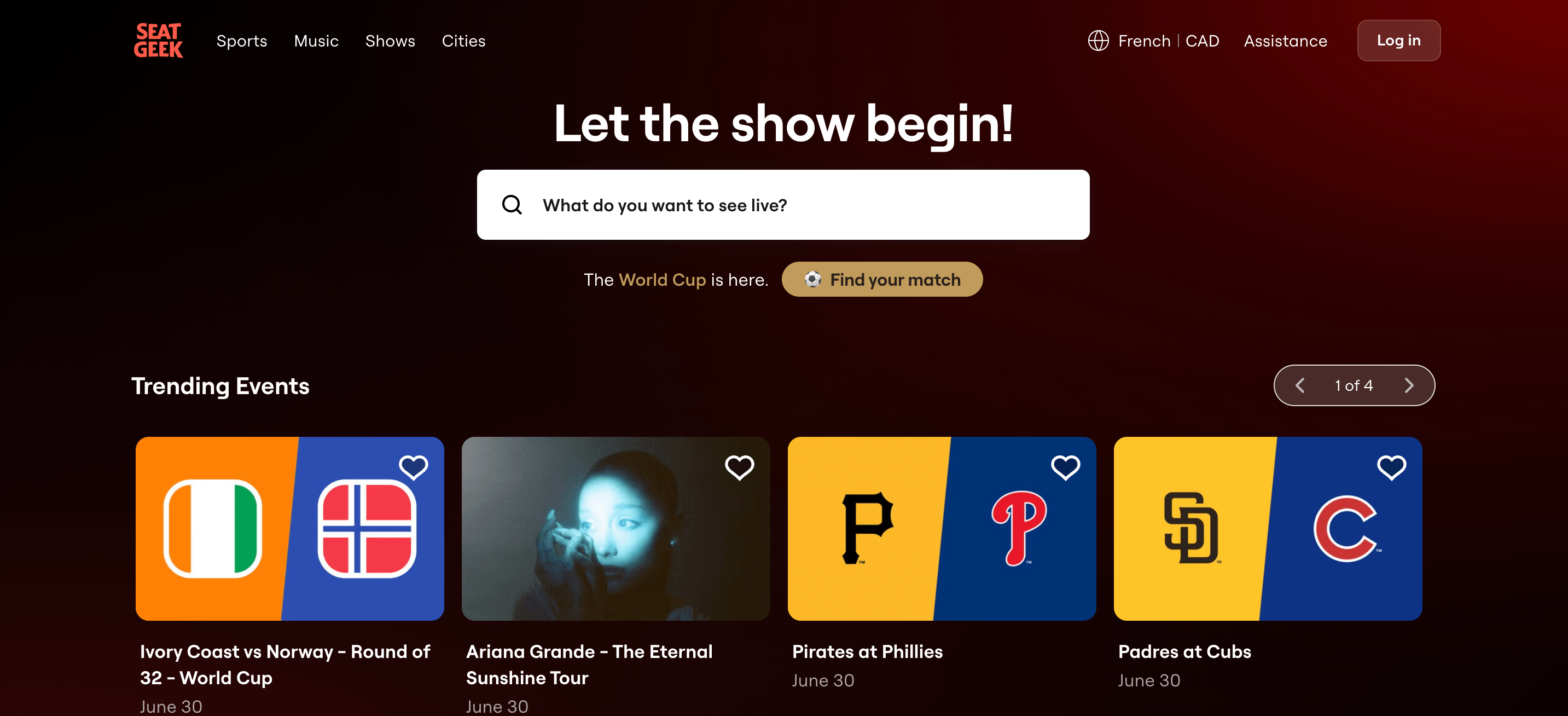
SeatGeek’s color-coded Deal Score and all-in pricing let you spot a fair seat and see your true total before checkout — the two things most ticket sites get wrong.
Key Features and Technology
SeatGeek’s product is broad, but it organizes cleanly into a handful of pillars. Here is how the platform actually breaks down.
Deal Score and All-In Pricing
The heart of the product. Deal Score analyzes price, seat location and historical data to rate every listing from 0 to 100, then paints the interactive seat map green-to-red so value is visible at a glance. Alongside it, all-in pricing bundles fees into the displayed number, and an “include fees” / “see with fees” toggle lets you browse with the true total shown from the start. Together they answer the two questions every ticket buyer has — “is this a good price?” and “what will I actually pay?” — without making you reach the final checkout screen to find out.
Interactive Seat Maps and View From Seat
SeatGeek’s patented, photorealistic seat maps let you zoom into specific sections and rows to see availability and prices with real clarity, while “View From Seat” supplies actual panoramic photos of the sightline from a given area. Powerful filters narrow listings by price, quantity, seat perks, accessibility features, gameday promotions and “with or without fees,” so you can find the exact experience you want — whether that is the cheapest valid seat, a specific view, or a section with all-inclusive food and beverage.
Buyer Guarantee and Ticket Delivery
Every ticket is backed by a 100% Buyer Guarantee covering four scenarios: late delivery, invalid entry, tickets that differ from what you ordered, and event cancellation without rescheduling. Resolution is comparable-or-better replacement tickets, a refund, or SeatGeek credit. Delivery is mostly mobile — tickets land in the app or by email and scan from your phone — though some tickets arrive via third-party mobile transfer and, importantly, certain tickets are released only 24–48 hours before the event, which is standard anti-fraud practice but can be stressful if you are traveling.
Selling, Smart Pricing and Swaps
On the sell side, you list tickets from your account, set a price or use Smart Pricing to auto-adjust against demand, and SeatGeek transfers them to the buyer automatically on sale — with payout typically landing in under two business days. The MLB Ballpark app is tightly integrated so baseball season-ticket holders can manage listings in a tap. SeatGeek Swaps adds a return option uncommon in ticketing. Two honest notes from real sellers: Smart Pricing does not let you set a hard minimum price, and a US bank account is required to receive payouts.
Primary Ticketing, Rally and AI Discovery
Behind the consumer app sits a full enterprise stack: SeatGeek runs primary box offices for teams and venues, blends that official inventory with resale in one place, and powers the event-day experience through Rally (rideshare, in-seat food and beverage, venue guides, weather). Its newer push is AI-led discovery — surfacing tickets inside ChatGPT, Google’s agentic search and Spotify — plus consumer touches like The Daily Tap, a once-a-day entry to win free tickets to nearby events. It is a genuinely deep platform, not a thin reseller skin.
Pricing, Plans, and Package Structure
SeatGeek has no subscription and no membership tier — browsing, the app, Deal Score, seat maps and price alerts are all free, and you only pay when you buy a ticket. The real “pricing” is the cost structure of a transaction: the ticket price itself (set by sellers on resale, or face value on primary), the buyer fees bundled into that price, any delivery fee, and the commission deducted from a seller’s payout. Fees are not a fixed percentage — they vary by event, venue, demand and ticket type — and independent fee analyses put SeatGeek’s total buyer fees in a wide band, sometimes toward the higher end of the major marketplaces. The figures below are approximate and intended as planning estimates; always confirm your exact total on the live listing before checkout.
| Item | Typical Cost (USD) | What It Is | Best For |
|---|---|---|---|
| Account & browsing | Free | App, Deal Score, seat maps, alerts | Everyone comparing ticket prices |
| Resale ticket price | Set by sellers | Market price, above or below face value | Concerts & sold-out events |
| Primary ticket price | Face value | Official box-office seats for partner teams/venues | MLB, Cowboys, Ravens, EPL games |
| Buyer service fee | ~Variable, often ~20–38% of price | Bundled into the all-in displayed price | Knowing your true total upfront |
| Delivery fee | ~$0–$10+ (varies) | Some orders/venues add a delivery charge | Check before paying |
| Seller commission | ~10–20% of sale | Deducted from your payout when tickets sell | Reselling seats you can’t use |
| The Daily Tap | Free | Once-a-day entry to win free local tickets | Casual users & deal hunters |
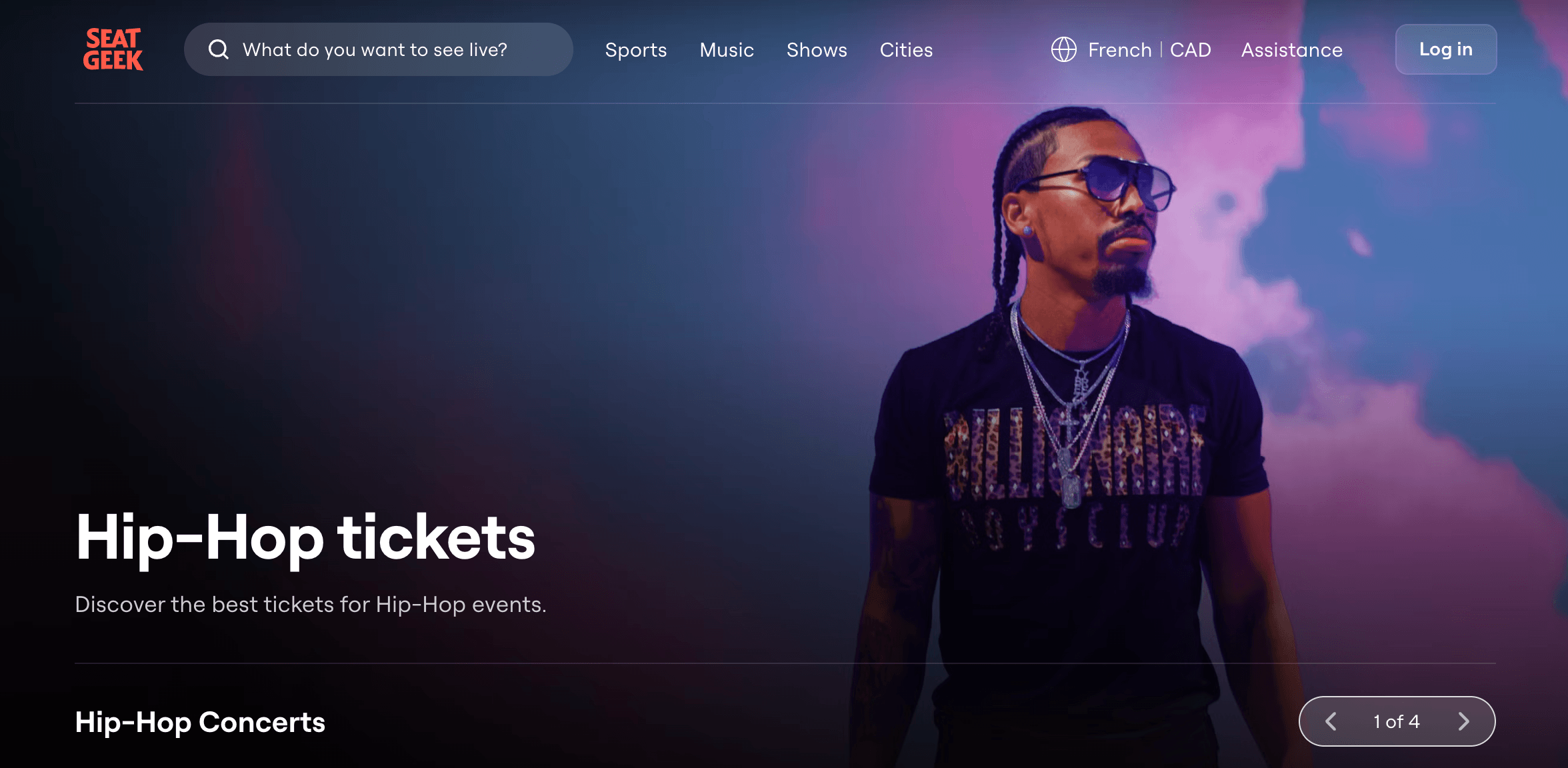
Filters, View From Seat photos and Deal Score make SeatGeek’s checkout one of the most informative in ticketing — the trade-off is fee levels that can run high, so always confirm your all-in total.
How SeatGeek Compares to Alternatives
| Factor | SeatGeek | StubHub | Vivid Seats |
|---|---|---|---|
| Marketplace type | Primary + secondary | Mostly secondary (resale) | Secondary (resale) |
| All-in pricing | Yes — early adopter | Yes (since FTC rule) | Yes (since FTC rule) |
| Built-in value tool | Deal Score (0–100) | None comparable | None comparable |
| Approx. total buyer fees | ~20–38% (varies) | ~15–25% (varies) | ~20–35% (varies) |
| Seller commission | ~10–20% | ~15% flat | Varies |
| Inventory depth | Large + face-value primary | Largest resale pool | Large |
| Buyer guarantee | Yes — 100% | Yes — FanProtect | Yes — 100% |
| Rewards program | No major program | No | Yes — loyalty credits |
| Trustpilot (approx.) | ~4.4 / 5 | ~4.1 / 5 | ~4.3 / 5 |
| Best for | App UX, seat maps & face-value primary | Max inventory & last-minute | Frequent buyers wanting rewards |
vs. StubHub: StubHub is the inventory king — the deepest resale pool in the business and usually the best bet for sold-out playoff games, last-minute buys and obscure markets, now publicly traded after its 2025 IPO. Its buyer fees often run a touch lower than SeatGeek’s, and its seller commission is a flat 15%. But StubHub has no equivalent of Deal Score, its seat maps are less refined, and it cannot offer the face-value primary tickets SeatGeek holds for its partner teams. The honest play: for a sold-out show, check StubHub for depth; for value clarity and partner-team games, check SeatGeek.
vs. Vivid Seats: Vivid Seats’ standout feature is its loyalty program — buy enough and you earn credits toward future tickets, which SeatGeek does not match. Its inventory is broad and its Trustpilot sits close to SeatGeek’s. The catches are that Vivid Seats’ fees frequently land at the higher end of the range, and its customer-service track record is among the more criticized in the category. SeatGeek counters with a better app, the cleanest seat maps, Deal Score, and primary inventory. If you are a frequent event-goer chasing rewards, Vivid Seats has a real edge; if you want transparency and UX, SeatGeek pulls ahead.
vs. Ticketmaster and zero-fee sites: Ticketmaster is the primary arm of Live Nation and the default for first-release, face-value tickets to most concerts and many NFL teams — but its fees and reputation are widely criticized. At the other end, zero-fee marketplaces like TickPick advertise no buyer fees, so the listed price is the total, which can come out cheaper than any of the big three on a given event. SeatGeek’s pitch sits in the middle: not the cheapest, but the most informative and trustworthy buying experience, with official primary tickets for the teams and venues it partners with. For many buyers the smart move is not loyalty to one site — it is opening two or three on the same event and comparing final, all-in totals before clicking buy.
Pros and Cons
What Users Love
Genuinely easy and transparent buying: The most consistent praise across Trustpilot is how simple and clear the process is — what you see is what you pay, tickets drop straight into your phone, and there are no last-second surprises. For people burned by hidden fees elsewhere, the all-in display is the whole reason they switched.
The best app and seat maps in the category: Reviewers and tech critics alike single out SeatGeek’s interface as the cleanest among ticket apps, with a seat map and 3D views that make picking the right seat effortless. The deal-grade color system is repeatedly called the feature that actually helps people avoid overpaying.
View From Seat removes the guesswork: Being able to see a real photo of the sightline before buying is a recurring favorite — owners describe trusting their purchase far more when they can preview the actual view, especially in unfamiliar stadiums and theaters.
Selling is fast and low-effort: Season-ticket holders repeatedly praise how smoothly SeatGeek sells seats they cannot use — list it, get price guidance, and the platform handles the transfer and pays out within a couple of business days. Many specifically mention how “fortunate” they feel that their tickets sold quickly.
Support that often comes through when it matters: Despite some criticism, a striking number of reviews describe customer-service reps going out of their way to resolve a problem — replacing tickets, issuing credit, or fixing a duplicate order — and turning a stressful situation into a save.
Trusted, official and well-backed: The MLB partnership, the NFL and EPL primary deals, the Buyer Guarantee and BBB accreditation give buyers real confidence that they are dealing with an established company — not an anonymous marketplace — which shows up again and again as a reason people keep coming back.
Limitations Worth Knowing
Fees are high, even if they are visible: This is the number-one fair criticism. All-in pricing shows your total honestly, but independent analyses put SeatGeek’s total buyer fees among the higher of the major secondary marketplaces — sometimes 20–38% of the ticket price. Transparent is not the same as cheap, and the full price is not always obvious until you are deep in the flow.
All sales are final, with limited refunds: Outside the Buyer Guarantee scenarios, ticket sales generally cannot be refunded — and for postponed or rescheduled events, SeatGeek typically does not refund unless replacement tickets are required for entry. If your plans change, you are expected to resell, not return.
Tickets can arrive uncomfortably late: A real recurring complaint is that some tickets are released only 24–48 hours before the event (a fraud-prevention measure), which makes it hard to plan travel or hotels with certainty. A minority of buyers report anxious waits and, in rare high-value cases like World Cup orders, scripted replies and slow escalation.
Support and disputes are inconsistent: Experiences split sharply — many are excellent, but a meaningful minority describe difficulty getting concessions on obstructed-view or wrong-state purchases, refusals on technicalities, and looping support. Resale ratings tend to be polarized, and SeatGeek is no exception.
Seller quirks and a US-centric payout system: Smart Pricing does not let you set a hard minimum, so some sellers report tickets selling lower than expected, and payouts require a US bank account. Deal Score also rates value only within SeatGeek’s own inventory, not across the whole market, so a “green” deal is not guaranteed to be the cheapest anywhere.
Strongest in the US and select markets: SeatGeek’s deepest coverage is in the United States, with primary partnerships in the UK and Europe (EPL clubs, London venues) but lighter reach in many other regions. Outside its core markets, inventory can be thinner and a local or zero-fee alternative may serve you better for a specific event.
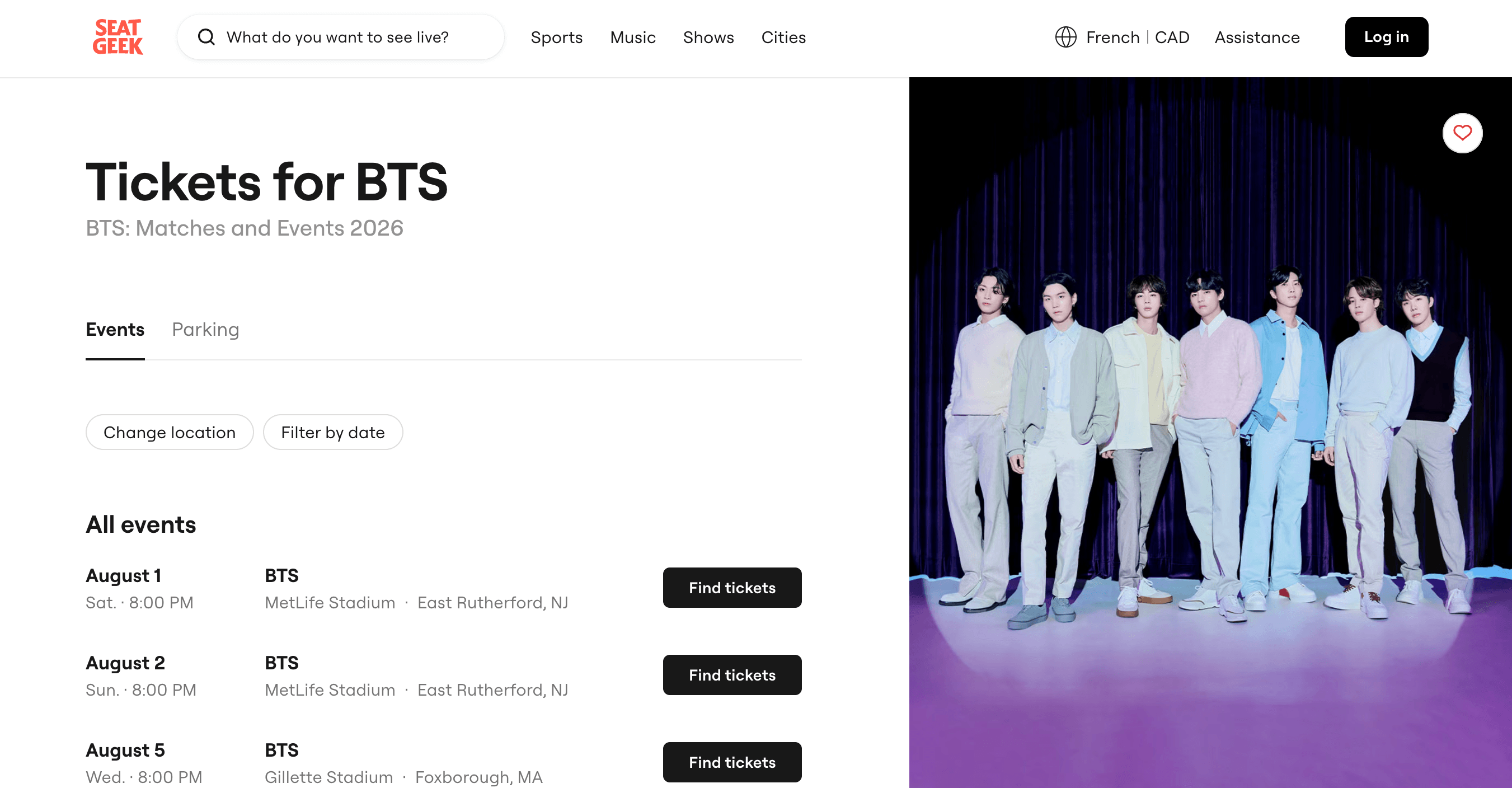
SeatGeek’s 100% Buyer Guarantee and mobile-first delivery make buying from independent sellers far less risky — just be ready for some tickets to release only 24–48 hours before the event.
Who Should Use SeatGeek
First-time and occasional ticket buyers: This is SeatGeek’s sweet spot. If you do not buy tickets often and worry about overpaying or getting scammed, Deal Score, all-in pricing, View From Seat and the Buyer Guarantee together make it the most reassuring, hardest-to-mess-up way to buy. The app does the thinking for you.
Sports fans of partner teams: If you follow MLB, the Cowboys, Ravens, Cardinals, Saints, Commanders, Titans, or a major EPL club, SeatGeek is often the source of official, face-value tickets that resale-only sites cannot offer — check it first for those matchups before paying a resale markup.
Season-ticket holders who resell: If you regularly have seats you cannot use, SeatGeek’s listing flow, Smart Pricing, automatic transfer and fast payout make offloading them genuinely painless — a huge share of glowing reviews come from sellers, not just buyers.
App-first, value-conscious buyers: If you want the best mobile experience, the clearest seat map and a quick visual read on whether a price is fair, SeatGeek is the most polished tool in the category — and the deal-grade colors make comparison shopping genuinely faster.
Who should look elsewhere: Strict budget shoppers chasing the lowest possible total should price-check a zero-fee marketplace like TickPick, since SeatGeek’s fees can run high. Buyers hunting sold-out, last-minute or obscure-market tickets may find deeper inventory on StubHub, and frequent event-goers who value loyalty rewards will get more from Vivid Seats. And anyone buying high-value tickets far in advance (think World Cup) should go in clear-eyed about late delivery and final-sale policy — or buy primary tickets directly from the team or venue where possible.
Getting Started: Step by Step
- Create an account and turn on “include fees.” Sign up free on the web or in the iOS/Android app, then immediately enable the all-in / “see with fees” view in settings so every price you browse is the true total — this one toggle prevents almost all checkout sticker shock.
- Search and follow your event. Find your team, artist, venue or city, and tap the heart icon to follow the event. You will get price-drop alerts that help you time your purchase, since secondary prices fluctuate daily right up to showtime.
- Use Deal Score and the seat map. Open the interactive map, sort by best deal, and look for green-coded listings (better value) over red ones. Use filters for price, quantity, seat perks and accessibility, and check the View From Seat photo so you know exactly what you are buying.
- Compare before you commit. For anything pricey or sold-out, open the same event on one rival marketplace and compare the final all-in totals — and if it is a partner-team game, check SeatGeek for face-value primary tickets, which can undercut resale entirely.
- Check for a promo code, then buy. Look in your account for SeatGeek Credit or an active promo code, apply it, enter your email and payment, and complete the purchase. Tickets are typically delivered to the app or email — remember some release only 24–48 hours before the event.
- Selling? List, price and let it transfer. To resell, open the Tickets tab, select your seats, set a price or use Smart Pricing, and post. SeatGeek transfers them automatically when they sell and pays out to your US bank account in under two business days.
Tips for Getting Maximum Value
Always browse with “include fees” turned on, because SeatGeek’s real advantage is clarity, not a built-in discount — the toggle turns an honest platform into a genuinely useful one. Follow events with the heart icon and watch the price-drop alerts, since secondary prices swing with demand and patience often pays off, especially for weekday games and less-hyped matchups. Before any big purchase, open the same event on a second marketplace and compare final totals, and check whether a zero-fee site like TickPick beats SeatGeek’s all-in price for that specific seat. For partner-team games, hunt for face-value primary tickets first. Hunt down a SeatGeek promo code or use any SeatGeek Credit in your account before checkout, and lean on Deal Score’s green listings to avoid overpaying within SeatGeek’s own inventory. If you are selling, remember Smart Pricing has no minimum-price floor, so set your own price deliberately when the market matters to you. And if a ticket has not arrived, do not panic at the 48-hour mark — late release is normal — but keep your order details and contact support early if anything looks off, since prompt reporting is what keeps your Buyer Guarantee claim valid.
Future Outlook and Final Assessment
The ticketing market in 2026 is being reshaped by two forces: regulation pushing the whole industry toward transparent, all-in pricing, and AI changing where fans start their search. SeatGeek is well-positioned on both. It was early to all-in pricing and built its brand on transparency before it was mandated, and it is moving aggressively into AI-driven discovery — surfacing inventory inside ChatGPT, Google’s agentic search and Spotify — so its tickets appear wherever people now begin looking. With the MLB partnership, expanding NFL and EPL primary deals, and a genuine enterprise platform behind the consumer app, it is far more than a reseller.
The honest caveats remain: fees run high even when shown upfront, sales are largely final, some tickets arrive uncomfortably late, and support is inconsistent for a minority of buyers. Zero-fee rivals undercut it on price and StubHub still wins on raw inventory. But on the things SeatGeek set out to fix — knowing whether a price is fair, seeing your true total, previewing your seat, and buying with a real guarantee — it remains the most polished and trustworthy experience in the category, and its 4.4/5 Trustpilot reputation across nearly 17,000 reviews reflects that.
Conclusion
SeatGeek is not trying to be the cheapest ticket site — it is trying to be the clearest and most trustworthy one, and at that job it largely succeeds. By bundling fees into an upfront price, rating every listing with Deal Score, showing you the real view from your seat, and backing each order with a 100% Buyer Guarantee, it removes the anxiety and guesswork that make ticket-buying miserable elsewhere. It rewards a little savvy — toggle fees on, compare your all-in total, hunt a promo code, and check for face-value primary seats — and it is not the right pick for hardcore budget hunters or anyone needing the deepest sold-out inventory. But for the everyday reality of buying and selling tickets to sports, concerts and shows, few platforms are as polished or as reassuring. Confirm your final price, compare before you commit, and SeatGeek can make getting to your next live event genuinely easy.
Ready to find the best seat at your next live event?
Explore more honest reviews, tutorials and tech comparisons to find the right tools and services for the way you work, play and live — at World Of Tech, where we make everything easy.
👉 Find Tickets on SeatGeek: https://seatgeek.com/
👉 Our YouTube Channel: youtube.com/@world_tech79
👉 Our Facebook Fanpage: Facebook
👉 Our X (Twitter): @worldoftech79
Pricing, fees, policies and partnership details in this review were verified against seatgeek.com and independent review sources (including Trustpilot and hands-on reviewer testing) as of June 2026. Ticket marketplace fees, policies and promotions change frequently, so confirm current details on the official site before purchasing. Competitor prices and fee ranges are approximate and subject to change.