
Fashion brands have spent decades paying for physical samples, studio photoshoots, and model bookings just to see how a design looks before it ever reaches a customer. Style3D AI wants to erase that entire step, letting anyone turn a text prompt, a sketch, or a product photo into a finished garment visual or model try-on image in minutes.
Built by Style3D, a Hangzhou-based digital fashion technology company with more than a decade of enterprise 3D design experience, Style3D AI is the consumer-facing generative layer on top of that expertise. But is it accurate enough for real production work, and does its pricing make sense for solo designers and small e-commerce brands? This 2026 review walks through the platform’s tools, pricing model, independent trust signals, and where it fits against other AI fashion image generators.
Style3D AI Review 2026: Is This AI Fashion Generator Worth Your Time?
Overview and Background
Style3D AI (style3d.ai) is a browser-based generative AI platform for fashion design, virtual try-on, and marketing visuals. It is a product of Style3D (also known as Linctex), a digital fashion company founded in Hangzhou, China in 2015 that has built its reputation on enterprise-grade 3D garment simulation software used by manufacturers, brands, and PLM systems across the apparel supply chain. Style3D AI repackages a slice of that underlying 3D and rendering technology into a simpler, prompt-driven tool aimed at individual designers, patternmakers, online sellers, and students rather than technical 3D artists.
The platform launched publicly on Product Hunt in April 2025 with an initial set of ten-plus AI tools, followed by a “Style3D AI Agent” conversational layer in mid-2025 that lets users move from an idea to a finished design and marketing asset through chat rather than navigating individual tools. The parent company has separately won recognition in the industry, including Innovation, R&D, and Product Launch honors at the 2024 Just Style Excellence Awards, which lends some institutional credibility to the AI spin-off even though the consumer app itself is still young.
It’s worth separating two things that share a name here, because a lot of the search results around “Style3D” actually describe the parent company’s enterprise product line rather than the AI generator this review covers. Style3D the company operates Style3D Studio (technical 3D design software for professional teams), Style3D Cloud (a collaborative R&D platform), and Style3D AI (the consumer-facing generator at style3d.ai). The enterprise side has a long list of named apparel clients and years of case studies behind it. Style3D AI, by contrast, is a newer product built to bring a simplified version of that same underlying technology to individual users — so its client base, review history, and market presence are naturally much thinner than the parent brand’s, even though the marketing sometimes blurs the two together.
Why Style3D AI Stands Out in 2026
Fashion-specific training, not a general-purpose skin: unlike broad AI art generators repurposed for clothing, Style3D AI is trained specifically on fashion industry data and workflows, which the company says helps it understand garment construction, draping, and fabric behavior more reliably than a generic diffusion model asked to “draw a jacket.”
Multiple entry points for different starting materials: the platform is organized around what you already have rather than forcing one workflow. Whether you’re holding a rough sketch, a flat product photo, a finished garment shot, or just a text idea, there is a dedicated tool designed to take that specific input and produce a usable output.
Full-funnel coverage from concept to marketing: Style3D AI doesn’t stop at generating a garment image. It carries that same design through virtual try-on, model swapping, background changes, and even image-to-video conversion, so a single starting concept can produce an entire set of e-commerce and social assets.
Task-specific AI agents: rather than one generic chatbot, Style3D AI offers separate agents tuned for fashion design, graphic and print design, apparel design, fabric design, toy design, and e-commerce marketing — each pointed at a narrower job so the outputs tend to stay on-brief.
Backed by real 3D and fabric-physics research: because the parent company built its name on physics-based cloth simulation for enterprise clients, Style3D AI has technology behind it that goes beyond typical prompt-to-image tools, at least in terms of understanding how fabric should fall and move.
Low barrier for non-technical users: the entire interface is built around plain-language prompts, uploads, and guided tool selection, with no 3D modeling, pattern-making, or design software experience required to get a usable image.
A genuine free trial before commitment: new accounts can generate images without paying up front, which matters for a tool whose real-world output quality is hard to judge from marketing screenshots alone.
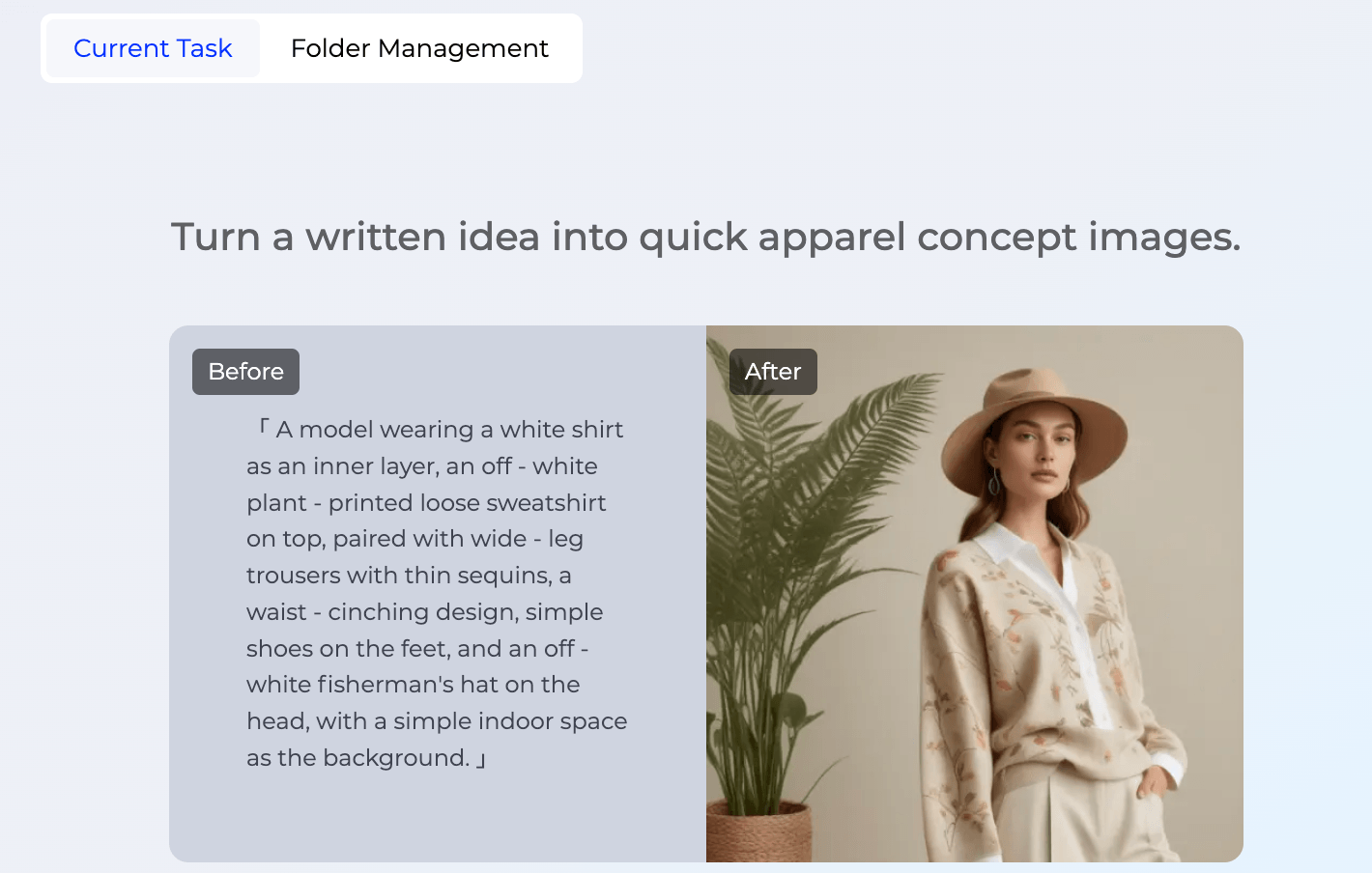
Style3D AI’s home screen routes you to the right tool based on what you’re starting with — a prompt, a sketch, or a product photo.
Key Features and Technology
Style3D AI groups its tools into four practical categories that roughly map to a fashion workflow: turning ideas into designs, adding prints and graphics, generating model and marketing photography, and producing short-form video. The company frames the interface around a simple decision tree — “if you have X and want Y, use this tool” — rather than a traditional software menu, which keeps the learning curve short even though there are more than ten individual tools spread across the platform. Here’s what each area actually does.
Text, Sketch, and Image-to-Design
The Text To Design tool converts a written prompt into clothing concepts and style directions, useful for early ideation when you don’t yet have visual reference. Sketch To Design turns rough linework into a polished, rendered garment, which is closer to how many designers actually think — you’re not describing a garment in words, you’re handing over a shape and letting the AI fill in fabric, shading, and finish. Image To Design extends an existing photo or reference style into new variations, useful for building out a small capsule collection from one hero piece rather than designing every item from a blank page. A dedicated Design Variations and Change Colors tool lets you explore colorways and small tweaks without regenerating a design from scratch, which matters because re-rolling an entire prompt often changes far more than just the color you wanted to test.
Virtual Try-On and AI Photoshoot
This is arguably the most commercially useful part of the platform for online sellers. Upload a flat-lay or garment product photo and the Virtual Garment Try-On tool places it on an AI model, producing shop-ready images without a physical photoshoot, a studio rental, or a model booking. Change Model & Background and Model Variations let you generate multiple looks, body types, and settings from the same garment, which is the kind of catalog diversity that used to require re-shooting the same product with several different models. Outfit Try-On handles full looks rather than single pieces, so a top and bottom sold separately can still be shown styled together for lookbook-style marketing without an extra shoot.
AI Print Generator and Pattern Tools
For brands that rely on original prints and graphics, Style3D AI can generate motifs and apply them directly onto a garment or pattern, which removes a step that traditionally required a separate graphic designer and manual mockup work.
Image-to-Video and AI Agents
Image To Video and Reference To Video turn a static generated image into short marketing clips, aimed squarely at social commerce. Sitting above all of this, the AI Agents feature (Fashion Design Agent, Graphic Design Agent, Apparel Design Agent, Fabric Design Agent, Toy Design Agent, and E-commerce Marketing Agent) offers a conversational way to move through several of these tools in sequence instead of hopping between separate pages.
Pricing, Plans, and Package Structure
Style3D AI operates on a freemium model: you can sign up and start generating without a credit card, then upgrade for more volume, higher resolution, or commercial usage rights. At the time of this review, style3d.ai does not publish a static, itemized pricing table on its public marketing pages the way many SaaS tools do — plan names, credit allotments, and monthly costs are surfaced inside the account and sign-up flow rather than on the homepage or a dedicated pricing URL. That’s an unusual choice for a tool this polished, and it’s worth flagging as a transparency gap rather than glossing over it.
| Plan | Price | What It Is | Best For |
|---|---|---|---|
| Free / Trial | $0 (limited credits) | Sign-up grant of generation credits, no card required | Testing output quality before buying |
| Individual / Creator tiers | Not publicly listed — surfaced at sign-up | Monthly credit allotments for design, try-on, and video tools | Freelancers, students, small brands |
| Team / Business tiers | Not publicly listed — surfaced at sign-up | Higher volume, likely priority processing and commercial rights | E-commerce brands, agencies |
| Enterprise | Custom quote (typical for the category) | API access, higher volume, brand-specific model training | Larger fashion brands and manufacturers |
How Style3D AI Compares to Alternatives
Style3D AI sits between two different categories of competitor: dedicated AI fashion photography tools built purely for e-commerce model shots, and heavyweight 3D garment construction software built for technical design. Here’s how it stacks up against one from each camp.
| Factor | Style3D AI | Botika (AI photoshoot) | CLO3D (3D design suite) |
|---|---|---|---|
| Core focus | Design generation + try-on + marketing, all-in-one | Ghost-mannequin-to-model conversion only | Pattern-accurate 3D garment construction |
| Starting price | Free trial; paid tiers not publicly listed | Approx. $22/month for 30 credits | Approx. $50–80/month (individual, annual billing) |
| Design generation from prompt/sketch | Yes | No | No (manual construction) |
| Pattern-accurate technical output | No | No | Yes |
| Learning curve | Low — prompt and click | Low | High — technical software |
| Best for | Designers and sellers needing design + marketing in one place | High-volume Shopify sellers converting flat-lay photos | Technical designers and manufacturers needing production-ready patterns |
Style3D AI vs. Botika: Botika is narrower and more mature as a pure e-commerce photography tool, with a track record of user reviews (currently averaging around 2.7 out of 5 in third-party comparison round-ups, with complaints centered on cost-per-credit and a limited toolset). Style3D AI covers more ground — design ideation, prints, and video — but as the newer entrant it doesn’t yet have a comparable public review history to validate real-world output consistency at scale.
Style3D AI vs. CLO3D: these aren’t really direct competitors so much as adjacent tools. CLO3D (and the company’s own Style3D Studio) exist for teams that need seam-accurate, manufacturable garments and are willing to accept a real learning curve and a higher, clearly published subscription cost that runs into the tens of dollars per month for individuals and considerably more for studio or enterprise seats. Style3D AI trades that technical precision for speed and accessibility — it’s a visualization and marketing tool, not a construction tool, and the two are genuinely complementary rather than substitutes: a small brand might use Style3D AI to pitch and market a concept, then move to CLO3D or a pattern-maker once a design is greenlit for production.
Put simply: if your bottleneck is generating enough on-model marketing images fast enough, Style3D AI and Botika are the right category to shop in, and Style3D AI’s broader tool set gives it an edge for brands that also want design ideation in the same subscription. If your bottleneck is turning a concept into a manufacturable, size-graded pattern, none of the AI generators in this comparison — including Style3D AI — replace what CLO3D or a technical designer does.
Pros and Cons
What Users Love
Genuinely fashion-trained outputs: because the models are built specifically for garments and fabric rather than adapted from general image generators, results tend to look more like clothing and less like AI-art approximations of clothing.
One platform covers most of the pre-production funnel: going from concept sketch to a model try-on shot to a short marketing video without leaving the app saves real coordination time compared to stitching together three separate tools.
No design software experience required: the prompt-and-upload interface removes the barrier that tools like CLO3D or Marvelous Designer present to non-technical founders and marketers.
Backed by an established parent company: Style3D’s decade-plus history in enterprise fashion tech, industry awards, and existing brand partnerships give more institutional weight than a typical anonymous AI startup tool.
Limitations Worth Knowing
Pricing transparency is genuinely weak: not having a public pricing page is a real friction point for buyers who want to comparison-shop before creating an account, and it’s worth going in expecting to sign up before you learn what you’ll actually pay.
Thin independent review history: at the time of writing, Style3D AI’s G2 profile shows no user reviews yet, which means there isn’t enough third-party feedback to independently confirm output consistency, support responsiveness, or renewal satisfaction at scale.
Not a technical design replacement: AI-generated designs are visually compelling but not production-ready patterns — a physical sample or a technical design pass in dedicated software is still required before manufacturing.
Young product in a fast-moving category: with a public launch in April 2025, Style3D AI hasn’t had the multi-year run that would let long-term reliability and pricing stability be judged the way an established tool can.
Who Should Use Style3D AI
Independent fashion designers exploring concepts before committing to samples will get the most value from the text-to-design and sketch-to-design tools, which shorten the ideation loop dramatically.
Small online sellers and Shopify/Etsy shops who currently pay for model photoshoots can use Virtual Try-On and AI Photoshoot to generate on-model listing images from flat-lay photos at a fraction of the cost and turnaround time.
Students and portfolio builders without access to expensive 3D software or a design background can produce professional-looking, presentation-ready visuals to build a portfolio.
Marketing teams at small fashion brands needing a steady flow of social and campaign content can lean on the image-to-video and model variation tools without booking a new shoot for every post.
Who should look elsewhere: technical designers and manufacturers who need pattern-accurate, seam-level construction files for production should stick with (or add) dedicated software like CLO3D, Marvelous Designer, or Style3D’s own enterprise Studio product — Style3D AI is not built to replace that layer of the workflow.
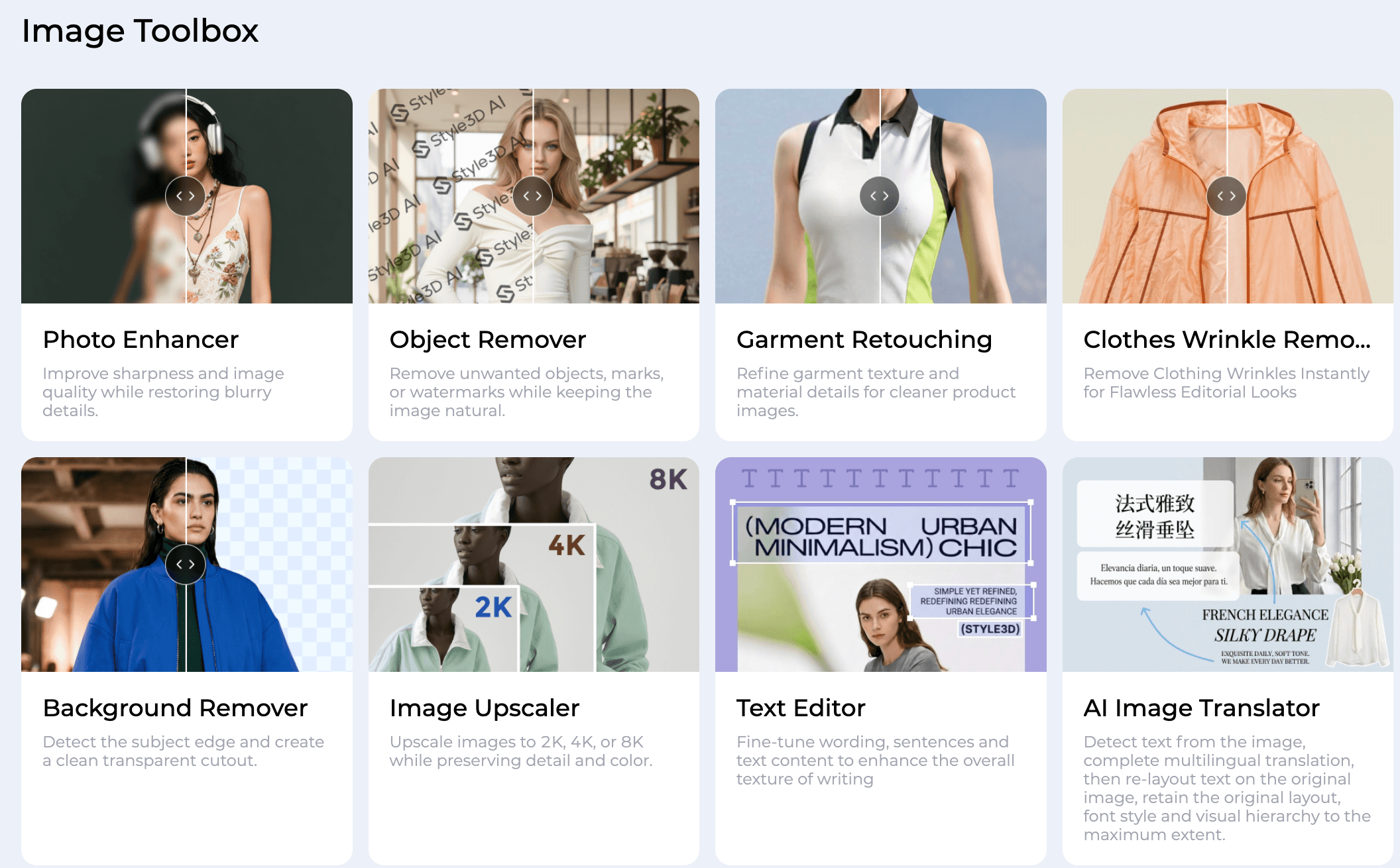
Virtual Try-On turns a flat product photo into a model shot — one of the platform’s most practical tools for online sellers.
Getting Started: Step by Step
- Create a free account. Sign up at style3d.ai — no credit card is required to start, and new accounts receive trial generation credits.
- Pick your starting point. Use the homepage’s guided selector to match what you have — a text idea, a sketch, or a garment photo — to the right tool instead of guessing.
- Generate a first batch of options. Run 3–5 variations on your first design or try-on to get a feel for output quality before spending on a paid plan.
- Refine with colorways and variations. Use Design Variations and Change Colors to explore directions without starting over from a blank prompt each time.
- Move into try-on and marketing tools. Once you have a design or product photo you’re happy with, push it through Virtual Try-On, Model Variations, and Image To Video to build a full asset set.
- Review your plan before scaling up. Check the credit cost shown at checkout against your expected monthly output before committing to a recurring subscription, since exact tier pricing isn’t published upfront.
Tips for Getting Maximum Value
Get the most out of Style3D AI by treating your prompts and reference images as the real lever on output quality — a clear, well-lit flat-lay or product photo will consistently produce better virtual try-on results than a blurry or heavily shadowed one, so it’s worth spending a few extra minutes on your source images before generating. When exploring design concepts, generate in small batches and iterate on the strongest one rather than trying to nail a final look on the first prompt, since AI fashion generators tend to reward refinement over one-shot precision. If you’re using the platform for e-commerce listings, run the same garment through Model Variations to produce a diverse set of body types and backgrounds in one session rather than regenerating from scratch for each new listing — this is both faster and keeps a consistent design language across your catalog. Finally, because pricing tiers aren’t public, keep a rough log of how many credits your actual workflow consumes in the free trial so you can pick the smallest paid plan that covers your real monthly volume instead of over-buying capacity you won’t use.
Future Outlook and Final Assessment
AI-generated fashion imagery is moving fast, and Style3D AI is well positioned relative to most competitors because it isn’t starting from zero — it inherits real fabric-simulation and 3D research from its parent company rather than building fashion knowledge on top of a general-purpose image model. The addition of conversational AI agents in mid-2025 suggests the roadmap is heading toward more automated, multi-step workflows rather than single-purpose generators, which lines up with where the broader AI fashion tooling market is trending.
That said, the platform’s biggest gap right now isn’t the technology — it’s the lack of public trust infrastructure. No published pricing, no meaningful third-party review volume yet, and a product history that only stretches back to early 2025 mean prospective users are taking more on faith than they would with an established competitor. None of that is disqualifying for a free-trial tool, but it does mean this is a “test before you commit” product rather than a “buy on reputation” one for now.
Over the next year or two, the reasonable expectation is that Style3D AI either publishes a standard pricing page as it matures and competition from tools like Botika and newer entrants such as Photta intensifies, or it leans further into enterprise and API deals where custom quoting is the norm anyway. Its position as the AI arm of an already-established 3D fashion tech company gives it a better shot than most AI startups at surviving long enough to build that review history and pricing transparency — but buyers evaluating it today should weigh that potential against the platform’s current, still-unproven track record.
Conclusion
Style3D AI does what it sets out to do: turn ideas, sketches, and product photos into usable fashion visuals without a photoshoot, a 3D modeling background, or expensive enterprise software. It’s not a substitute for technical pattern design, and buyers should go in clear-eyed about the unpublished pricing and the platform’s short track record — but for designers, students, and small online sellers who want to cut sampling and photography costs, it’s a genuinely useful tool worth testing on the free trial before deciding whether a paid plan fits your workflow and budget.
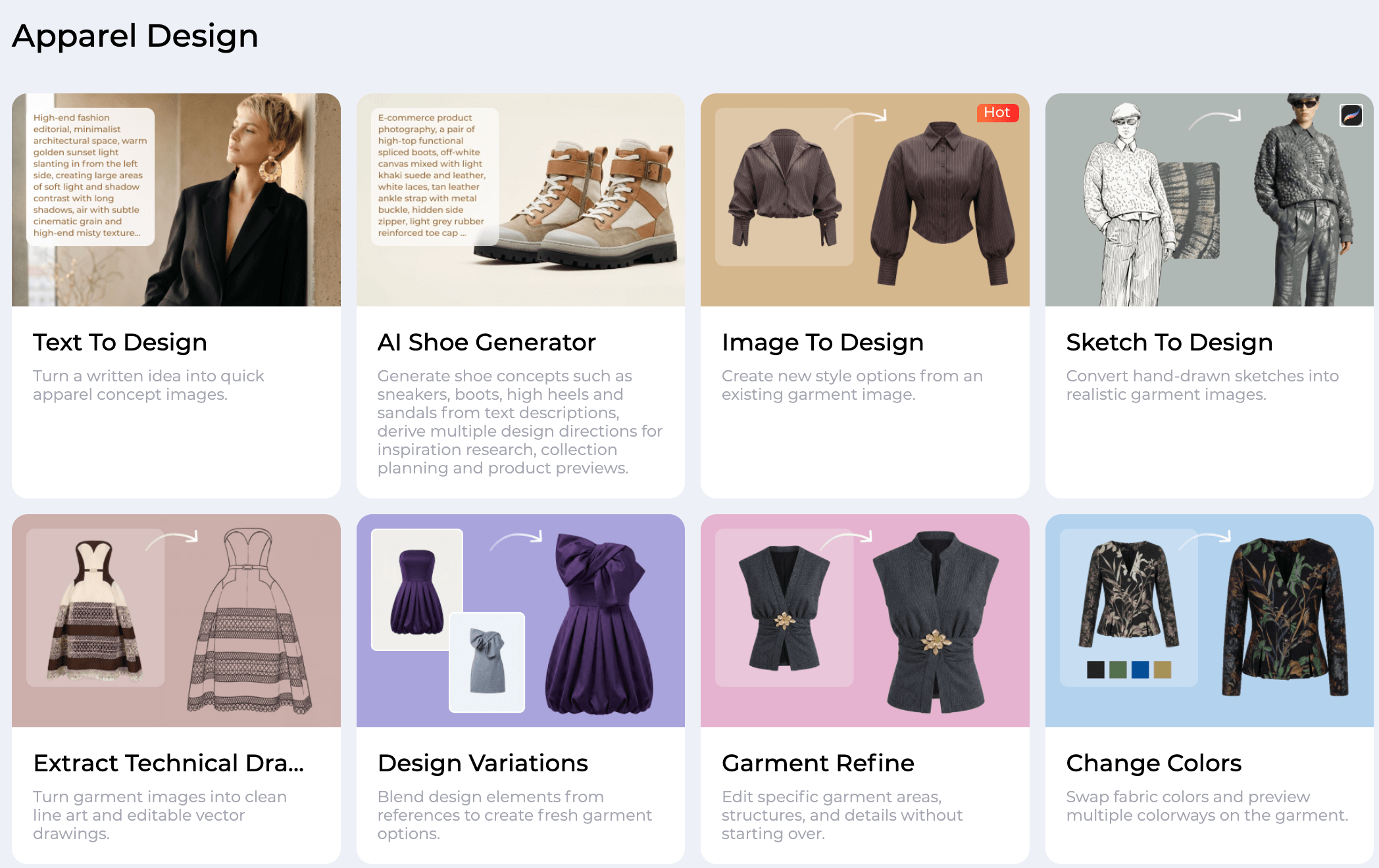
From a single prompt to multiple colorway and style directions in minutes.
Ready to try AI-powered fashion design for yourself?
Explore more honest reviews, tutorials and tech comparisons to find the right gear for the way you work, travel and live — at World Of Tech, where we make everything easy.
👉 Shop Style3D AI: https://worldoftech.space/style3d
👉 Our YouTube Channel: youtube.com/@world_tech79
👉 Our Facebook Fanpage: Facebook
👉 Our X (Twitter): @worldoftech79
Pricing, specifications and policy details in this review were verified against style3d.ai and independent review sources as of September 2026. Style3D AI does not publish a public pricing page as of this writing; plan pricing is presented at sign-up and may vary. AI SaaS pricing and features change frequently, so confirm current details on the official site before purchasing. Competitor prices are approximate and subject to change.