
The e-bike market has a pricing problem, and most riders feel it the moment they start shopping: the bikes that look genuinely capable — 750W motors, fat tires, real off-road geometry — tend to start around $1,500 and climb quickly past $2,000. Kingbull Bikes attacks that problem head-on. The direct-to-consumer American brand builds fat-tire electric bikes across mountain, folding, cargo, city, and full-suspension categories, and during its current summer promotion its two hero models — the Hunter 2.0S mountain fat-tire bike and the retro-styled Ranger — sell for roughly $799 each, with 750W motors, claimed 28 MPH top speeds, 864Wh batteries, and advertised ranges up to 80 miles. Add a 2-year warranty, free U.S. shipping, 15-day returns, and financing through Klarna and PayPal, and Kingbull positions itself as one of the most aggressive value plays in the 2026 e-bike market.
Aggressive pricing always raises the obvious question, though: what’s the catch? Kingbull’s on-site review widget shows thousands of customer reviews and its bikes have been covered by outlets like Electric Bike Report and New Atlas, yet its independent Trustpilot profile is still thin, its support runs on email rather than phone, and — importantly — its two cheapest hero models are still working through UL safety certification while the rest of the lineup has already earned it. Whether Kingbull is the smartest budget buy of the season or a compromise you’ll regret depends entirely on which model you pick and what you expect from a sub-$1,000 e-bike. This 2026 review walks through the full lineup, verified pricing, real strengths, honest limitations, and how Kingbull stacks up against Lectric and Aventon — so you can decide with clear eyes.
Kingbull Bikes Review 2026: Budget Fat-Tire E-Bikes With Serious Range Ambitions
Overview and Background
Kingbull Bikes (kingbullbike.com) is a direct-to-consumer electric bike brand that has carved out a distinct identity as a fat-tire specialist. Rather than spreading itself across road bikes, gravel bikes, and skinny-tire commuters, nearly everything Kingbull sells rolls on wide 4-inch rubber — the tire format that smooths out gravel, sand, snow, and broken pavement, and that has become the default choice for riders who want one bike to handle both weekday commuting and weekend trail duty. The brand claims a community of more than 20,000 riders and backs its bikes with a 2-year warranty, which is notably longer than the 1-year coverage that remains standard among many budget competitors.
The 2026 lineup breaks into two tiers. The core range — Hunter 2.0S, Ranger, Literider 2.0, Rover 2.0, Voyager 2.0, and the Discover 2.0 / Discover ST 2.0 city bikes — spans roughly $799 to $1,199 at current sale pricing and covers mountain, folding, cargo, and commuter use cases. Above it sits the newer Forge Series — the EX Titan full-suspension mountain bike, Jumper Go 20-inch full-suspension all-terrain bike, Verve long-range folder, and Trekker premium step-through — which runs $1,349 to $1,499 on sale, carries bigger 960Wh batteries, and has completed UL 2849 electrical-system certification verifiable on the official UL Product iQ directory. Every bike ships free within the contiguous U.S., arrives mostly assembled, and can be financed through PayPal Credit or Klarna.
Kingbull sells primarily through its own website but has been building out a physical dealer network, a rider referral program, and an open-box outlet for discounted returns. Independent coverage has come from e-bike media including Electric Bike Report, New Atlas, and autoevolution, and hands-on YouTube reviewers such as TailHappyTV and Electric Bike Journal have tested individual models. On the customer-feedback side, the picture is split: Kingbull’s on-site widget displays thousands of largely positive reviews, while its independent Trustpilot profile holds a 4-star rating from only around 36 reviewers as of July 2026 — a small sample that includes both enthusiastic first-time buyers and at least one serious unresolved complaint, which we’ll examine honestly in the limitations section.
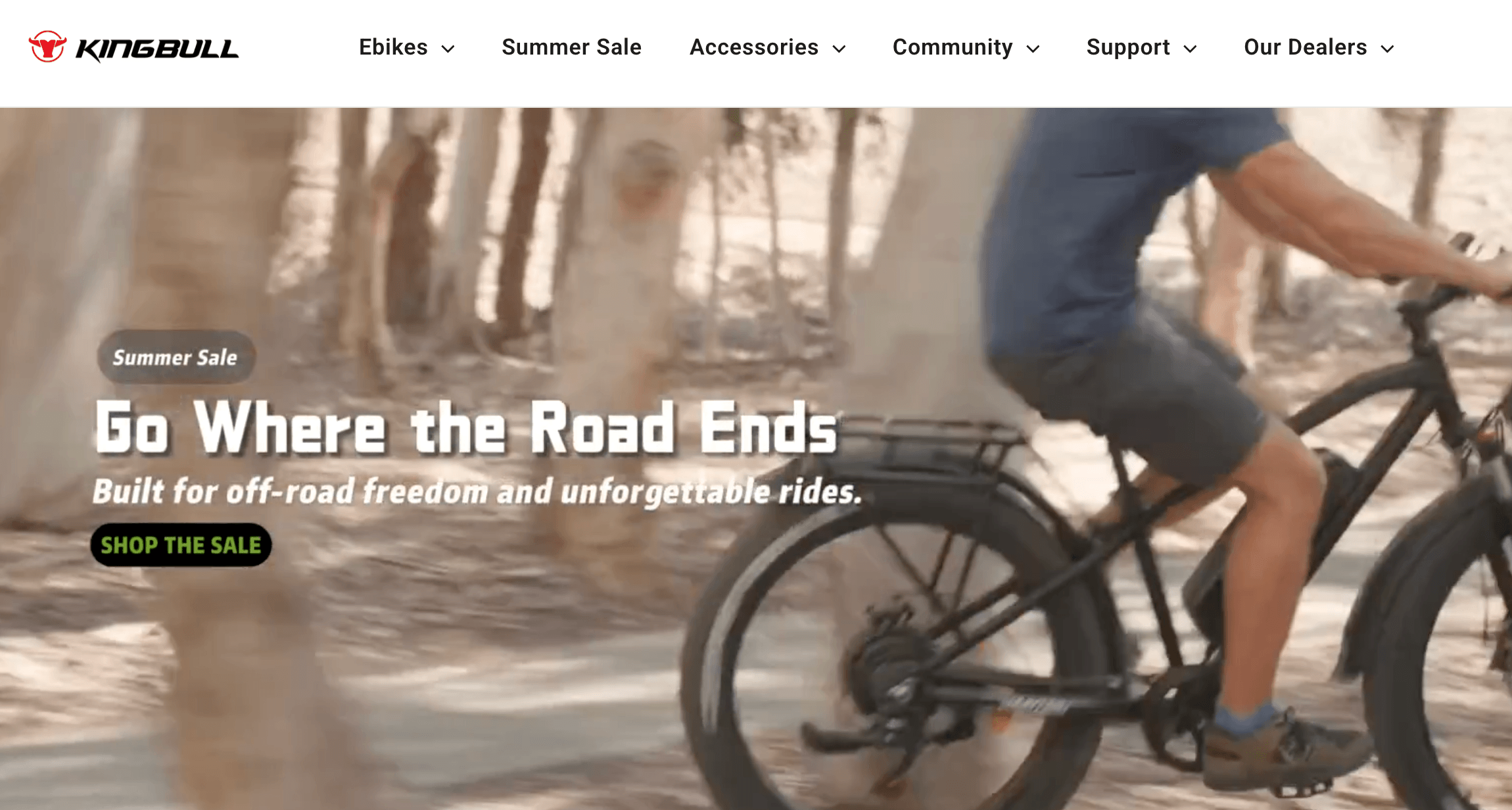
Kingbull’s fat-tire lineup spans mountain, folding, cargo, and city e-bikes — with hero models starting near $799 on sale.
Why Kingbull Stands Out in 2026
Sub-$800 pricing on genuinely specced bikes: The headline story is the Hunter 2.0S and Ranger at roughly $799 during the summer sale — down from list prices of $1,699 and $1,399 respectively. These are not stripped-down compliance bikes: both carry 750W rear-hub motors, 864Wh (18Ah) batteries, claimed 28 MPH Class 3 speeds, and advertised 80-mile maximum ranges. Comparable fat-tire bikes from Lectric start around $1,499 and Aventon’s flagship runs about $1,999, which means Kingbull is undercutting the category’s best-known names by roughly half at promotional pricing.
Big batteries across the entire range: Battery capacity is where budget brands usually cut corners, and it’s where Kingbull conspicuously doesn’t. The entry Hunter 2.0S and Ranger get 864Wh packs, the mid-range models carry 720Wh, and the Forge Series steps up to 960Wh (20Ah) — larger than the 720Wh base battery in the Lectric XPeak 2.0 and the roughly 733Wh pack in the Aventon Aventure 3. More watt-hours translate directly into fewer range-anxiety moments, especially for throttle-heavy riders.
A 2-year warranty in a 1-year world: Kingbull covers all its bikes for two years, which remains uncommon at this price point. Combined with 15-day returns, a 15-day price-protection policy, and an optional product-protection plan, the paper coverage is stronger than what most budget direct-to-consumer competitors offer — though, as always, warranty value ultimately depends on how smoothly claims get handled, and Kingbull’s email-only support model is a factor there.
One brand, five bike categories: Few budget brands cover this much ground. Kingbull offers a moped-style retro cruiser (Ranger), hardtail mountain fat bikes (Hunter 2.0S), a folding all-terrain bike (Literider 2.0), a full-suspension trail bike (Rover 2.0, EX Titan, Jumper Go), a dual-battery-capable cargo hauler (Voyager 2.0), and step-through city commuters (Discover ST 2.0, Trekker). Households buying two different bikes for two different riders can stay within one brand — and the ongoing “buy 2, save $150” bundle plus dedicated double-bike listings are clearly built for exactly that.
UL certification progress with unusual transparency: In February 2026 Kingbull published a model-by-model breakdown of its UL safety status: the 2.0 series has completed UL 2849 electrical-system certification (with most models also holding UL 2271 battery certification), and the Forge Series has earned UL 2849 with a listing that anyone can verify on the UL Product iQ directory. Publishing which models are certified and which are still in testing — rather than a vague blanket claim — is more candor than many budget brands manage, even if it also confirms a genuine gap we’ll flag below.
A growing dealer and community footprint: Kingbull is pushing beyond the pure direct-to-consumer model with a find-a-dealer program, a rider club, an active Facebook owner community, and a refer-a-friend scheme. For a budget brand, physical dealer presence matters: it creates local options for test rides and service that mail-order-only competitors can’t match, and it signals investment in longevity rather than a fly-by-night operation.
Genuinely enthusiastic early owners: Across the on-site reviews, Trustpilot, and YouTube coverage, a consistent pattern emerges: buyers repeatedly praise easy assembly, secure packaging, strong hill-climbing power, and battery life that outlasts expectations, with several riders in their 60s specifically noting the bikes got them riding daily again. That real-world satisfaction signal, while not independently audited at scale, is consistent enough across channels to carry weight.
Key Features and Technology
Kingbull’s engineering philosophy is straightforward: put the money into the motor, battery, and tires — the three components that most directly determine how an e-bike feels to ride — and keep the electronics simple. Here’s what that looks like across the lineup.
750W Motors and Class 3 Performance
Every current Kingbull model runs a 750W nominal rear-hub motor — the legal ceiling for e-bikes in most U.S. states — with the Jumper Go notably using a motor from Bafang, one of the most established drive-unit suppliers in the industry. Most models are configured as Class 3, delivering pedal assist up to 28 MPH plus throttle, while the Discover 2.0 and Discover ST 2.0 city bikes ship as 20 MPH Class 2 machines better suited to bike-path regulations. Reviewers and owners consistently describe strong hill-climbing performance, and hands-on tests of the Rover 2.0 in mountain terrain have highlighted its power delivery on steep hunting trails. Pedal assist on most models is cadence-based rather than torque-sensing — assist kicks in when the pedals turn, not in proportion to how hard you push — which feels less natural than the torque sensors on the Lectric XPeak 2.0 but keeps costs down and suits throttle-first riders fine.
Batteries, Range Claims, and the Dual-Battery Option
Battery capacity is Kingbull’s clearest hardware advantage. The Hunter 2.0S and Ranger carry removable 864Wh (48V 18Ah) packs rated for up to 80 miles; the Literider 2.0, Rover 2.0, Voyager 2.0, and Discover models use 720Wh (15Ah) packs rated for 55–60 miles; and the Forge Series (EX Titan, Jumper Go, Verve, Trekker) moves to 960Wh (20Ah) with 80-mile claims. The Voyager 2.0 cargo bike additionally supports a dual-battery configuration using Samsung cells for extended hauling range. As with every e-bike brand, treat maximum range figures as best-case numbers achieved at low assist levels — real-world range for a heavier rider using throttle liberally on fat tires will land meaningfully lower, often around half the headline figure. Even discounted that way, the watt-hour math still favors Kingbull over similarly priced rivals. An optional $259 power-station upgrade at checkout adds portable charging capacity for camping-oriented riders.
Fat Tires, Suspension, and Frame Variety
The 4-inch fat-tire format is the connective tissue of the lineup, delivering flotation on sand and snow, cushioning on rough pavement, and grip on loose trails. Suspension varies by tier: the Hunter 2.0S and Ranger use front suspension forks, while the Rover 2.0, EX Titan, and Jumper Go offer full suspension for genuine off-road comfort — the EX Titan pairing its dual suspension with Tektro hydraulic brakes and a frame sized generously for taller riders. Frame styles span step-over, step-through, folding (Literider 2.0 and Verve fold for car trunks and apartments), moped-style (Ranger’s vintage silhouette with a long bench-look seat), and longtail cargo (Voyager 2.0 with passenger and trailer options). Owner feedback repeatedly notes the bikes feel heavy-duty and stable, with the flip side being weight: fat-tire e-bikes in this class are substantial machines, and pedaling one unassisted with a dead battery is possible but not pleasant.
UL Safety Certification: Model-by-Model Status
Battery safety has become a defining issue for e-bikes, and Kingbull’s position deserves precise reporting. According to the company’s February 2026 status update, the 2.0 series (Literider 2.0, Discover ST 2.0, Rover 2.0, Voyager 2.0) has completed UL 2849 certification — the standard covering the entire integrated electrical system — with most of those models also holding UL 2271 battery certification. The Forge Series (EX Titan, Jumper Go, Verve, Trekker) has likewise achieved UL 2849, with a listing verifiable on UL’s public Product iQ directory. However, the Hunter 2.0, Hunter 2.0S, and Ranger were still moving through evaluation and testing at that update, with certification described as in progress rather than complete. If UL certification matters to you — and for anyone charging indoors, in an apartment, or in a building that requires UL-listed e-bikes, it should — verify the current status of your specific model before ordering, because the two cheapest hero bikes are precisely the ones still in the pipeline.
Warranty, Returns, and the Ownership Ecosystem
Every Kingbull ships free in the contiguous U.S., typically processed within two working days, and arrives mostly assembled — owners consistently report setup taking minutes rather than hours. Coverage includes a 2-year warranty, 15-day returns, and a 15-day price-protection policy, with optional extended protection plans and shipping insurance at checkout. Kingbull also runs a points-rewards program, a referral scheme, an open-box store for discounted units, and sells a full catalog of replacement components — batteries, chargers, controllers, displays, brakes, and tires — which matters for long-term serviceability on a direct-to-consumer bike. Support, however, runs through email tickets at customers@kingbullbike.com with no published phone line; most owners describe responses as prompt and helpful, but the one detailed negative Trustpilot account describes a months-long email dispute, so the channel is a real trade-off rather than a footnote.
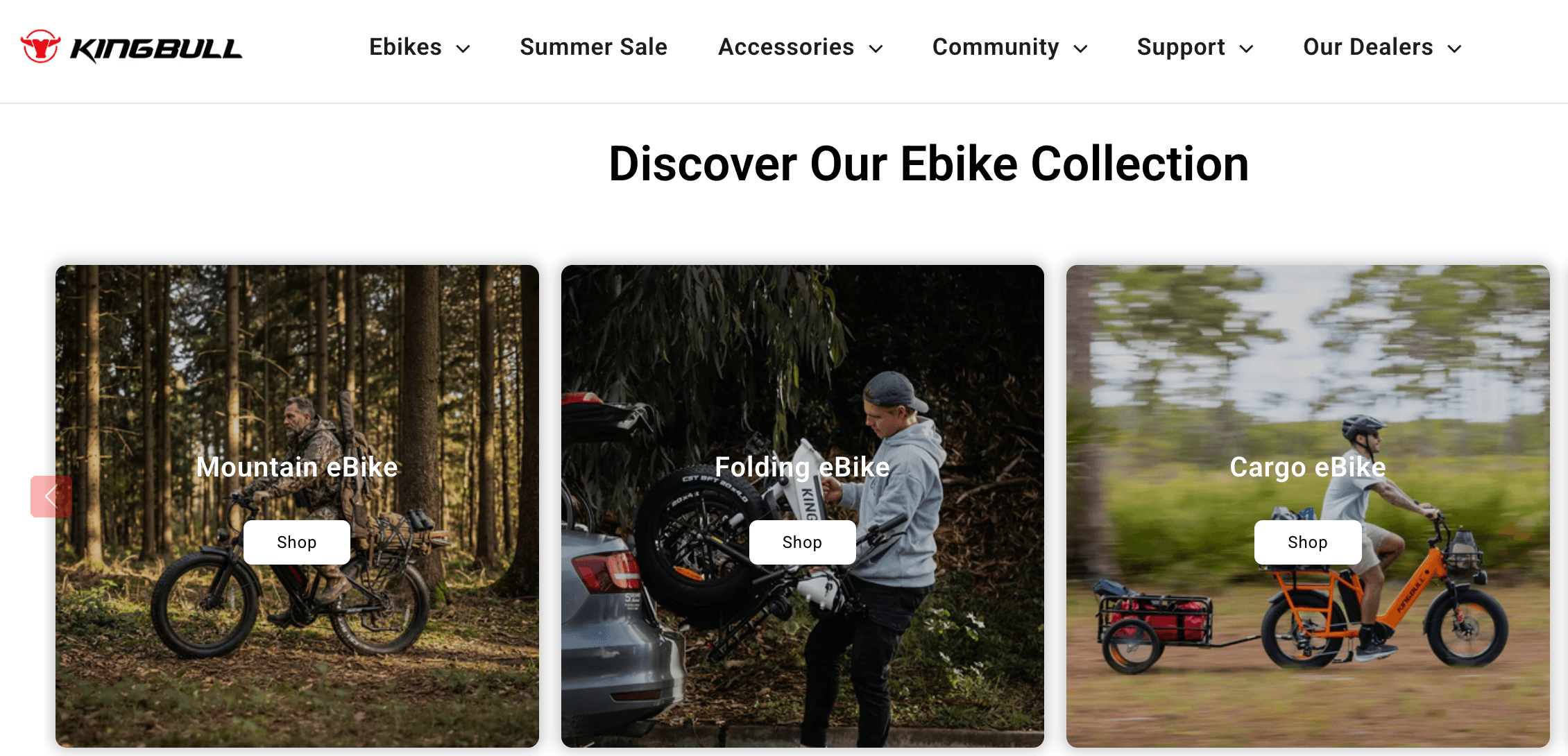
750W motors, 864–960Wh batteries, and 4-inch fat tires anchor the spec sheet across the Kingbull range.
Pricing, Plans, and Package Structure
Kingbull runs near-constant promotions — the current summer sale follows anniversary and July 4th events — so the sale prices below, verified on kingbullbike.com in July 2026, are effectively the street prices most buyers will pay, while the regular prices show the nominal list. All bikes include free shipping, the 2-year warranty, and financing options; a “buy 2, save $150” bundle and discounted double-bike listings sweeten multi-bike orders. All pricing is approximate and subject to change with each promotional cycle.
| Model | Sale Price (Reg.) | What It Is | Best For |
|---|---|---|---|
| Hunter 2.0S | ~$799 ($1,699) | Mountain fat-tire, 864Wh, 28 MPH, 80-mi claim | Best overall value; trails and hunting |
| Ranger | ~$799 ($1,399) | Vintage moped-style off-roader, 864Wh | Style-focused riders; teens and families |
| Literider 2.0 | ~$979 ($1,699) | Folding all-terrain fat bike, 720Wh, UL 2849 | RV owners, apartments, car-trunk portability |
| Discover ST 2.0 | ~$1,099 ($1,899) | Step-through city bike, 720Wh, 20 MPH, UL 2849 | Commuters wanting easy mounting |
| Voyager 2.0 | ~$1,119 ($1,899) | Cargo fat bike, dual-battery option, UL 2849 | Family hauling, errands, car replacement |
| Rover 2.0 | ~$1,199 ($1,899) | Full-suspension all-terrain bike, UL 2849 | Serious off-road riders on a budget |
| Verve / Trekker | ~$1,349 ($2,099) | Forge Series folder / step-thru city, 960Wh | Long-range commuting with UL 2849 |
| Jumper Go / EX Titan | ~$1,499 ($2,499–$2,599) | Full-suspension Forge flagships, 960Wh, 80-mi claim | Trail riders and taller adventurers |
How Kingbull Compares to Alternatives
Kingbull’s most direct rivals in the fat-tire value segment are Lectric — the U.S. sales leader in budget e-bikes — and Aventon, whose Aventure 3 tops most 2026 fat-tire recommendation lists. The comparison below pits Kingbull’s Hunter 2.0S against the Lectric XPeak 2.0 and Aventon Aventure 3; competitor prices are approximate and subject to change.
| Factor | Kingbull Hunter 2.0S | Lectric XPeak 2.0 | Aventon Aventure 3 |
|---|---|---|---|
| Price (approx.) | ~$799 on sale ($1,699 list) | ~$1,499 (~$1,699 long-range) | ~$1,999 |
| Battery | 864Wh (18Ah) | 720Wh base; 960Wh upgrade | ~733Wh |
| Pedal assist | Cadence sensor | Torque sensor | Torque sensor + app tuning |
| UL certification | In progress (2.0/Forge series certified) | UL 2849 + UL 2271 | UL certified |
| Warranty | 2 years | 1 year | 2 years |
| Support & service | Email only; growing dealer network | Phone, email, chat | Bike-shop dealer network |
| Best for | Maximum specs per dollar; range-hungry riders | Refined ride feel with full certification | Premium features, security, and shop support |
Kingbull vs. Lectric XPeak 2.0: Lectric is the safer establishment pick — years of number-one U.S. sales, a torque sensor that makes pedaling feel natural, full UL 2849 and UL 2271 certification, and phone support. Kingbull counters with roughly half the price at sale, a bigger standard battery, and double the warranty length. If ride refinement and certification top your list, pay up for the XPeak 2.0; if you’re throttle-oriented and value-driven, the Hunter 2.0S delivers more hardware for dramatically less money.
Kingbull vs. Aventon Aventure 3: The Aventure 3 is the category’s polished flagship, with app-based battery locking, torque-sensor tuning, a color display ecosystem, and a nationwide bike-shop network for test rides and service. It’s also roughly two and a half times the Hunter 2.0S’s sale price. Aventon suits riders who want a premium ownership experience and local support; Kingbull suits those who’d rather bank the $1,200 difference and accept a simpler, email-supported bike.
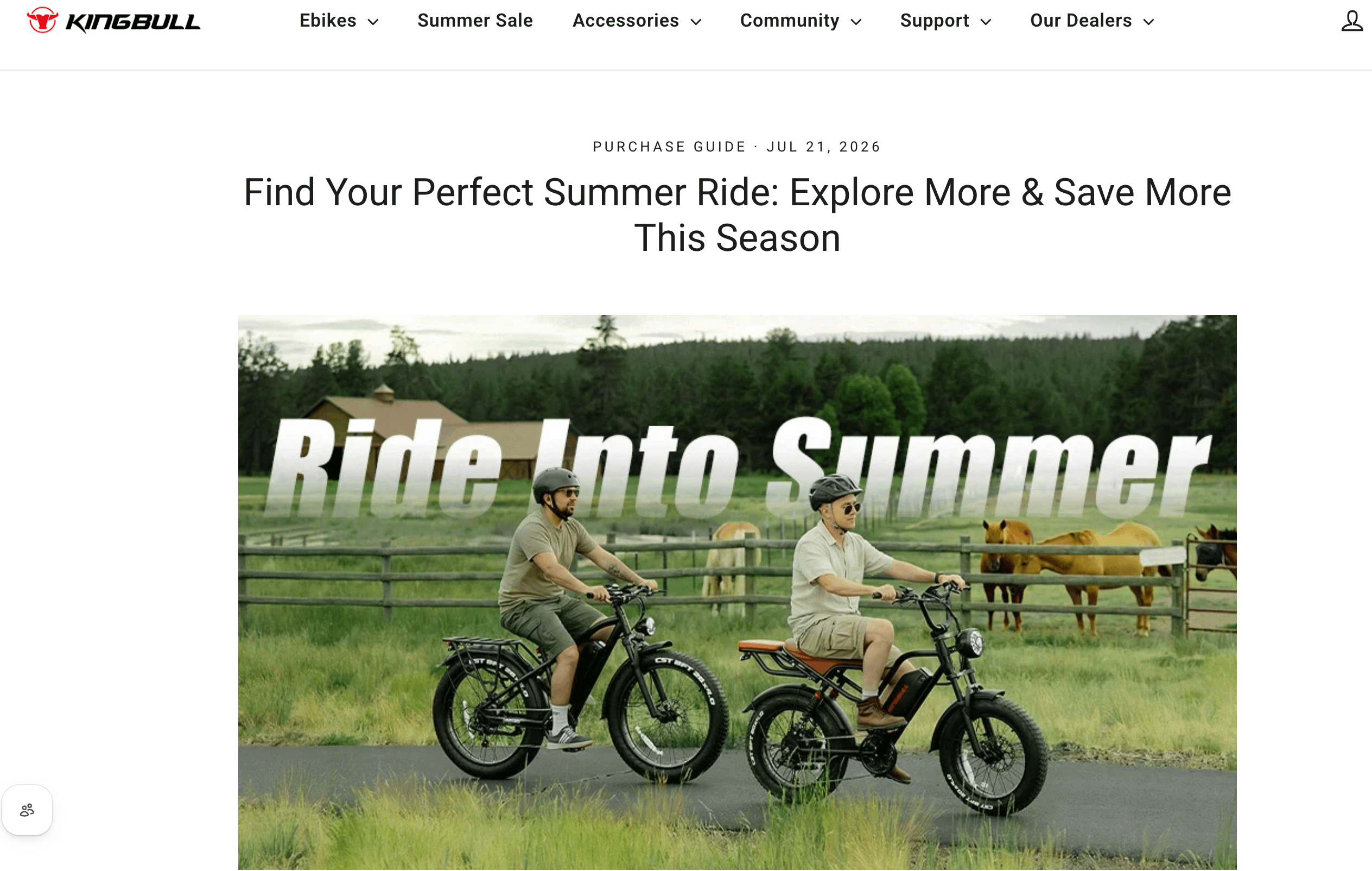
At sale pricing, Kingbull undercuts Lectric and Aventon by $700–$1,200 while offering larger standard batteries.
Pros and Cons
What Users Love
Unbeatable specs-per-dollar at sale prices: A 750W, 864Wh, 28 MPH fat-tire bike for around $799 is genuinely hard to match anywhere in the 2026 market, and owners repeatedly describe the bikes as the best value they found after extensive shopping.
Battery life that outlasts expectations: Multiple owners report riding 15–40 miles on low assist while barely denting the charge indicator, with heavier riders specifically praising how well the bikes haul them without draining quickly.
Easy assembly and secure shipping: Bikes arrive well-packed and roughly 90% assembled; reviewers consistently note going from box to first ride in under half an hour with clear instructions.
Responsive email support with goodwill gestures: Despite the lack of a phone line, most accounts describe next-morning email replies, quickly shipped replacement parts, and small surprise extras like stickers and caps that build brand loyalty.
A 2-year warranty and generous policies: Double the coverage of many budget rivals, plus 15-day returns and price protection, gives budget buyers meaningful paper protection.
Limitations Worth Knowing
Hero models still lack completed UL certification: As of Kingbull’s February 2026 update, the Hunter 2.0S and Ranger — the two bikes most buyers will actually order — were still in the UL testing pipeline, while competitors like the Lectric XPeak 2.0 already hold both UL 2849 and UL 2271. If your building requires UL-listed e-bikes or you charge indoors, verify current status before buying.
Thin independent review footprint: Kingbull’s on-site widget shows thousands of reviews, but its Trustpilot profile holds only around 36 as of July 2026. A 4-star average from that small a sample is encouraging but not statistically robust, and the gap between on-site and independent volumes is worth keeping in mind.
Email-only support cuts both ways: There is no published phone number, and at least one detailed Trustpilot complaint describes a bike that arrived with a damaged brake and a return dispute that dragged on for months over email. When email support works, it works well; when it doesn’t, there’s no escalation channel to call.
Cadence-based assist and simple electronics: Most models lack the torque sensors, companion apps, and smart security features found on Lectric and Aventon rivals, so pedal assist feels more on/off than proportional, and there’s no remote battery locking or ride tuning.
Optimistic range claims and hefty bikes: The 80-mile figures assume ideal low-assist conditions; throttle-heavy real-world riding will deliver far less. And like all fat-tire e-bikes in this class, these are heavy machines — awkward to carry upstairs and tiring to pedal unassisted. Isolated owner reports also mention minor issues like a chain dropping on the Ranger.
Who Should Use Kingbull Bikes
Value-first buyers and e-bike newcomers: If your budget caps near $1,000 and you want the most motor, battery, and tire the money can buy, the Hunter 2.0S and Ranger at sale pricing are among the strongest offers in the market — and owner accounts suggest first-time e-bikers adapt to them quickly.
Outdoor riders, hunters, and campers: The fat-tire format, full-suspension options like the Rover 2.0 and EX Titan, the optional power-station upgrade, and camping accessory bundles make Kingbull a natural fit for backcountry access, game-camera runs, and campsite mobility.
Couples and families buying multiple bikes: The buy-two discounts, double-bike listings, and category breadth mean a household can pair a city step-through with a mountain bike from one brand, one order, one warranty relationship — a pattern that shows up repeatedly in owner reviews.
Older and heavier riders returning to cycling: A striking share of Kingbull’s most enthusiastic reviews come from riders in their 60s and heavier riders who found the bikes sturdy, confidence-inspiring, and powerful enough to make daily riding genuinely enjoyable again.
Who should look elsewhere? Riders who need a completed UL listing today for apartment or workplace charging should choose a certified Kingbull 2.0/Forge model or a fully certified competitor like the Lectric XPeak 2.0. Anyone who wants torque-sensor ride feel, app connectivity, phone-based support, or walk-in bike-shop service will be happier spending more on Aventon. And weight-sensitive riders who must carry a bike up stairs daily should consider lighter non-fat-tire alternatives entirely.
Getting Started: Step by Step
- Match a model to your riding. Use the compare tool on kingbullbike.com: Hunter 2.0S for trails and hunting, Ranger for moped-style cruising, Literider 2.0 or Verve if you need folding, Discover ST 2.0 or Trekker for commuting, Voyager 2.0 for cargo, and Rover 2.0 / Jumper Go / EX Titan for full-suspension off-road.
- Verify UL status and local rules. If you charge indoors or your building requires certification, confirm your chosen model’s current UL 2849/2271 status — the 2.0 and Forge series are certified; Hunter and Ranger were still in progress at the last official update. Also check whether your area permits Class 3 (28 MPH) bikes on your intended routes.
- Time your purchase to a sale. Order via worldoftech.space/kingbullbikes during a promotional window, stack the buy-two bundle if applicable, and consider the accessory bundles or power-station upgrade at checkout if they fit your plans. Klarna and PayPal Credit are available if you’d rather pay over time.
- Assemble and inspect on arrival. Expect delivery processing within about two working days and assembly of roughly 30 minutes — handlebar, front wheel, pedals. Before your first ride, check brake engagement, tire pressure, and every quick-release and bolt; photograph any shipping damage immediately and email support the same day, since your return and claim windows start ticking at delivery.
- Do a short shakedown ride. Spend your first few miles in low pedal assist on familiar ground to learn the cadence-sensor behavior, throttle response, and braking distances of a heavy fat-tire bike before attempting traffic, hills, or trails at full Class 3 speed.
- Register and join the ecosystem. Keep your order confirmation for the 2-year warranty, sign up for Kingbull Points, join the owner Facebook group for real-world tips, and bookmark the owner’s resources page — the error-code guides and maintenance tutorials there will save you support tickets later.
Tips for Getting Maximum Value
Treat the battery as the asset it is: charge with the original Kingbull charger in a ventilated space, avoid draining to zero, and store the pack around half charge if the bike sits for weeks — that discipline protects both range and safety on any e-bike, certified or not. Ride mostly in pedal assist levels one and two rather than throttle to stretch real-world range toward the advertised figures; owners who do report barely touching their battery indicators over long rides. Budget a small amount for early comfort upgrades, because the most common owner gripe is the stock saddle — a suspension seatpost or padded saddle transforms long rides, and taller riders may want an extended stem. Keep an eye on the open-box store and holiday cycles for accessory discounts, use the referral program if friends admire your bike (they will — compliments are a recurring theme in owner reviews), and file any price-protection claim promptly if your model drops within 15 days. Finally, learn basic fat-tire maintenance: correct tire pressure for your terrain dramatically changes ride quality, and the on-site troubleshooting guides for controller error codes can resolve most electrical hiccups without waiting on an email thread.
Future Outlook and Final Assessment
Kingbull’s trajectory through 2026 looks like a brand deliberately climbing the credibility ladder: the Forge Series brought bigger batteries and completed UL 2849 certification with a publicly verifiable listing, the dealer network is expanding beyond pure direct-to-consumer sales, and the company has committed publicly to bringing the Hunter and Ranger through the same certification program. If those certifications land and the independent review base grows to match the on-site volume, Kingbull’s main objections evaporate and the value equation becomes very hard to argue against. The risks run the other way, too: budget e-bike brands live and die on post-sale support at scale, and an email-only channel will be tested as the rider base grows past 20,000.
The competitive context matters as well. Lectric and Aventon continue pushing torque sensors, smart features, and certification as the new baseline, which pressures Kingbull to keep its price gap wide enough to justify simpler electronics. For now, it clearly does — a $700–$1,200 saving buys a lot of forgiveness — but shoppers should always compare current sale prices on all three brands the week they buy, because this segment’s promotions shift monthly.
Conclusion
Kingbull Bikes earns its place on the 2026 shortlist by doing the unglamorous thing well: packing large batteries, legal-maximum motors, and fat-tire versatility into bikes that cost hundreds less than the established alternatives, then backing them with a 2-year warranty and policies that respect the buyer. It is not the most refined ride, the most connected, or — for its two cheapest models — the most certified, and its independent review footprint still has growing to do. But judged on what most budget e-bike shoppers actually need — power, range, durability, and a fair price — Kingbull delivers convincingly, and the consistent delight in owner reviews suggests the bikes are winning people over one driveway at a time. If a capable fat-tire e-bike under $1,000 is your target, Kingbull deserves a serious look before you spend more elsewhere.
Ready to hit the trail for half the price of the big brands?
Explore more honest reviews, tutorials and tech comparisons to find the right gear for the way you work, travel and live — at World Of Tech, where we make everything easy.
👉 Shop Kingbull Bikes: https://worldoftech.space/kingbullbikes
👉 Our YouTube Channel: youtube.com/@world_tech79
👉 Our Facebook Fanpage: Facebook
👉 Our X (Twitter): @worldoftech79
Pricing, specifications and policy details in this review were verified against kingbullbike.com and independent review sources as of July 2026. E-bike pricing and promotions change frequently, so confirm current details on the official site before purchasing. Competitor prices are approximate and subject to change. Sale prices reflect Kingbull’s summer promotion and may differ at the time of reading.